No. 81331
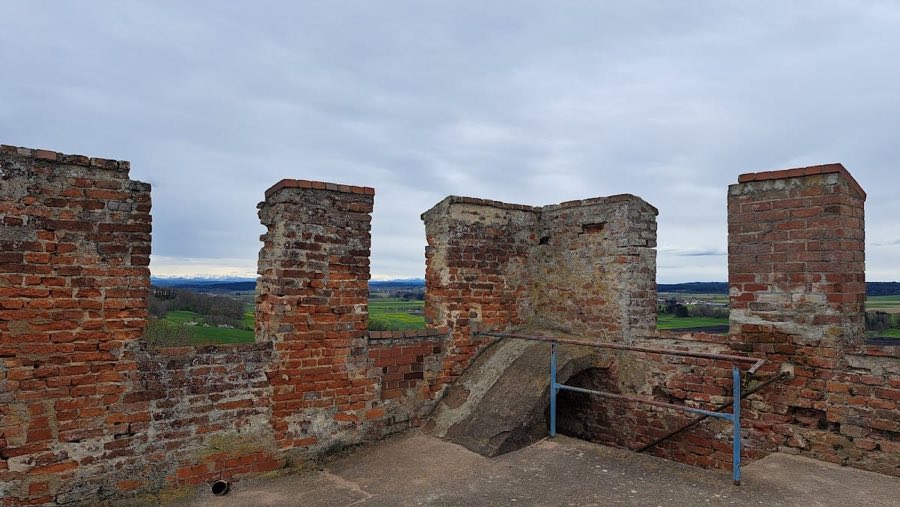
Burgruine Altenschönegg
Germany
CastleRuin13th century
No. 14861
No. 14861 · 48.162 N, 10.119 E
Quick summary
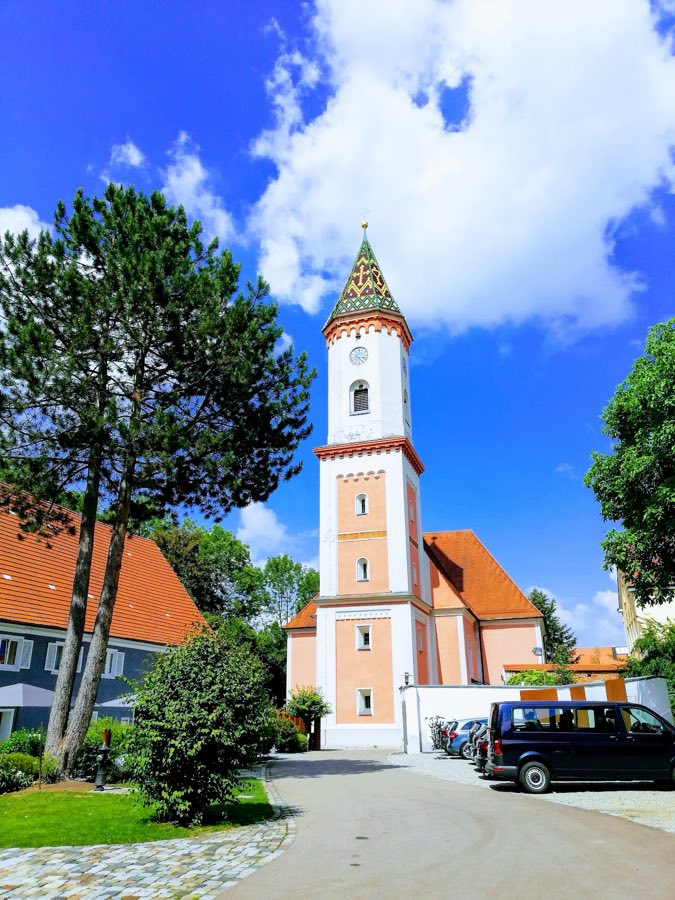
Schloss Illereichen is a castle in Germany with origins associated with the 8th century.
See all castles in GermanySchloss Illereichen stands in Altenstadt‑Illereichen, Germany, and was raised by medieval local nobility.
A fortified house belonging to the lords of Aichheim is recorded in 1330; at that time the lordship then known as Aichheim, later also called Illereichen, passed by marriage into the Rechberg family when Konrad von Rechberg married Luitgard, daughter of Berthold von Aichheim. During the later Middle Ages the site was rebuilt. A substantial new building was erected between about 1420 and 1460, and a gate tower was added in the 1500s.
The Rechberg family retained control of the lordship, including Altenstadt and Illereichen, until 1677. In 1626 the territory was raised to the status of a free imperial lordship, gaining representation both in the Imperial Circle and among the Imperial Estates. Ownership later moved to the Counts of Limburg‑Styrum, and in 1772 Carl von Palm bought the lordship for roughly 450,000 Gulden. In 1788 Prince Johann Nepomuk Josef von Schwarzenberg purchased Illereichen for about 750,000 Gulden, and in 1789 the estate came into the hands of his son Josef.
Political control shifted in the early nineteenth century. In 1806 the lordship fell under Bavarian sovereignty. From 1814 until 1834 a princely Schwarzenberg manorial court administered justice at Illereichen. In 1833 Prince Josef von Schwarzenberg sold the estate to the Bavarian minister Maximilian Graf von Montgelas; the following year Montgelas transferred judicial rights and ground‑fees to the King of Bavaria. The castle complex was mostly demolished in 1837 and 1838. The remaining structure is now recorded as a protected monument under file number D‑7‑75‑111‑40.
The site preserves the footprint of a once extensive castle complex arranged around an outer ward and a garden, with a sequence of service and farm buildings beyond. Surviving fabric reflects successive phases of construction from the late medieval rebuilding into the early modern period, and the ensemble is understood as a reduced remnant of that larger compound.
The outer ward survives as a raised, enclosed building complex that originally served as the first defensive and service zone before the inner residence. This section dates to the medieval and later phases of the site and remains in situ as the main surviving block of the former castle. Its walls and general plan show later reuse tied to the site’s agricultural and administrative functions.
A gate tower standing at the approach was constructed in the sixteenth century. The tower marks the former entrance route and is preserved as part of the ensemble, retaining its role as the principal gateway structure even though the wider complex was altered in the nineteenth century.
Immediately adjacent to the outer ward is the former castle garden, bounded by supporting and defensive stone walls. These retaining and defensive walls are built of masonry and survive as visible barriers that once defined the garden’s edge and provided protection to the planted enclosure. South of the outer ward the garden area continues and the former hunter’s house stands near this planted zone, recorded as part of the garden complex.
Ancillary service buildings survive as listed secondary structures. A former economy building and separate servants’ building are included in the preserved ensemble; they attest to the estate’s domestic and agricultural operations. A stable building associated with the complex is also extant, and a stone bridge that connected parts of the site remains in place, constructed in masonry and serving as a durable link across the approach or moat area. Overall, these elements survive in a fragmentary but in‑situ condition as the documented remains of Schloss Illereichen.
No. 81331
No. 26862
No. 71303
No. 99294
Comments
Comments for Schloss Illereichen will require a verified account before posting.
We'll send a verification link before your first comment is published.