No. 14861
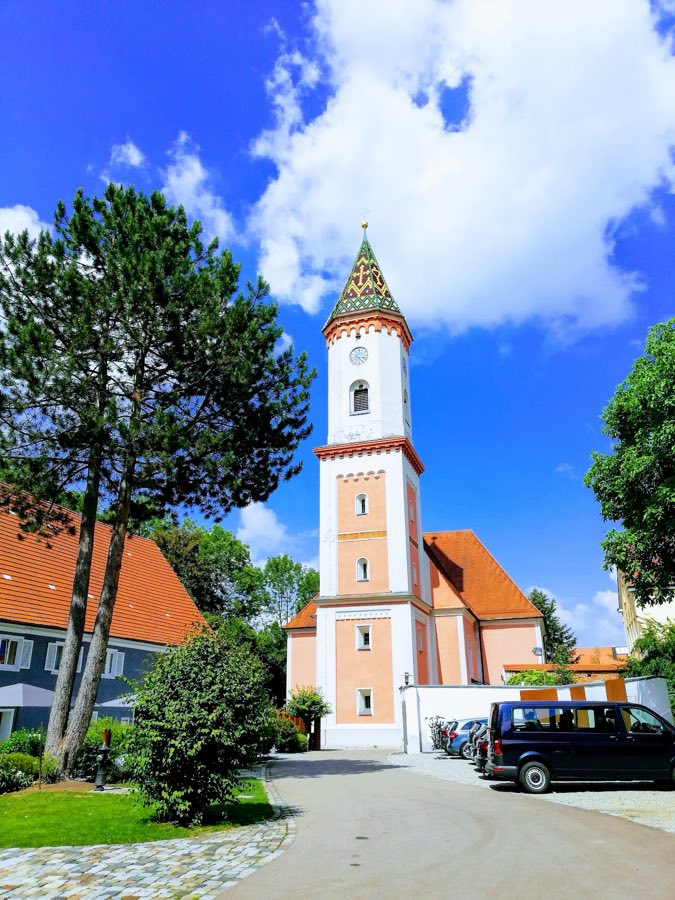
Schloss Illereichen
Germany
CastleRestored8th century
No. 81331
Castle · Germany
No. 81331 · 48.107 N, 10.296 E
Quick summary
Burgruine Altenschönegg is a castle in Germany with origins associated with the 13th century.
See all castles in GermanyBurgruine Altenschönegg is located in Oberschönegg, Germany, and was originally constructed by medieval German nobility. The earliest known records date the castle’s existence to 1220, when it served as the residence of the Herren von Schönegg, a ministerial family within the Holy Roman Empire. By 1237, this family held their position as vassals under the Counts Palatine of Tübingen, who controlled nearby fortresses including Burg Kellmünz and Burg Babenhausen.
In the later 13th century, the Herren von Schönegg expanded their influence beyond the castle, founding the Frauenkloster Klosterbeuren, a nearby convent, in 1273. However, conflict soon befell the site. Historical accounts report that King Rudolf von Habsburg ordered the destruction of Altenschönegg in 1281. The castle faced additional assault in 1319 at the hands of citizens from the nearby town of Memmingen, reflecting regional unrest and challenges to feudal authority.
Following the extinction of the Herren von Schönegg family’s male line, the castle passed into ecclesiastical hands. Beginning in 1355, it became the administrative center, or Pflegamt, of the Prince-Bishopric of Augsburg. This role persisted through several decades, including a period from 1395 to 1462 when the property was pledged to the noble Herren von Aichelberg and later managed by the bishop’s steward, Stain von Ronsperg. During this era, the castle’s chapel, dedicated to Saint Burkard, was reportedly destroyed by Memmingen citizens amid conflict that took place around 1388 and 1389.
Throughout the 15th century, Altenschönegg stood at the center of several violent episodes. It experienced destruction inflicted by Ulm citizens in 1446 and further damage in 1462 during a dispute between Emperor Friedrich III and Duke Ludwig IX. Despite these challenges, the castle remained the seat of the Augsburg diocese’s local administration until the early 19th century, underscoring its continued political importance.
In the 19th century, the castle’s remaining tower underwent a transformation under Prince Anselm Maria Fugger von Babenhausen. On June 3, 1809, he acquired the 30-meter tall bergfried, restored the damaged structure, and repurposed it as an observation tower commonly called the Römerturm, or “Roman Tower.” The Fugger family, notable landowners in the region, also controlled the nearby village of Weinried, linking the castle’s legacy with local noble estates.
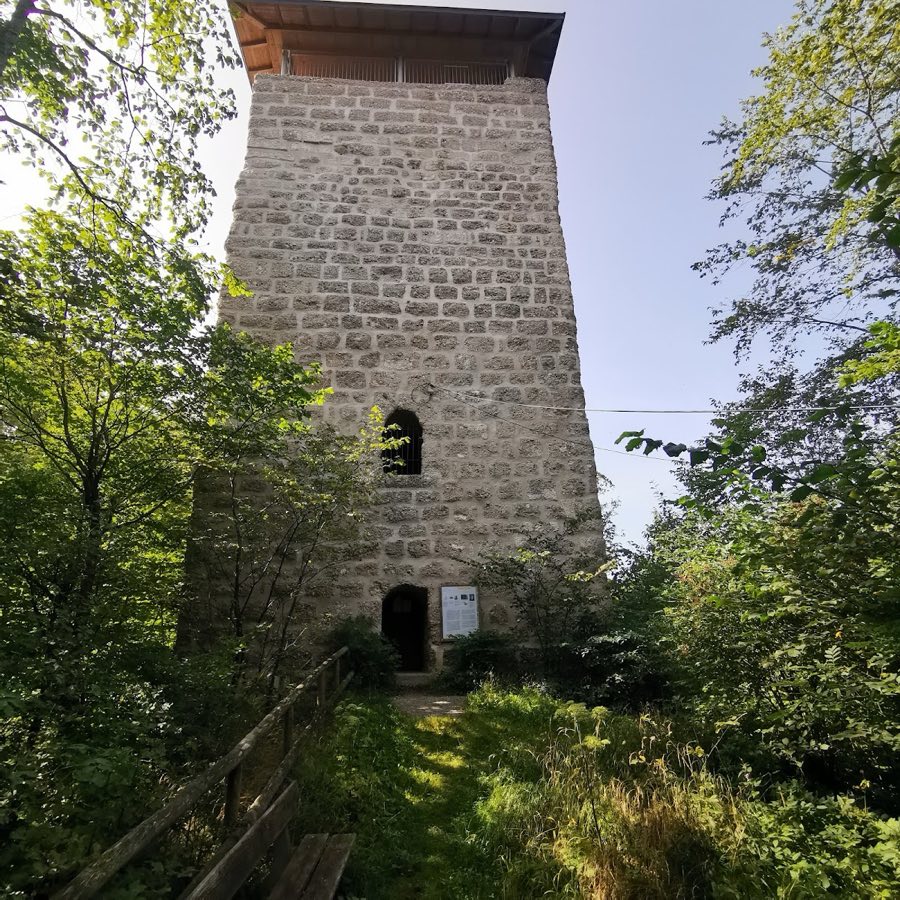
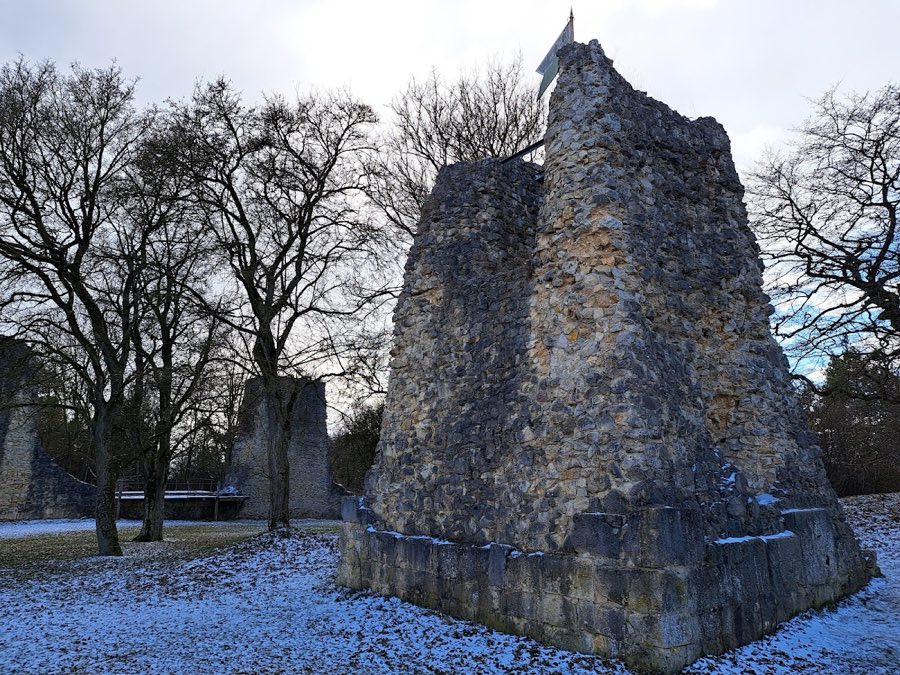
Today, the most visible remnant of Burgruine Altenschönegg is its square bergfried, a tall, fortified tower that rises approximately 30 meters. The tower’s lower portion was constructed from large blocks of Nagelfluh, a type of natural conglomerate stone typical of the region, dating back to the 12th or early 13th century. This solid stone base provides clear evidence of the castle’s early medieval origins and defensive function.
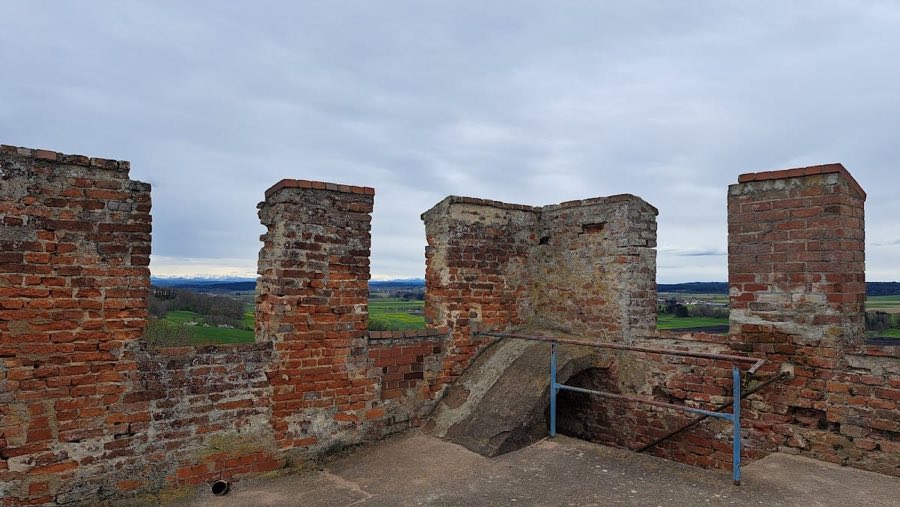
Above this sturdy foundation, the upper section of the bergfried is built from brick, revealing reconstruction or additions from the 15th or 16th century. This contrast in building materials highlights the castle’s long history and multiple phases of repair and modification. The use of brick in the tower’s higher levels reflects changing construction techniques during the late medieval period.
The tower’s massive base, set with carefully quarried stone blocks, supported its role as a stronghold in a lowland location near Oberschönegg. Its elevation would have offered strategic views of the surrounding landscape, aiding both defense and administration. Following its restoration in the early 1800s, the tower was adapted for public use as a viewing platform and renamed the Römerturm, preserving the structure’s presence in the landscape.
No other substantial castle structures remain in visible form, and the bergfried stands as the primary surviving architectural feature. Historical records mention a chapel once dedicated to St. Burkard, but no specific structural details or remains of this building are noted. The tower’s enduring masonry and height offer direct links to the site’s centuries-long history of medieval nobility, ecclesiastical governance, and repeated conflict.
No. 14861
No. 26862
No. 71057
No. 27602
Comments
Comments for Burgruine Altenschönegg will require a verified account before posting.
We'll send a verification link before your first comment is published.