No. 21852
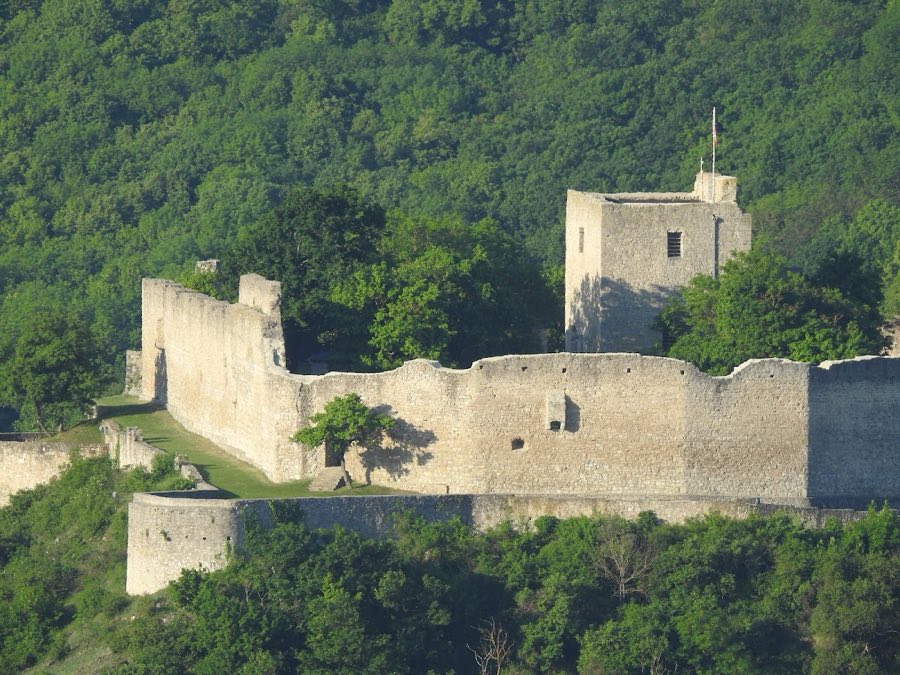
Heimenburg Castle, Hainburg an der Donau
Hainburg an der Donau, Austria
CastleRuin11th century
No. 11811
Castle · Austria
No. 11811 · 48.062 N, 16.852 E
Quick summary
Schloss Rohrau is a castle in Austria with origins associated with the 12th century.
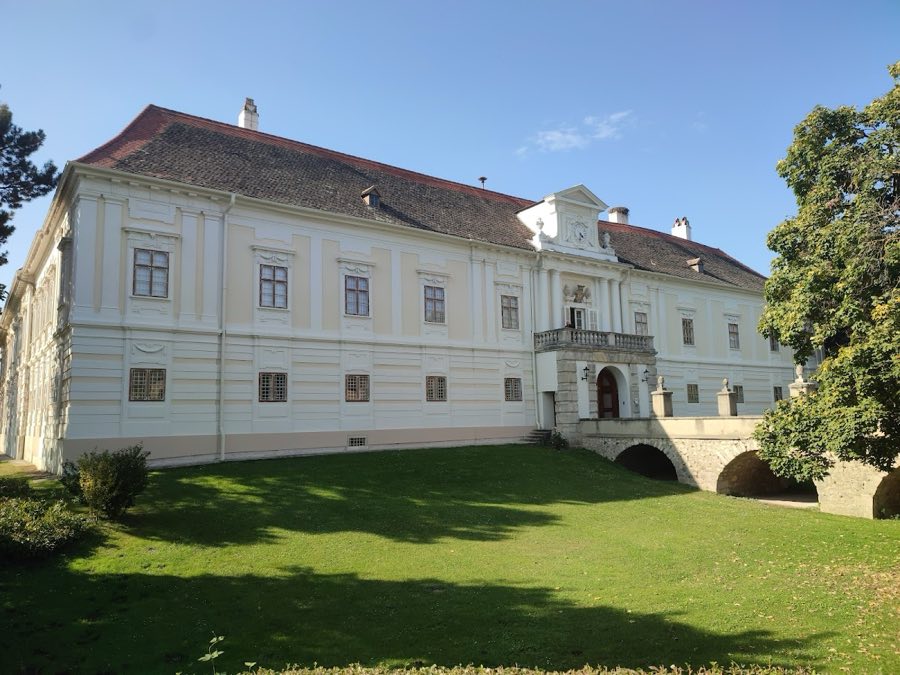
See all castles in AustriaSchloss Rohrau, Rohrau, Austria, is a historic castle-palace whose origins lie with medieval feudal lords of the Holy Roman Empire and whose fabric reflects Renaissance and late‑Baroque rebuilding. The place became important as a noble seat and later as the long-time residence of the Harrach family, whose collection now fills the principal rooms. Its story spans medieval enfeoffments, military action, repeated rebuilding, and aristocratic patronage.
The site appears in royal and ducal transactions from the eleventh and twelfth centuries. Agnes of Poitou granted Rohrau, together with nearby Petronell, to Rapoto V of Bavaria; after Rapoto’s death his heir Diepold III brought Hugo, later known as Hugo von Liechtenstein, into Austrian service and granted him these holdings. Hugo is recorded from 1136 and stands at the head of the Liechtenstein lineage associated with the area. Rohrau is first named as an independent knightly seat in 1240 under Dietrich de Rorow. That local line ended in 1278 and the estate passed by inheritance to Leutold I von Stadeck through Dietrich’s daughter Diemut.
Control of Rohrau shifted among leading regional powers in the later Middle Ages. After the death of the last Stadeck lord in 1399 Duke Wilhelm tried to seize the lordship, but Hermann II, Count of Celje, secured an imperial enfeoffment from King Wenceslaus in 1400. By 1402 the property passed to Ulrich von Montfort‑Pfannberg and King Ruprecht confirmed the Montfort family’s rights in 1404; the Montforts retained the castle and its dominion for roughly a century and two decades.
In 1524 Leonhard III von Harrach acquired Rohrau and the Harrach family thereafter shaped its fortunes. His son Leonhard IV took a firm Catholic stance during the Counter‑Reformation, was elevated to the imperial baronage by Emperor Ferdinand I in 1552 and received admission to the Order of the Golden Fleece in 1584, then made Rohrau his retirement residence in 1586. Ottoman troops appeared under the castle walls in 1593, causing heavy damage to the fortress and its surroundings. A concentrated rebuilding program followed around 1599–1605, for which payment records and craftsmen’s accounts survive. The Harrachs’ rank rose again when Karl Freiherr von Harrach was made an Imperial Count by Ferdinand II in 1627.
The castle suffered decline in the mid‑seventeenth century and approached ruin before restoration works ordered in 1668 by Ferdinando Bonaventura von Harrach. The family returned the castle to full occupation by about 1688 under Leonhard Ulrich von Harrach. The last major structural campaign recorded was carried out at the direction of Count Leonhard IX in 1776–1777. The Harrachs continued to live at Rohrau until the end of the Second World War, when occupation by the Red Army inflicted severe damage. After the war the estate underwent repair and for a period supported agricultural activity. Interiors were renewed in 1966, and in 1970 Countess Stéphanie von Harrach established the château as the seat of the Harrach picture gallery. Ownership and the picture collection later passed by inheritance into the family of Waldburg‑Zeil after Eberhard von Waldburg‑Zeil married a Harrach descendant in 1966. In April 2006 sixteen paintings, including works attributed to Rembrandt, Van Dyck, Rubens and Pieter Snayers, were stolen. The site today is protected as a historic monument (protection number 11663).
The ensemble now presents itself as a late‑Baroque complex made up of the main residential palace with a three‑wing building in front. The principal residence consists of four two‑storey wings that form an almost square inner courtyard, a layout that overlays an older medieval plan. A moated medieval stronghold once occupied the site; its moat was filled in and the castle was rebuilt in a Renaissance manner, yet the ground plan still shows the footprint of the earlier moated arrangement.
The principal approach is marked by a broad stone bridge leading to a monumental entrance portal. Above that portal sits a balcony with a balustrade; the doorway that opens onto the balcony is crowned by the Harrach coat of arms set above the lintel (horizontal beam above a door). The central section of the main façade rises into a pediment that contains a clock, creating a clear focal point on the front elevation. The castle stands within an extensive park that blends directly into the floodplain forest of the Leitha river, positioned at the southern edge of the Rohrau settlement.
Inside, a formal staircase from the entrance hall leads up to the piano nobile (main living floor), where a gallery spreads through ten rooms and where large family portraits hang. The small chapel preserves the Rohrau Altarpiece, a sixteenth‑century panel ascribed to an anonymous Antwerp workshop; its dome is finished with stucco decoration. The chief reception room includes the so‑called Haydn Room, which contains a portrait bust of Joseph Haydn carved by Antonio Grassi.
Sixteenth‑century building accounts record detailed stone and masonry work carried out during the major rebuilding of about 1599–1605. Mason Leonhard Pall logged extensive days of work, including the setting of vaults on a newly constructed section. Stonemason Antonius Tencalla shaped Kaiserstein (imperial stone quarried at Leythaberg) for door and window surrounds, cornices, five carved window heads, the market pillory, the ashlar and corner stones of the New Gate in the outer castle, and a draw‑well within the inner court. These carved elements of Kaiserstein remain a defining material feature of the castle fabric.
Later alterations adapted internal spaces to new uses after 1970, converting formerly open areas into larger rooms for exhibitions and gatherings. The building still bears scars of the 1593 Ottoman attack and of the severe damage inflicted during Red Army occupation in 1945; extensive postwar repairs and later conservation work have returned much of the complex to use as a residence, gallery and cultural venue. The Harrach family picture collection occupies the principal rooms, and the site is accessible by guided tours on scheduled days and by arrangement.
No. 21852
No. 81073
No. 85634
No. 83971
Comments
Comments for Schloss Rohrau will require a verified account before posting.
We'll send a verification link before your first comment is published.