No. 77755
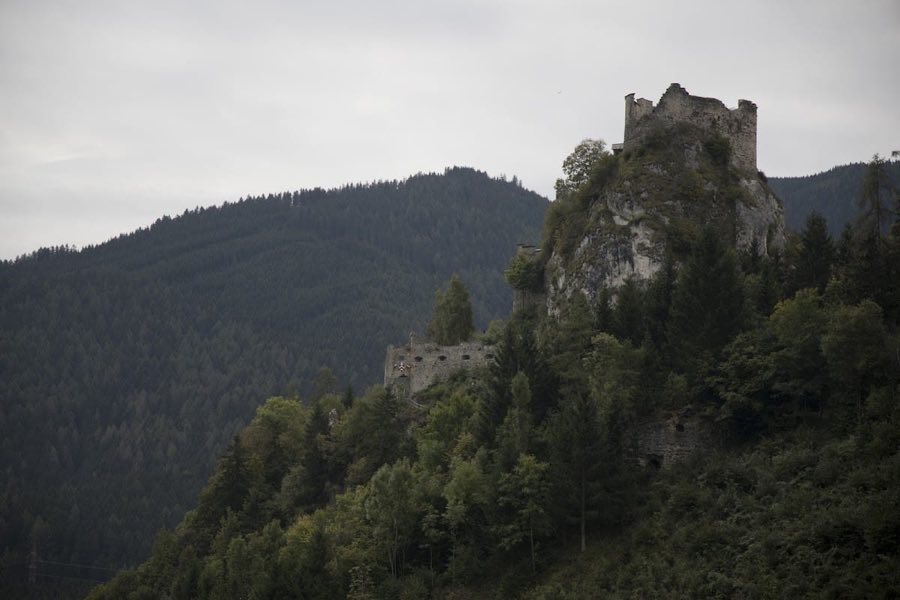
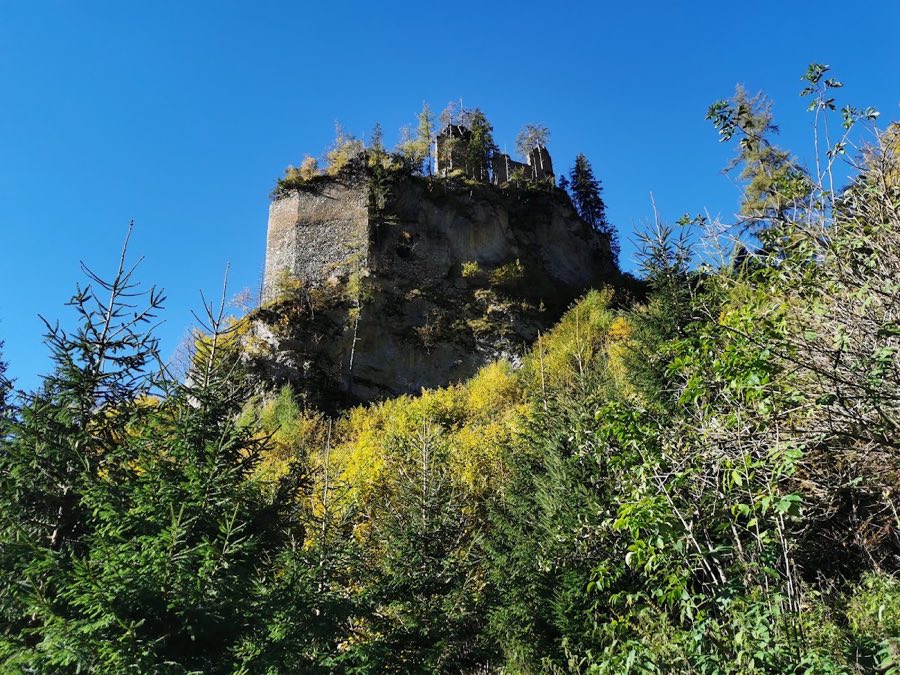
Burgruine Eppenstein
Austria
CastleRuin10th century
No. 58407
Castle · Austria
No. 58407 · 47.269 N, 14.687 E
For rent
Schloss Wasserberg is marked for bookable castle accommodation. Nightly pricing, sleeps count, stay rules, and amenities are displayed only when public operator data is available.
Rental type: Hotel / bookable stay, Short-stay rental
Short-term availability: Bookable accommodation signal
Quick summary
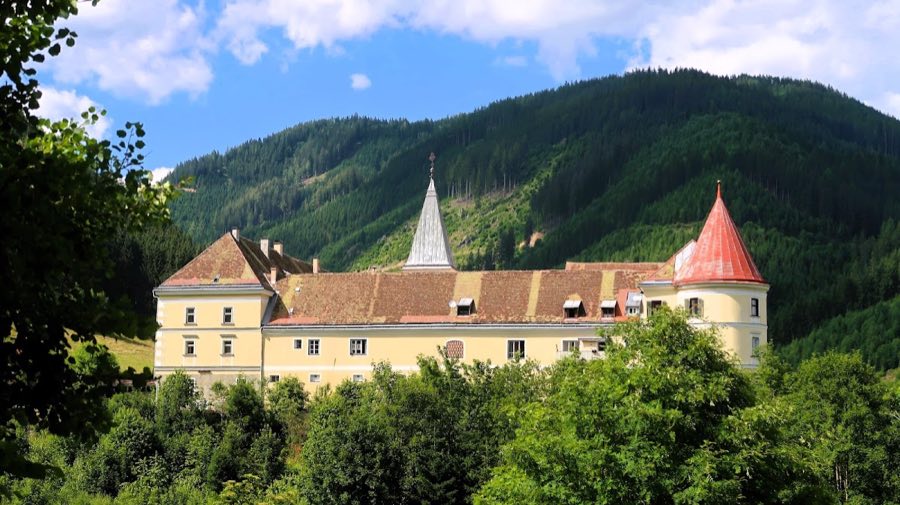
Schloss Wasserberg is a castle in Austria with origins associated with the 13th century.
See all castles in AustriaSchloss Wasserberg in Gaal, Austria, is a medieval castle-palace established by the Bishopric of Seckau in the 13th century and built up with Romanesque and Gothic elements. The estate sat at the meeting of two valleys long under ecclesiastical control and served as a fortified residence and administrative centre for the local bishops and their officials across several centuries. Its location, long-standing household rights and repeated mention in legal and military actions made it a focal point for regional authority from the High Middle Ages into the modern era.
The valley passed into the hands of the Archbishopric of Salzburg around 860. By the 10th century Salzburg ministeriales appear as garrison-type officials in the area, and a fortified structure stood on the later castle hill before the 13th century castle was raised. In 1174 the regional margrave confirmed a woodland donation linked to the estate and a margravial agent marked the forest boundaries, showing the site’s role within wider territorial networks. At the foundation of the Diocese of Seckau in 1218 the archbishop gave the Wasserberg estate to the new bishopric, anchoring its ecclesiastical ownership.
Around 1260 Bishop Bernhard of Seckau had a castle built on the donated land, and the place thereafter carried the names Wasserberg and Seccauburg. From the mid-13th century local burgraves of the Geuler (Galler) family administered the site; Otto of Wasserberg appears as a burgrave in 1261. In 1276 Dietmar of the Geul seized the fortress and expelled a Bohemian garrison after Bishop Wernhart had handed the castle to the Bohemians, and King Rudolf of Habsburg restored the stronghold to the bishop that same year. Bishops continued to use Wasserberg for administration: in the 14th century Bishop Rudmar issued many charters there, obtained fishing rights on Lake Ingering in 1338, and by the mid-14th century the bishopric held patronage over the local parish church.
Across the later Middle Ages members of the Geuler/Galler family and other appointed burgraves continued to govern the site. In 1479 Bishop Christoph placed Wasserberg in Hungarian hands; imperial forces under Andreas Lueger recaptured the castle in 1480, and imperial orders returned it to the Bishop of Seckau. Beginning in 1482 Bishop Matthias Scheit transformed the fortress into a more comfortable palace; the conversion continued into the early 16th century. Matthias Scheit died at Wasserberg in 1512, excommunicated after a protracted conflict with the cathedral chapter. The castle’s name appears as Seccoburg in documents from this later 15th-century phase.
Administrators and stewards ran the estate through the 16th and 17th centuries, with named officials recorded in 1521–1538 and again from 1540 onward. In 1555 Bishop Petrus, pressed by high levies associated with the Turkish wars, pawned Wasserberg and its lordship to Christoph Haymer for 10,000 florins with a ten-year right of redemption. The property passed in and out of leases and pledges in the 1560s and 1570s, with a sequence of tenants and petitioners seeking the tenancy. A long roster of stewards and administrators succeeds into the 17th century; in 1649, after the devastation of the Thirty Years’ War, administrator Martin von Ehrberg recorded that he had to supply daily rations for forty soldiers stationed at the site and hoped for their departure.
The lordship historically encompassed multiple economic assets, including thirty-six mills, two stamping mills, a main keep and widely scattered dependent holdings; the manorial farm contained meadows, arable fields and high pastures. After nearly six centuries of episcopal ownership the bishopric sold the castle and lordship in 1844 to Maximilian Seßler, who carried out substantial enlargements and alterations through 1848. Following Seßler’s death in 1862 the house changed hands repeatedly. Julius Maya acquired the property in 1880 and ran a timber works and later a scythe factory. In the 1890s new owners created a landscape park and converted the building for summer visitors. From 1895 an “Alpenhotel” with restaurant opened for guests; by 1897 the enterprise had evolved into a Kneipp and climatic spa with an on-site physician. Hotel operations ceased under the ownership of Karl von Thuillieres in 1906–1912.
The Cistercian Abbey Heiligenkreuz-Neukloster purchased the castle in 1913. During the First World War the building housed Russian officers and, following their withdrawal in June 1915, served as quarters for wounded Austrian officers. Between the wars the property was used as a holiday colony for recuperative children. After the 1938 annexation of Austria the Reich Forestry Administration took control of the castle and its forests in 1939. Between 1945 and 1950 the State of Styria held the estate in trusteeship; a legal action by the abbey led to the court’s 1950 decision to return the castle and forest lands to Heiligenkreuz, which has owned the property since. Today the complex serves as the administrative centre for an 11,650-hectare forestry estate and provides housing and holiday accommodation for members of the monastic community.
The castle occupies a small hill at the confluence of the Ingeringbach and Gaalbach streams and originally stood within broad moats and surrounding marshland. The surviving plan shows a four-winged building that encloses a large central courtyard, a layout formed by medieval rebuilding and later adaptations. The ground floors and basements of the south, east and north wings retain Gothic masonry and construction from the medieval phase, with heavy stone walls that mark the building’s defensive-to-domestic transformation.
A round tower at the southeast corner preserves Romanesque walling and is the sole remaining example of the original four corner towers. Near the courtyard gateway a tower rises with a lower stage built in the Gothic period and an upper stage rebuilt in the Baroque era; this upper level is finished with a pointed helmet roof. A medieval keep, historically recorded as the bergfried, stood within the manorial complex as part of the defensive core of the site.
Two bells hang in the tower, dated to the 14th and 15th centuries, and several heraldic stones are fixed into the masonry. One coat-of-arms stone bears the arms of Bishop Matthias Scheit and the year 1483, another commemorates Maximilian Seßler with the date 1846, and stones for Abbots Gregor Pöck and Franz Gaumannmüller are also visible on the tower face. The courtyard centre contains a 12-ton local stone crowned by a modern bird sculpture by Raphael Statt. During restoration work in 2013 workers opened a 15th-century well in the southeast corner of the courtyard and carried out interior renovations and a redesign of the courtyard surface.
The castle chapel sits in the north wing. Restoration in 1976 exposed the chapel’s nineteenth-century altered foundations and revealed late-Gothic fresco fragments dated 1492 on the courtyard-facing walls; those frescoes were conserved in 1977. Inside the chapel a late-Gothic star-rib vault springs from clustered shafts, and the altar installed later is neo-baroque and holds a copy of a painting by Martin Altomonte. A small external chapel dedicated to John of Nepomuk stands in front of the castle; it has a semicircular apse protected by an iron grille, a statue of the saint and exterior wall paintings of various saints set in Rococo-style frames dated to the third quarter of the eighteenth century.
No. 77755
No. 69820
No. 84879
No. 86432
Comments
Comments for Schloss Wasserberg will require a verified account before posting.
We'll send a verification link before your first comment is published.