No. 37247
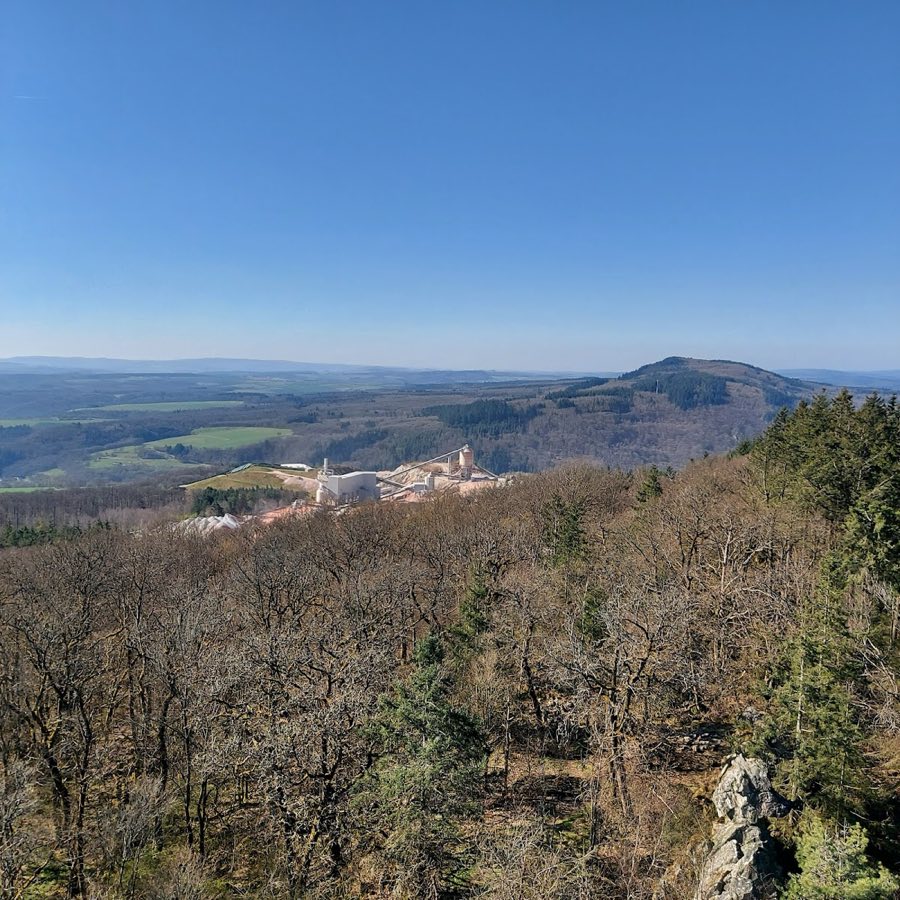
Burg Koppenstein, Gemünden/Hunsrück
Gemünden/Hunsrück, Germany
CastleRuin14th century
No. 50967
Castle · Germany
No. 50967 · 49.846 N, 7.391 E
Quick summary
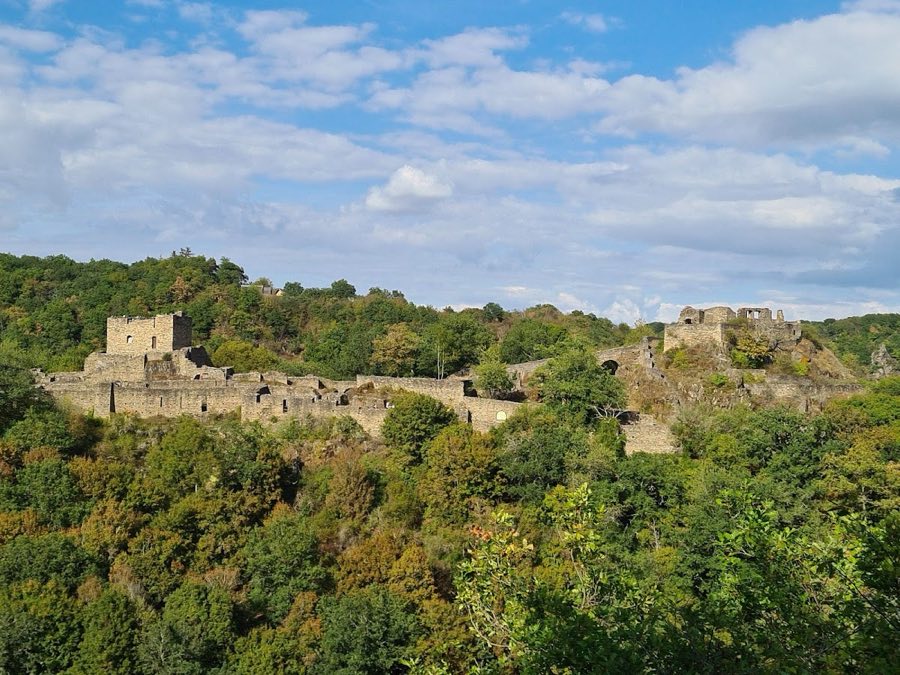
Schmidtburg is a castle in Germany with origins associated with the 10th century.
See all castles in GermanySchmidtburg stands above Schneppenbach, Germany, and was built by Frankish nobles.
The site is said to have been founded in 926 by three Frankish nobles, Franco, Hunpert and Norpolt, as a strongpoint against Hungarian raids. The castle enters the written record in 1084 when a new owner, Emicho, is named. His descendant Emicho II inherited the place and took the epithet Comes silvestris, literally “count of the forest.” Over time Schmidtburg became one of the ancestral seats of the family known as the Wildgrafen.
By the mid and late thirteenth century the Wildgrafen’s holdings had been divided, with documented property partitions in 1258 and again in 1277 that produced several family branches. Feuding between the branch associated with Schmidtburg and the branch linked to Kyrburg led to outside arbitration; the contested fief was assigned to Baldwin, Elector-Archbishop of Trier. When the Schmidtburg line died out, Baldwin seized the castle as an escheated fief. The Wildgrafen continued armed attempts to regain the site, but these efforts failed through 1342. After that date the castle served the Elector-Archbishop of Trier as a regional fortress and as the seat of an administrative district.
In the fourteenth century the lower part of the castle accommodated many knightly households who served the lord as retainers. During the fifteenth and sixteenth centuries most of those dwellings were abandoned. One family, the Schenk von Schmidtburg, remained and transformed the north‑west corner of the lower enclosure into a largely independent sub-complex. The lower castle continued to decline through the sixteenth century. In 1688 French forces destroyed the remaining fortifications during the Palatine War of Succession. After that attack only a single residential house and one economic building remained standing, and those two structures were used by the district’s administrators until the end of the eighteenth century.
Tradition records two further associations: the ruin may stand on fourth‑century Roman foundations, and the outlaw Johannes Bückler, known as Schinderhannes, is suspected to have sheltered at the site while fleeing gendarmes.
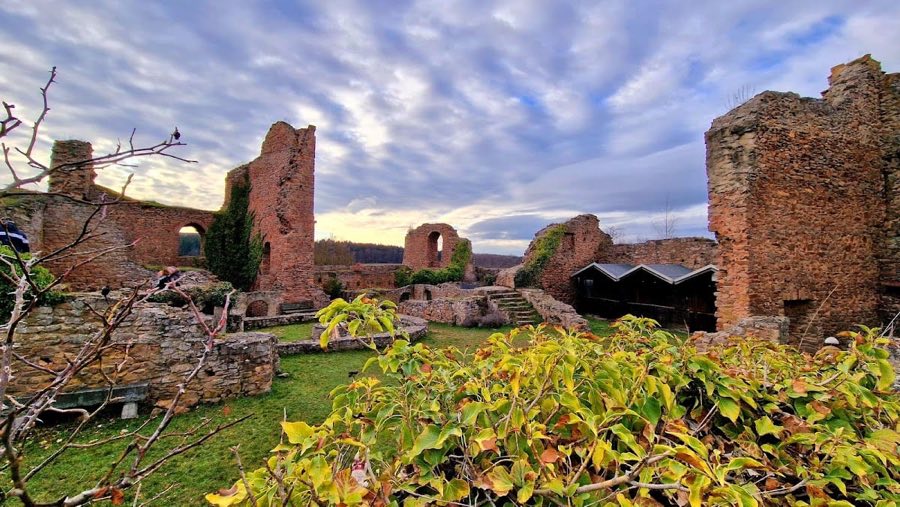
The ruin occupies a bend of the Hahnenbach at about 321 metres above sea level and is divided into an upper castle and a lower castle, the whole forming one of the largest castle sites in the area. The upper enclosure is cut off from the rest of the complex by a defensive ditch, reflecting its role as the inner stronghold. The opposite slope of the valley is occupied by the Altburg, an earlier Celtic fortification, and the nearby Herrenberg mine lies within walking distance.
The upper castle contained several residential buildings and a central keep. Archaeological excavations uncovered remains of this towered keep, confirming its former presence within the upper enclosure. Hewn steps leading toward an upper tower survive in the masonry, and an individual tower has been identified in later descriptions as associated with the site’s modern management. The ditch that separates the upper section remains visible in the layout of the ruin.
The lower castle once covered a broad area and held many houses for castle retainers. In the north‑west corner a branch of the resident family converted a group of buildings into a largely autonomous sub‑complex; traces of that development can still be read in the surviving fabric. The lower enclosure fell into long decline in the sixteenth century, and the remaining defensive works were demolished by French forces in 1688. After that destruction only one residential building and a single economic structure survived and were later re-used by the local administrators; both survive today as fragments of the estate that was occupied into the late eighteenth century.
No. 37247
No. 82964
No. 61332
No. 80194
Comments
Comments for Schmidtburg will require a verified account before posting.
We'll send a verification link before your first comment is published.