No. 75617
Zlenice-Hláska
Czechia
CastleRuinFor events13th century
No. 91011
No. 91011 · 49.875 N, 14.751 E
For events
Stará Dubá Castle is marked as a château or castle venue lead. Capacity, indoor/outdoor spaces, catering rules, and accommodation options are published only after public verification.
Event types: Private events, Cultural gatherings, Filming and photography
Quick summary
Stará Dubá Castle is a castle in Czechia with origins associated with the 13th century.
See all castles in CzechiaStará Dubá Castle is situated within the municipality of Přestavlky u Čerčany in the present-day Czech Republic. This medieval stronghold was constructed and occupied by members of the Bohemian nobility during the late 13th century.
The earliest surviving record dates back to 1282, when the castle was held by Ondřej z Dubé, a scion of the Benešovic family. The estate remained in possession of this lineage through to the beginning of the 15th century. In the early 1400s, ownership shifted when Jan Zúl of Ostředek seized control. Known for his raids on nearby settlements, Jan Zúl’s actions provoked royal intervention, leading to the castle’s capture by the king’s forces in 1404.
Following these events, Vaněk z Dubé took residence in the fortress. After his death, governance of the estate passed to Markéta of Rychemburk. Unlike her predecessors, Markéta primarily lived in the neighboring town rather than at Stará Dubá, suggesting the castle’s significance and upkeep were in decline by that time.
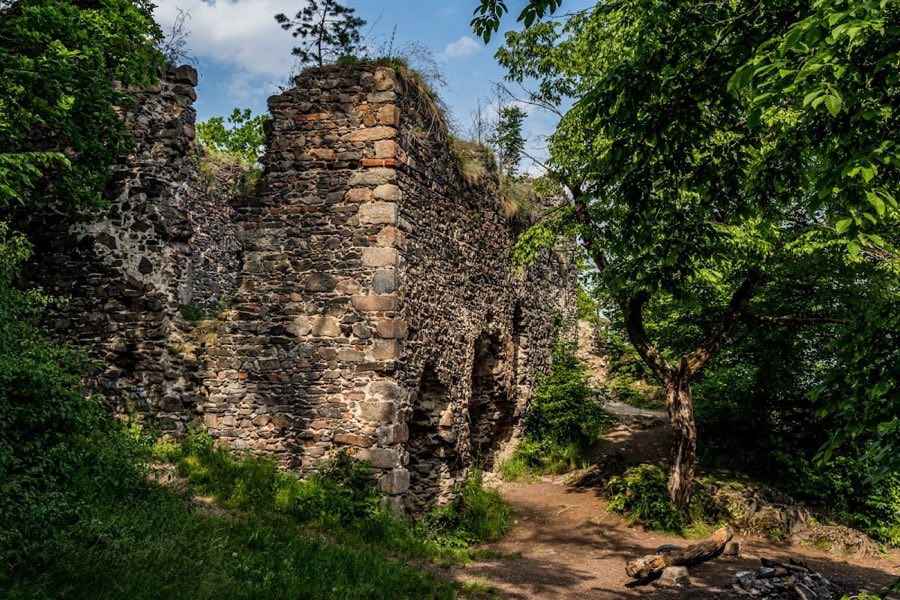
In the 1440s, the castle entered the possession of Bohuš Kostka of Postupice. This period culminated in a destructive siege in 1466, with contemporary sources indicating the attackers were likely allied with Zdeněk of Konopiště or members of the Zelená Hora League, rather than the forces of King George of Poděbrady. By this stage, Stará Dubá had suffered substantial damage and ceased to function as an active fortress.
Throughout its history, the castle was recognized for its impressive scale and quality of construction. Comparable to some smaller royal castles, its buildings enclosed a fortified perimeter, underscoring the high status of its owners within the Bohemian nobility.
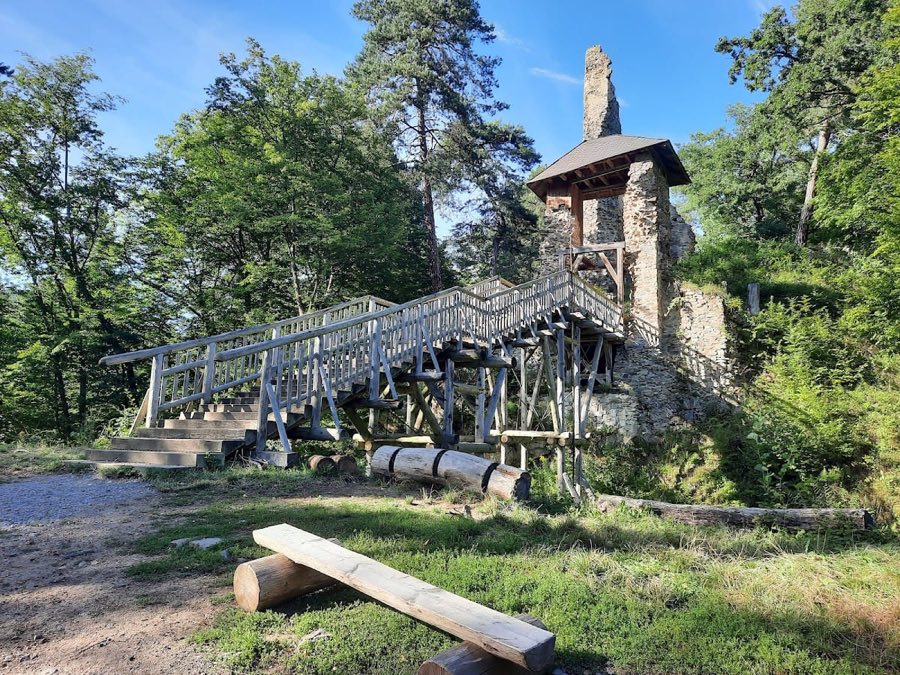
The ruins of Stará Dubá Castle occupy a raised promontory overlooking the Sázava River, with its layout reflecting the defensive needs and residential functions of a medieval noble stronghold. Unlike typical castles that feature an outer ward or bailey, this complex integrated the adjacent fortified town of Odranec directly with the main castle structures. The town’s fortifications partially connected to the castle walls, effectively expanding the defensive perimeter without the necessity of a separate outer enclosure.
A moat encircles the castle on its promontory side, creating a defensive barrier separating it from the surrounding land. Immediately behind this moat lies a small courtyard fortified with additional defensive works that extend into a barbican—a fortified outwork—protecting the rear access to the castle.
One of the most prominent features of the site is a large tower, though its collapsed masonry now partially conceals much of the original ground level, causing the current surface to lie higher than it did during medieval times. Behind the ruins of this tower sits the castle’s residential section, which comprised four wings forming a compact rectangular courtyard, providing a sheltered living space within the fortress walls.
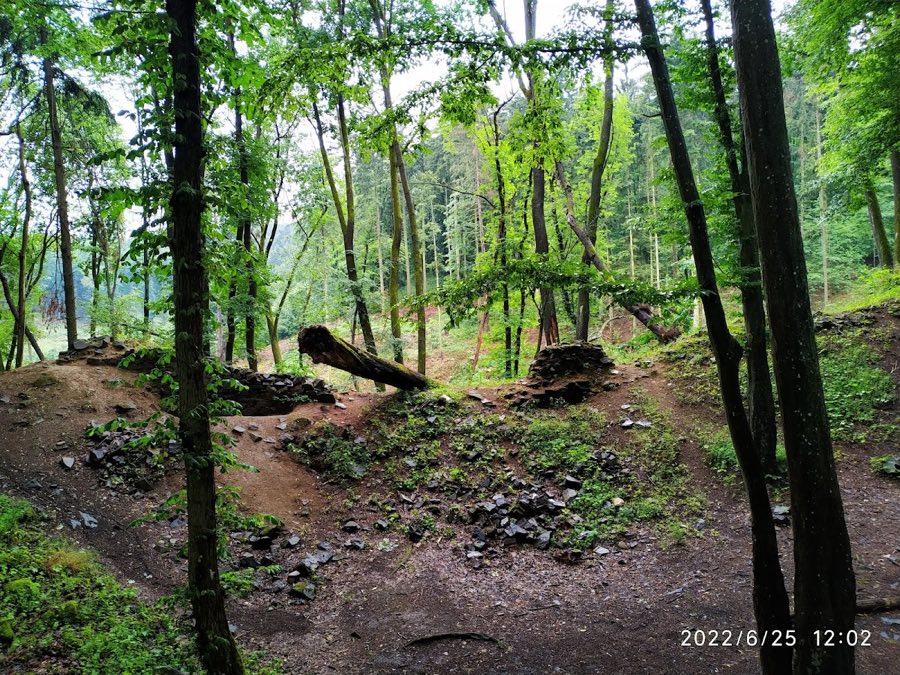
Further within the castle grounds, archaeologists have identified the remains of a substantial building buried beneath rubble accumulated to roof height. This structure likely served as a significant hall or gathering place during the castle’s occupation.
In the area southwest of the castle, vestiges of siege fortifications survive. These include a command post and a position where artillery was emplaced, positions that saw action during the 15th-century attack responsible for damaging adjacent walls. These military features offer direct archaeological evidence of the castle’s final conflict and destruction.
No. 75617
No. 59551
No. 54102
No. 95740
Comments
Comments for Stará Dubá Castle will require a verified account before posting.
We'll send a verification link before your first comment is published.