No. 48006
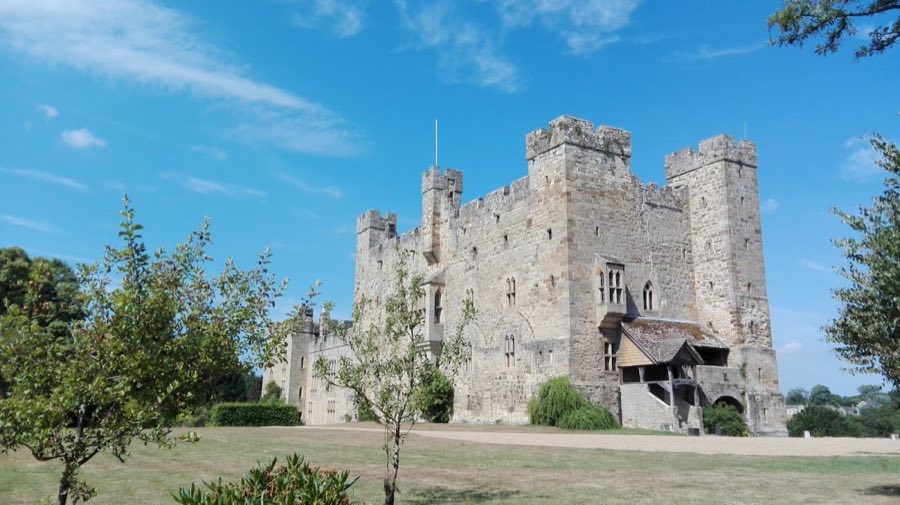
Haughton Castle
United Kingdom
Manor houseRuin13th century

No. 63781
Castle · United Kingdom
No. 63781 · 54.941 N, 2.313 W
Quick summary
Staward Peel, Haydon Bridge is a castle in Haydon Bridge, United Kingdom with origins associated with the 13th century.
See all castles in United KingdomStaward Peel stands at Haydon Bridge, United Kingdom; its medieval fortifications were erected by English lords of the area, while an earlier shrine on the same spot has been linked to Roman activity.
A small shrine is recorded at the site around 1271, and that shrine has been described as possibly originating in the Roman period. In 1316 Anthony de Lucy of Langley established a timber pele here and garrisoned it with fifteen men-at-arms and fifteen hobelars, marking the location’s role in local defence during the early fourteenth century.
In 1326 King Edward II annexed the western portion of the Lucy estate, a tract that included Staward Pele. Following that annexation, tenders were called to remove the timber structure and replace it with a larger, more defensible complex. Thomas II de Featherstonehaugh carried out construction of a full-scale stone castle on the pele’s footprint.
Ownership changed in the later fourteenth century when Philippa of Hainault purchased the property in 1373 from John Darci le Cocin and Nicholas de Swinburne; the castle then passed to Edmund, Duke of York. From 1385 the Dukes of York let the property to Hexham Priory, a tenancy that continued until the Dissolution of the Monasteries. After that period the crown took possession and in 1603 transferred the site to the Earl of Dunbar.
In 1613 King James I granted Staward to Lord Howard of Walden, who subsequently conveyed it to John Sanderson of Healey. The estate changed hands again in 1664 when George Bacon of Broadwood Hall purchased the premises for £450. A lintel at nearby Staward Manor House bears George Bacon’s initials alongside those of his wife Cecilia Robson, dated 1668, linking the family to the locality. By 1759 a plan recorded the ruins as they then stood. The structure was demolished sometime before 1856. In 1947–48 a Roman altar, which had been built into the upper part of the ruins, fell and was later moved to Low Staward Manor.
Over time the site has been referred to as Staward Peel or Staward Pele, reflecting alternate spellings used in historical records.
The layout recorded for the site combines the footprints of a medieval timber pele and later stone castle, reflecting a transition from wooden fortification to masonry defences. A plan from 1759 shows the complex with an entrance gateway, an enclosing wall and a central, keep-like mass, indicating a compact defended enclosure aligned with the earlier pele’s position.
Archaeological fabric includes the timber pele erected in 1316 by Anthony de Lucy, which was constructed in wood and intended as a small fortified dwelling for a garrison. This timber phase was superseded when Thomas II de Featherstonehaugh replaced the pele with a stone castle, changing the site’s construction from wood to masonry. The later stone works are represented in surviving fragments that correspond with the gatehouse and surrounding enclosure shown on the eighteenth-century plan.
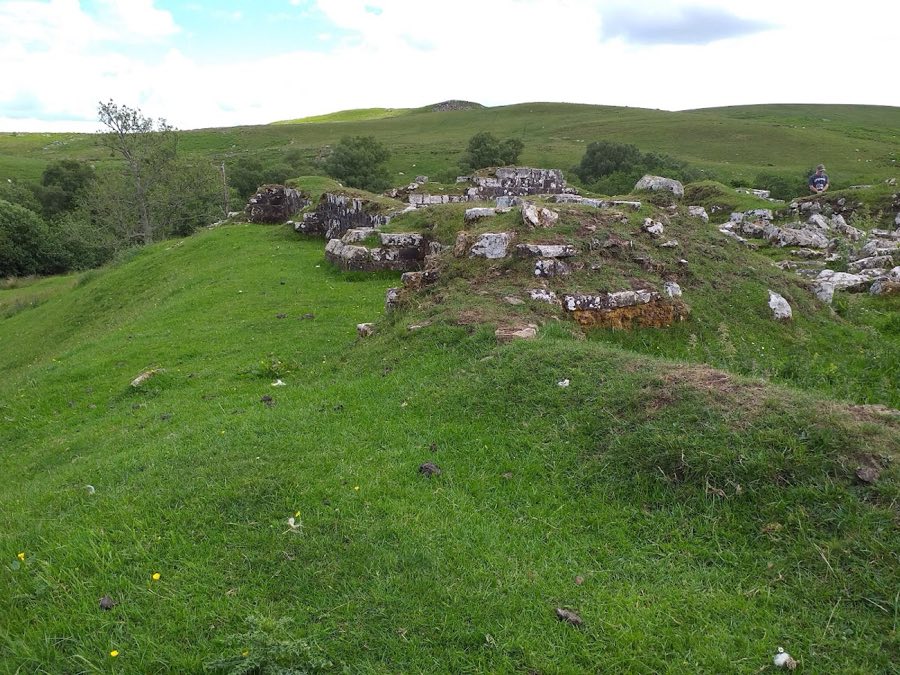
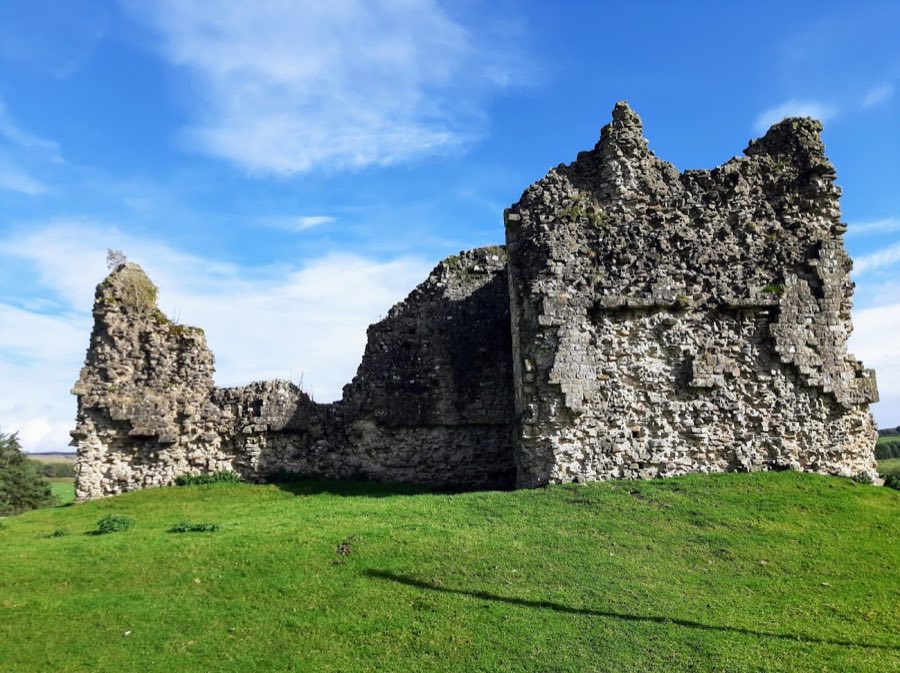
Today the most visible masonry consists of portions of three outer walls interpreted as belonging to the gatehouse, standing as fragmentary stone ruins. The ditch and associated earthworks that once defined the castle’s perimeter survive as earthwork features, their profiles preserving the defensive layout. Documentary evidence indicates that rubble from the standing ruins was removed during demolition, and the remaining stonework has thus been reduced to these isolated wall sections.
A Roman altar had been set into the upper part of the structure at some stage and in 1947–48 it fell from that position; the altar was subsequently relocated to Low Staward Manor and remains there. The nearby Staward Manor House contains a carved lintel dated 1668 with the initials of George Bacon and Cecilia Robson, showing a later, domestic association with the site and local building fabric.
No. 48006
No. 37207
No. 29712
No. 65086
Comments
Comments for Staward Peel, Haydon Bridge will require a verified account before posting.
We'll send a verification link before your first comment is published.