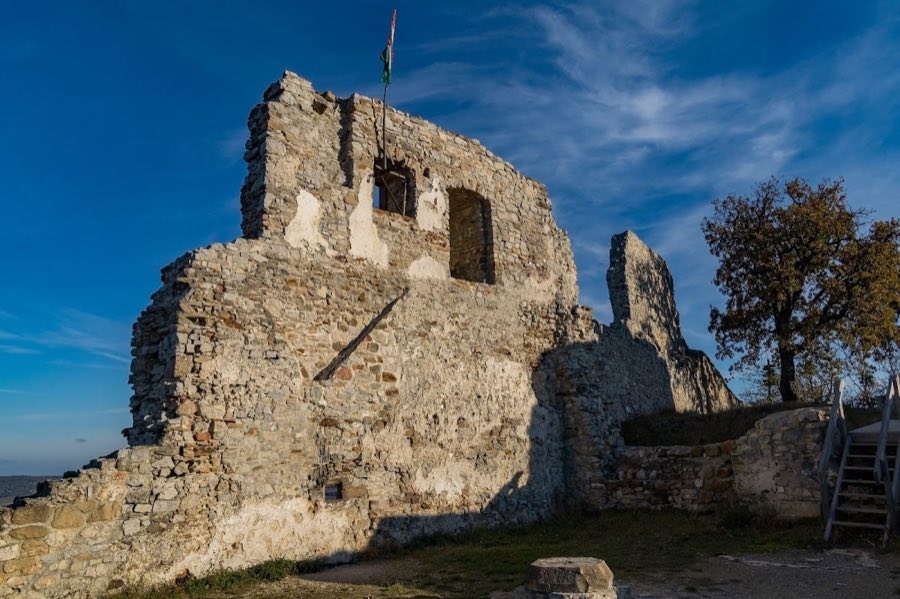
No. 27283
Rezi Castle
Hungary
CastleRuin13th century
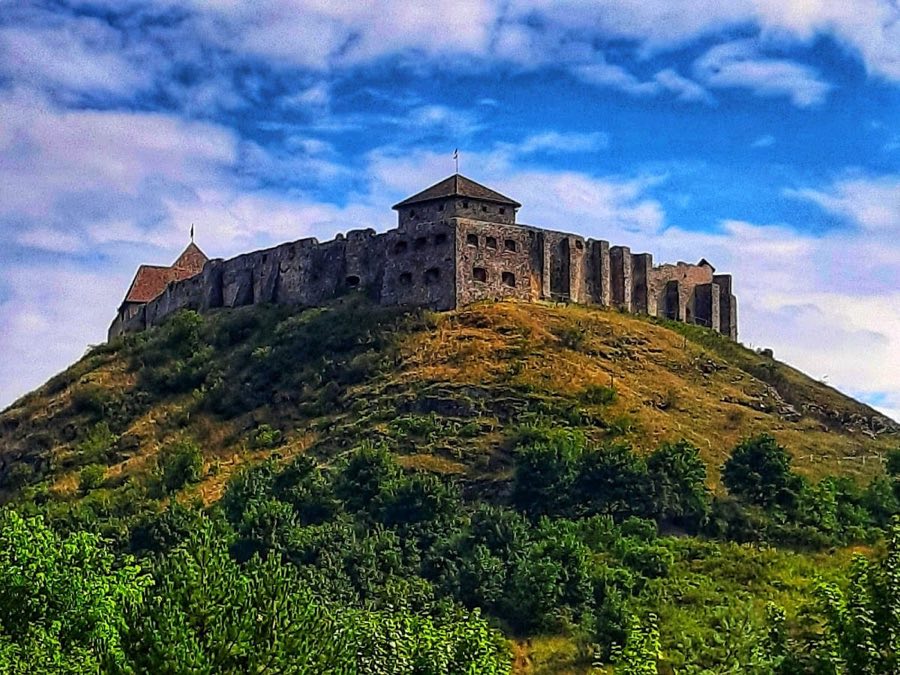
No. 97921
Castle · Hungary
No. 97921 · 46.982 N, 17.282 E
Quick summary
Sümeg Castle is a castle in Hungary with origins associated with the 13th century.
See all castles in HungarySümeg Castle is located in the town of Sümeg in modern-day Hungary and was built by the medieval Hungarian civilization. Its origins date back to the mid to late 13th century, when King Béla IV is believed to have initiated its construction. Following its completion, King Stephen V transferred ownership of the fortress to the Diocese of Veszprém, establishing its role as an ecclesiastical stronghold.
By the early 14th century, specifically in 1301, written records show that the castle had come under the control of the powerful Kőszegi family, a noble lineage who held it for about 15 years. King Charles Robert eventually reclaimed Sümeg Castle for the bishops, restoring its connection to the church. During the 15th century, significant expansions and reinforcements were made to the complex. Bishop Albert Vetési was responsible for adding outer stone walls and residential buildings, strengthening both its defensive and residential capacity.
The mid-16th century brought military challenges as the Ottoman Empire captured nearby Veszprém in 1552. Consequently, Sümeg became the seat of the bishops and underwent major fortification work reflecting Renaissance military architecture. Notably, the Kövesi Bastion, a substantial artillery tower, was constructed on the northeast side under Bishop András Kövesi’s direction to provide enhanced defense against Ottoman attacks.
Throughout the late 16th and early 17th centuries, the castle played an active military role during the Turkish wars. It was also involved in the Bocskai uprising of 1605 when rebel forces seized the fortress and killed Bishop Miklós Újlaki. Despite numerous Ottoman siege attempts, Sümeg withstood these assaults. However, in 1664, a retreating Turkish army caused severe damage by setting fire to the castle and the adjacent town.
Restoration efforts followed, led by Bishop István Sennyey, who reinforced the walls with thicker masonry and strengthened them with buttresses. During the Rákóczi War of Independence from 1703 to 1711, the castle once again served as a rebel stronghold. After the conflict, imperial troops abandoned and partially demolished the fortress in 1726, which resulted in its loss of military importance.
In the centuries that followed, Sümeg Castle fell into ruin. Local inhabitants often took stones from the site for building purposes. Archaeological investigations began in the 1960s, confirming the castle’s original 13th-century construction and subsequent development phases. Major restoration initiatives only commenced after 1989, culminating in extensive repairs and rebuilding to conserve the historic structure. Since 2016, funded by the Hungarian National Castle Program, further reconstruction has focused on barracks, the castellan’s house, medieval kitchen facilities, and defensive galleries, aiming to preserve and present the castle’s layered history.
Sümeg Castle occupies a solitary hill called Castle Hill, positioned about 20 kilometers north of Lake Balaton. The fortress is laid out in an irregular triangular shape, roughly 125 meters in length and 80 meters across, oriented from north to south. The core of the castle includes a keep, or old tower, with its lowest level dating to the 1260s, representing the earliest surviving stone construction on the site. The upper walls forming the outer shell of the castle were completed around a century later, enclosing the main defensive area.
Surrounding the plateau in front of the main structure, a strong, high outer defensive wall was added during the 15th century, creating an expanded enclosed courtyard within the fortress. The principal gate is located on the western side and features a gatehouse equipped with a drawbridge. The entrance follows a bent passage design, a defensive architectural technique intended to slow and expose attackers as they entered.
One of the most prominent features of the southern part of the castle is a massive square bergfried, the main tower traditionally used for defense and refuge rather than residence. Today, this tower houses a permanent exhibition showcasing medieval weapons and armor. Some rooms inside have been decorated to reflect medieval interior styles, providing insight into the castle’s historical atmosphere.
On the northeast side stands the multi-level Kövesi Bastion, named after Bishop András Kövesi who commissioned its mid-16th-century construction. This artillery bastion is characterized by thick walls designed to withstand cannon fire, illustrating the adaptations made in response to advancements in siege technology. During restoration work after the fire damage of 1664, the defensive walls were thickened further and strengthened with buttresses to improve stability.
Inside the castle, a walkway along the walls leads visitors from the outer courtyard to an inner gate and the central courtyard space. Historically, residential buildings lined the inside of the walls, forming a protected area where inhabitants lived and carried out daily affairs. These buildings were attached to the defensive walls, maximizing the use of space within the fortress.
Archaeological excavations carried out in the 1960s were instrumental in clarifying the castle’s various construction phases and allowed conservators to plan effective restoration. Since 1989, conservation efforts have included clearing the inner areas, repairing damaged wall sections, and installing stairways to facilitate access to towers and walkways. More recent projects funded by the National Castle Program have focused on reconstructing the eastern wing buildings, such as the barracks, the castellan’s house, and a medieval kitchen, as well as restoring the Csabi Tower and defensive galleries on the northeast side. These connected spaces form exhibition areas intertwining historical features with thoughtful preservation.
No. 27283
No. 97228
No. 34417
No. 10690
Comments
Comments for Sümeg Castle will require a verified account before posting.
We'll send a verification link before your first comment is published.