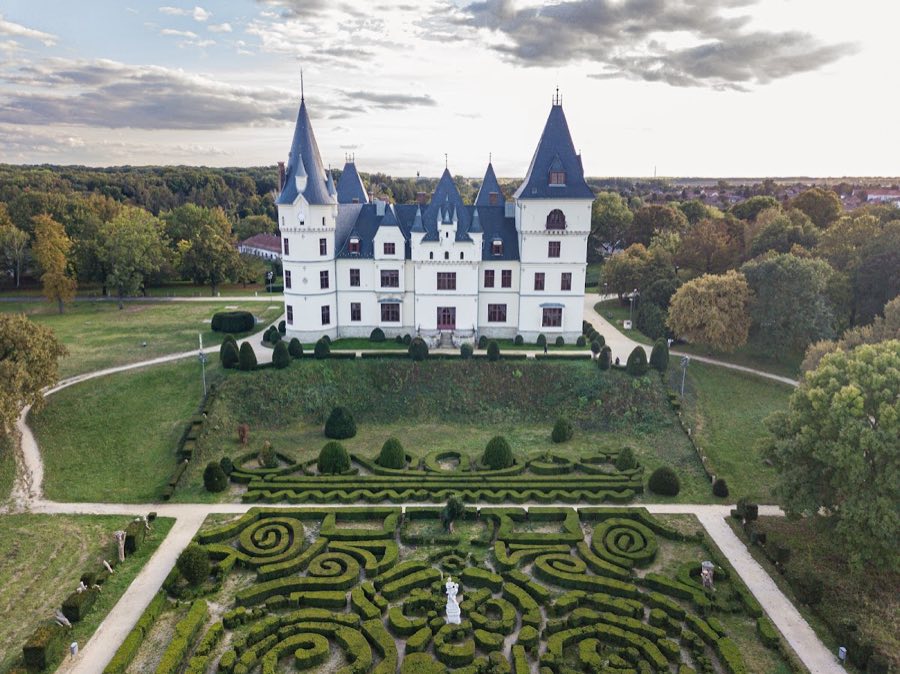
No. 59335
Andrássy Castle, Tiszadob
Tiszadob, Hungary
CastleRestored19th century
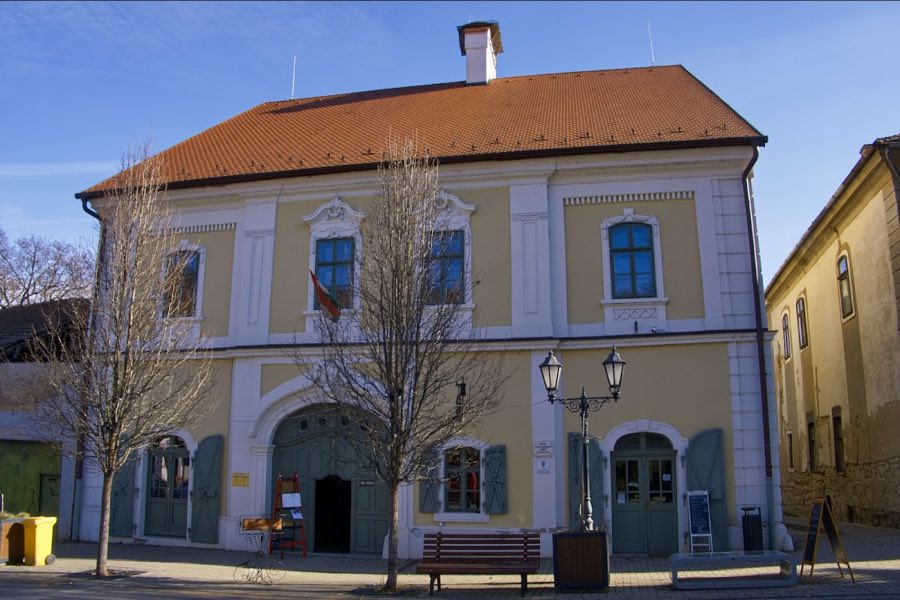
No. 18955
Castle · Hungary
No. 18955 · 48.128 N, 21.412 E
Quick summary
Tokaj Castle is a castle in Hungary with origins associated with the 14th century.
See all castles in HungaryTokaj Castle in Tokaj, Hungary, was established in the medieval period by local Hungarian nobles. An earlier strongpoint called Kőrév stood on the right bank of the Bodrog and was destroyed during the Mongol invasion. In 1283 King Ladislaus IV granted the nobles of Nyri permission to build a fortress, which developed into a stone stronghold that was later besieged by the king in an effort to wrest it from Amadeus Aba; that early fortification was probably destroyed during or soon after that siege.
In the second half of the 14th century a new fortress was erected on the left bank of the Bodrog. This rebuilt castle appears in documents from 1410 when King Sigismund gave it to John Garai, son of Nicholas Garai. Ownership passed in the following decades to figures including the Serbian despot Stefan Lazarević and Đurađ Branković. By 1451 control had shifted to John Hunyadi and then to King Matthias Corvinus, who carried out improvements and added four corner towers.
After the defeat at Mohács the site became linked to the Zapolya family; Matthias donated the castle to Imre Zapolya in the mid‑15th century, and John Zapolya was proclaimed king at this place. During the early 16th century the fortress changed hands repeatedly in the struggle between Zapolya and Ferdinand, with the years 1527–1538 seeing alternating possession by Ferdinand, Stephen Báthory and Gáspár Serédi. The Turkish threat prompted major refortification from the 1530s into the 1550s, including the addition of an artillery bastion and outer defenses, and the garrison was substantially reinforced in the 1550s–1560s.
Between 4 and 12 February 1565 the castle was besieged and taken by Lazarus von Schwendi; Captain Jakob Raminger then carried out repairs. From the late 16th century into the 17th century Habsburg authorities rebuilt and updated the fortifications with the participation of Italian military engineers such as Francesco del Pozzo, Ottavio and Giulio Baldigara, and Cristodoro della Stella, though work was repeatedly hindered by shortages of materials and flood damage, including loss of a pontoon bridge over the Tisza in the flood of 1591.
In 1605 forces of Stephen Bocskai occupied Tokaj after a year‑long siege. György Thurzó bought the castle in 1607 for 71,590 florins and sought to strengthen it; Act 51 of 1609 compelled unpaid labor from residents of eight counties for these efforts. During the 1610s and 1620s the place was involved in conflicts with Gabriel Bethlen, who attacked it in 1619 because the Hungarian Holy Crown was kept there. Bethlen incorporated the castle into his possessions in 1622, added a northwest bastion, and was married there in 1628; his widow, Katharina of Brandenburg, lived in the castle briefly before Ferdinand II granted the property to János Homonnai, by which time many buildings were described as almost uninhabitable.
George Rákóczi I’s campaign in 1644 led the garrison to surrender, after which Rákóczi renovated interior buildings, constructed a new outer gate with a drawbridge and built a bridge over the Bodrog, and repaired damaged defenses using palisades. In 1660 General de Souches’ army camped beneath the walls for nearly a year; contemporary military records and pictorial plans record bridges over both rivers, bridgeheads, and wedge‑shaped city walls. Subsequent Habsburg works directed by Jakob Holst and then by engineers named Battmayer, Ssicha, and Strasoldo repaired interior spaces, the gate, the bridge, and two stone bastions.
The late 17th century brought repeated sieges: kuruc forces attacked in 1670 and 1678, Imre Thököly occupied the site in 1682 and General Schultz recovered it in 1685. A 1694 census lists 63 named Hungarian and German soldiers in the garrison. During the Hegyalja uprising of 1697 insurgents under Ferenc Tokaji occupied the castle on 1 July, and the town fell to Vaudemont on 17 July, who bombarded the castle until the rebels retreated toward the Tisza. In the frozen conditions of autumn 1703 Francis Rákóczi II’s forces besieged Tokaj and the defenders surrendered. Rákóczi ordered demolition in autumn 1704, demolition was deemed complete by spring 1705, the walls were razed, and a trench was cut to divert the Bodrog through the former foundations; the castle’s cannon were removed for use at Eger. The site was never rebuilt. Repeated river floods deepened the ruin, and by the late 19th century fishermen had erected huts on rubble mounds above the water.
Archaeological investigation resumed in the 21st century under Miklós Makoldi. Excavations beginning in 2007 identified structural elements including an eastern cannon tower, a mid‑16th‑century bastion, and foundations of the residential tower and inner round defensive work. Work in 2008 within the inner buildings recovered silver coins, roof tiles, glass and pottery, tools and remains associated with Renaissance‑era structures. In 2009 excavators examined a stone bridge that linked the castle tower and the cannon tower, and they showed that a seven‑metre ditch beside the castle had been filled in during the 17th century to enlarge the defended area.
The castle stood just north of where the Bodrog meets the Tisza, sited so water protected two sides and an artificial canal ran along the north, a setting that made the place reachable by boat, especially when floods inundated the low ground. Archaeology confirms a multi‑phased medieval and early modern complex whose core began as a 14th‑century inner stronghold with a two‑storey residential tower and four round towers forming an inner enclosure. Builders used stone for principal walls and towers, and later defensive additions combined stone work with earth and timber, reflecting changing military needs over centuries.
Excavations revealed an artillery-focused program from the 16th century, including an artillery or cannon tower and a bastion dated to the 1550s–1560s that commanded the forecourt area. The outer line of defense was completed in that period as a fortified wall with a mix of round and square bastions, intended to resist gunpowder weapons. A northwest bastion added under Gabriel Bethlen belongs to that era of adaptation. The structure of the cannon tower and the bastion show masonry courses and foundational work consistent with mid‑16th‑century artillery architecture, and the excavators exposed the stone fabric of these elements in situ.
Bridges and gateworks were integral to the site. Documentary and pictorial evidence attests to bridges spanning both rivers and to bridgeheads protecting those approaches, and excavations in 2009 explored a stone bridge that linked the main castle tower with the cannon tower. A pontoon bridge is recorded as lost in the flood of 1591, while major 17th‑century repairs included a new outer gate equipped with a drawbridge and a bridge over the Bodrog. Some 17th‑century defenses were built of packed earth and timber palisades, while later campaigns replaced or reinforced these with stone bastions and stone bridgeworks, a sequence visible in the varying construction techniques found in the trenches.
Archaeological trenching inside the castle uncovered domestic and craft deposits, including silver coins, ceramic tiles, glass fragments, pottery, and tools connected with Renaissance period occupation and rebuilding. Excavators also exposed the foundations of palace wings added in the 15th century and the inner round defensive tower, providing a stratified record of construction and reuse. A seven‑metre ditch beside the castle was shown to have been filled in during the 17th century as part of an expansion of the defended footprint, evidence for deliberate alteration of the site’s layout to meet evolving needs.
By the 21st century only limited standing masonry remains survive above ground. On the surface a portion of the southwest bastion survives to a height of about two metres and extends roughly five metres in length, and a crescent‑shaped lake today marks the line of the former inner ditch or moat. Other features lie as foundations and buried masonry revealed by the excavations, preserved in situ and recorded as part of the castle’s long sequence of construction, conflict, repair and eventual demolition.
No. 59335
No. 84691
No. 58502
No. 21078
Comments
Comments for Tokaj Castle will require a verified account before posting.
We'll send a verification link before your first comment is published.