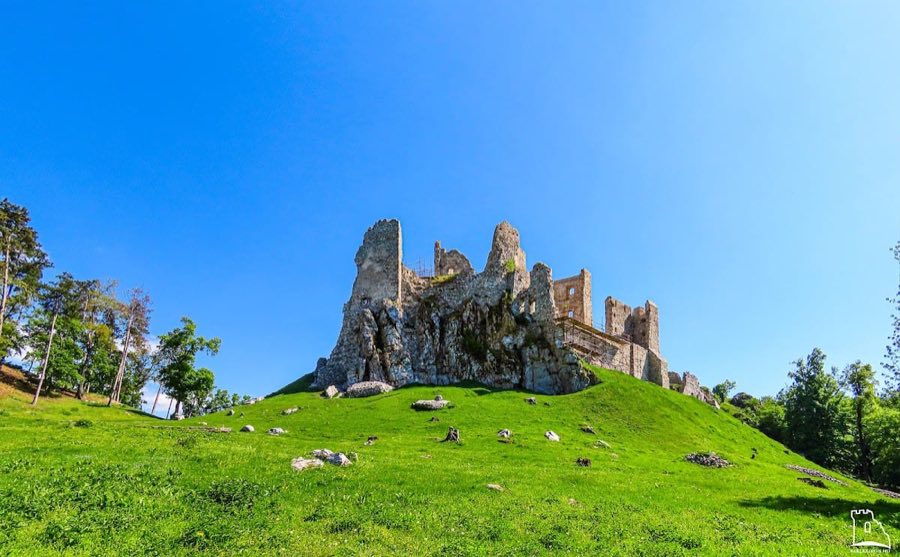
No. 48992
Hrušov Castle
Slovakia
CastleRuin14th century
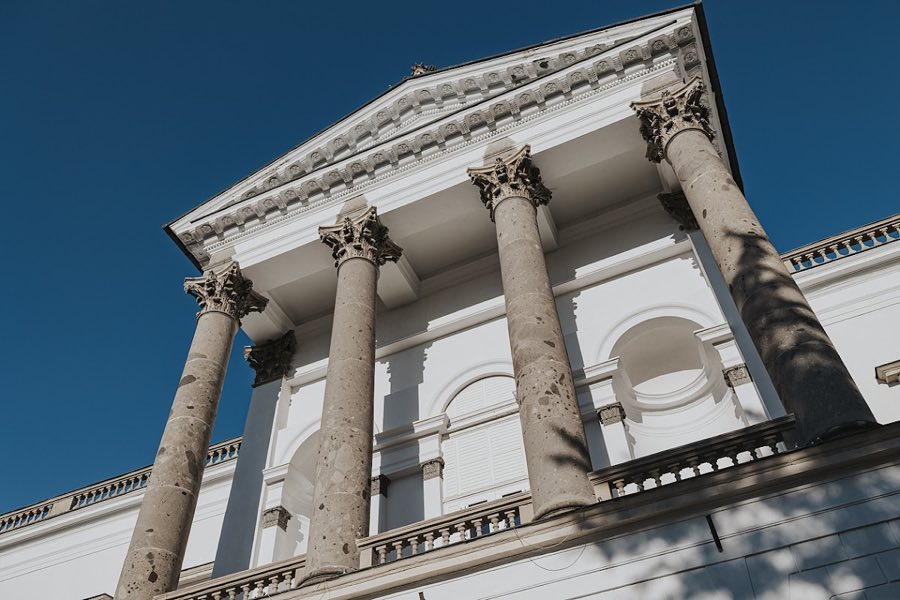
No. 73606
Castle · Slovakia
No. 73606 · 48.421 N, 18.413 E
Quick summary
Topoľčianky Castle is a castle in Slovakia with origins associated with the 13th century.
See all castles in SlovakiaTopoľčianky Castle in Topoľčianky, Slovakia, is a historic castellated residence whose oldest fabric dates to the late Gothic period of the 15th and 16th centuries. Built and altered across several centuries, the site combines late Gothic and later Renaissance and Neoclassical phases, and it served as the landed seat of successive noble families, a Habsburg residence, and a state property after the end of the Austro-Hungarian monarchy. Its changing ownership and adaptations reflect larger political shifts in the region, from medieval county administration through Habsburg rule to incorporation in the Czechoslovak state.
From the late 13th century until 1614 the local Tapolcsány family held the estate as majorat lords. When that line ended the property was sold at public auction in January 1616 and came into the hands of Baron László Pethe-Hetessi. A further transfer happened in 1627 when Anna Pethe married Count Paul Rákóczi, bringing the estate under the Rákóczi family. The Rákóczi line ended as owners with Francis II Rákóczi, who left the region after the failure of the early eighteenth century Hungarian rising against Habsburg rule.
In August 1708 troops commanded by General Sigbert Heister occupied the village and the estate passed into Viennese control, entering the possession of Emperor Joseph I. The emperor sold the property in the autumn of 1711 to a member of the Zichy family, who in turn sold it in 1742 to Count Adam Keglevich. Members of the Keglevich family retained the estate through the nineteenth century; the last owner of that line recorded here was István Keglevich, who died in 1905.
Poor management led to a sale by auction on 20 September 1890, when Archduke Joseph Karl Ludwig of Austria acquired the property and thus brought it into the Habsburg family. The archduke’s son, Archduke Joseph August, carried out significant changes to the grounds and estate facilities. He cleared nearby farm buildings, enlarged the surrounding park to roughly forty hectares, established and expanded horse breeding and a stud, and added a new riding hall, a carriage depot, and a hunting lodge rebuilt in 1910 in the Secession style. He also furnished the residence with valuable interiors and built a library whose holdings grew to about fourteen thousand volumes.
The collapse of the Austro-Hungarian Empire after World War I and the Treaty of Trianon placed the estate within the new state of Czechoslovakia, and the property was nationalized. The Habsburg family were expropriated and Archduke Joseph August’s efforts to recover the estate did not succeed. The castle and much of its furniture were assigned as a summer residence for the president of the republic; Tomáš Garrigue Masaryk used it regularly between 1923 and 1935, while his successors used it only occasionally. On 15 October 1921 a state stud was established on property formerly belonging to the archduke; the new stud took over the historical riding hall, the older stables, and surrounding meadows and pasture. On 28 August 1949 President Klement Gottwald transferred the castle and many of its furnishings to the trade unions for use as a workers’ recreation home, and significant parts of the original inventory were lost at that time. Following the political changes after 1989 the castle received legal protection as a cultural monument, underwent restoration, and today serves as a museum; the most valuable library items are retained for scholarly research.
The castle stands as a compound formed originally by four ranges that surround an inner courtyard. The earliest structural elements come from the late Gothic building phase of the fifteenth and sixteenth centuries and were then reshaped in part during the seventeenth century in a Renaissance mode. During the period of fighting against Ottoman incursions the complex was strengthened for defense. Later Baroque layers were added and, in the 1820s, one of the four wings was removed and replaced by a large Neoclassical block as part of an early nineteenth century rebuilding campaign, a project completed in the mid-1820s.
The courtyard retains its two-storey arcades, that is covered passageways with rows of arches on two levels, which organize movement and faces inward toward the court. The later Neoclassical front includes a prominent dome over the central mass and a façade with a three-bay portico, a balcony set above the entrance, four supporting columns, and a triangular pediment. One of the original wings survives but shows the contrast between older masonry and the nineteenth century classical rebuilding.
Around the main house the landscaped park was extended to roughly forty hectares in the early twentieth century and was reworked with ponds and decorative elements. Three large animal sculptures, titled Bear, Boar and Stag, stand within the grounds and were created by the Hungarian sculptor Alajos Strobl. Set close to the main residence are a hunting lodge rebuilt in the Secession style in 1910, a riding hall constructed for equestrian work, and a carriage depot that once housed horse-drawn vehicles and sledges. The riding hall, older stable buildings and pasturelands later passed under the administration of the state stud established in 1921.
Interior fittings once included elaborate furniture, some pieces dating to the seventeenth century, and a substantial library expanded under Habsburg ownership to about fourteen thousand volumes. Large portions of the original movable collection were dispersed or lost during the postwar transfer to trade union use in 1949. Since the end of Communist rule most of the castle has been conserved and restored under monument protection and the building now functions as a museum facility, while the most valuable library holdings remain available only to qualified researchers.
No. 48992

No. 62969
No. 59352
No. 82482
Comments
Comments for Topoľčianky Castle will require a verified account before posting.
We'll send a verification link before your first comment is published.