No. 52216
Beaufort Castle
Lebanon
CastleRestored12th century
No. 27984
Castle · Lebanon
No. 27984 · 33.196 N, 35.412 E
Quick summary
Toron Castle is a castle in Lebanon with origins associated with the 12th century.
See all castles in LebanonToron Castle is located near the modern village of Tibnine in southern Lebanon. It was originally constructed by the Crusaders in the early 12th century during their campaigns in the Levant.
The fortress was built between 1105 and 1106 by Hugh of Falkenberg, also known as Hugo de Saint-Omer, to aid the Crusaders’ siege and capture of the coastal city of Tyre. Toron then became the center of a lordship under the Principality of Galilee, a vassal state within the Kingdom of Jerusalem. After Hugh’s death in 1106, the region suffered a violent assault by Izz al-Mulk, resulting in the death of the local inhabitants and widespread plunder. By the period of 1107 to 1109, Toron was granted as an independent lordship to Humphrey I of Toron, establishing a hereditary line of rulers.
The lordship passed through successive generations, including Humphrey II and Humphrey IV. In 1148, the lordship of Banias was united with Toron through Humphrey II’s marriage to the daughter of Renier Brus, lord of Banias and Assebebe. Humphrey II also sold parts of Banias and another fortress named Chastel Neuf to the military order of the Hospitallers in 1157. However, the union of Banias and Toron did not last permanently. Banias was captured by Nur ad-Din Zangi in 1164 and later reclaimed by Joscelin III of Edessa. Humphrey IV, a prominent figure, also held the title Prince of Transjordan, which linked the lordship to the eastern territories.
Toron remained in Crusader hands until 1187 when Saladin defeated the Crusader forces at the Battle of Hattin, subsequently capturing the castle. In 1197, German Crusaders attempted to retake Toron but failed due to resistance from local Muslim clans and timely reinforcements sent by the Egyptian forces. During the Fifth Crusade, Sultan al-Mu’azzam ordered the dismantling of fortifications at Toron, Safad, and Hunin in 1219 to prevent their use by Crusaders, reflecting shifting military strategies.
After a period under Muslim control, the 1229 treaty between Frederick II, Holy Roman Emperor, and Sultan al-Kamil returned Toron to Crusader authority. Soon after, in 1220, the lordship was sold to the Teutonic Knights, a military religious order. However, a legal dispute arose involving Alice of Armenia, a descendant of Humphrey IV, who successfully reclaimed the lordship by imperial decree. Throughout the 13th century, Toron changed hands multiple times between the Crusaders and the Ayyubids. The final Crusader possession ended in 1266 when the Mamluk Sultan Baibars captured the fortress, allowing the Crusaders to leave peacefully.
The lords of Toron held significant military and political roles in the Kingdom of Jerusalem; for example, Humphrey II served as constable, a high-ranking officer, and Humphrey IV married Queen Isabella, briefly bringing Toron under royal domain. Over time, the lordship became part of other important holdings, eventually falling under the control of the Principality of Antioch and the Montfort family.
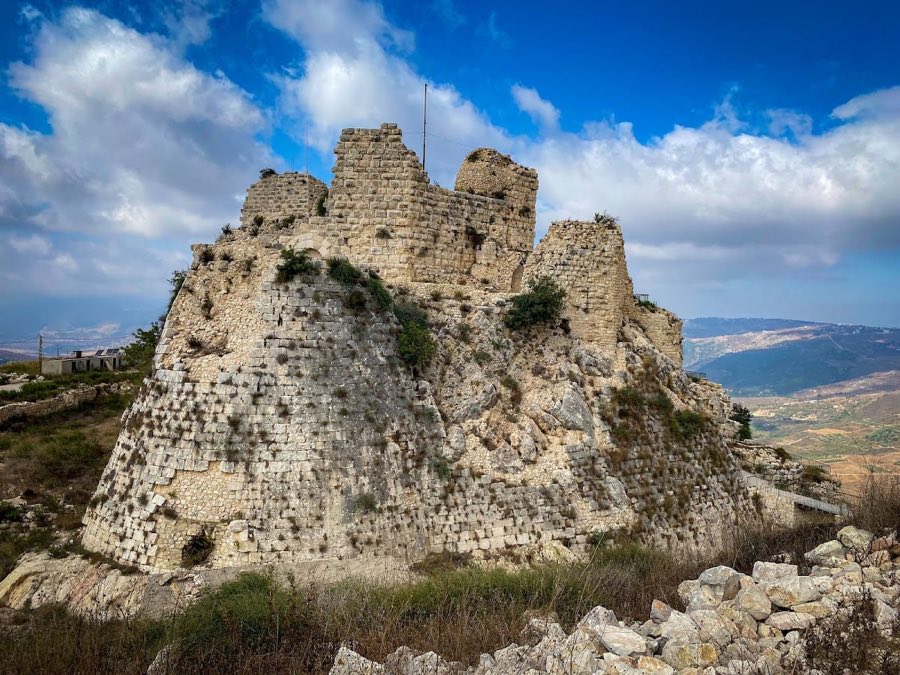
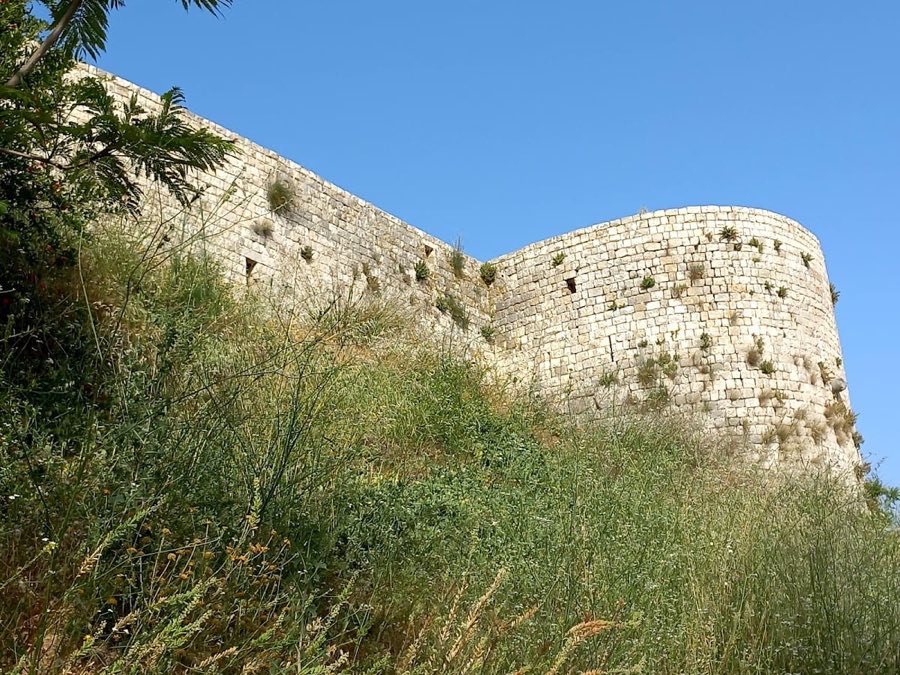
Toron Castle occupies a steep hill, which was once a Bronze Age settlement mound known as a tell, standing about 725 meters above sea level north of Tibnine. The castle’s overall shape follows the natural oval contours of this hill, adapting its fortifications to the terrain. Originally, the fortress featured twelve rectangular towers, including a prominent southern keep or donjon, serving as the main stronghold.
Most medieval architectural elements have not survived intact due to considerable damage inflicted in 1266 during the Mamluk conquest. Only foundational stone structures and some large blocks remain visible today. The castle also once had an external water supply system known by the term “berquil,” designed to provide water during sieges.
Within the castle walls stood a chapel dedicated to the Virgin Mary, reflecting the Christian faith of its Crusader builders. This religious space was an integral part of the castle’s function as a noble residence and military center.
In the mid-18th century, the ruined castle was rebuilt by the Shiite Sheikh Nasif al-Nassar, who resisted Ottoman authority in the region. He used the fallen medieval walls and foundations as the base for new fortifications. Much of the current visible structure therefore dates to this Ottoman-era reconstruction rather than the original Crusader period.
During the Ottoman period, the castle served as the residence of the local governor and was used by the El-Assaad clan. Records from 1881 indicate about twenty Muslim inhabitants lived within its enclosure at that time.
A notable feature until the early 20th century was a pair of chained marble lions guarding the main castle entrance. Their origin and meaning remain uncertain. These lions disappeared after 1921, likely removed and sold by local residents.
Though medieval remains are limited, the castle’s commanding position overlooking the surrounding landscape explains its frequent involvement in historical military confrontations and its long-standing strategic importance.
No. 52216
No. 16852
No. 66471
No. 22684
Comments
Comments for Toron Castle will require a verified account before posting.
We'll send a verification link before your first comment is published.