No. 15373
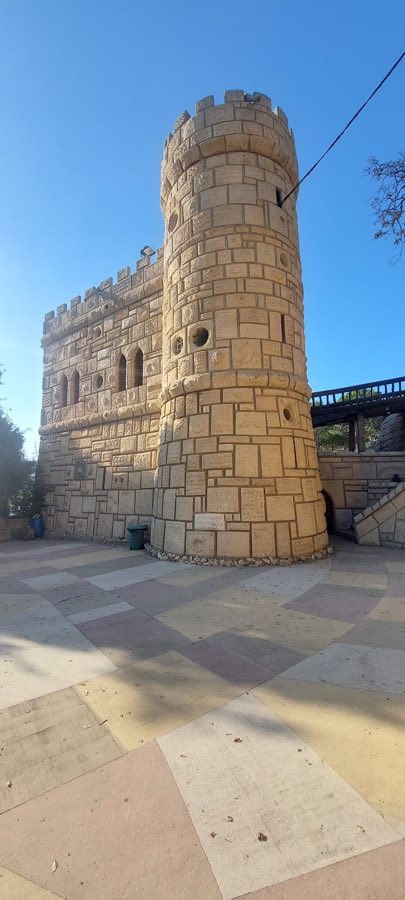
Moussa Castle
Lebanon
CastleIntact20th century
No. 22684
No. 22684 · 33.567 N, 35.371 E
Quick summary
Sidon Sea Castle is a castle in Lebanon with origins associated with the 13th century.
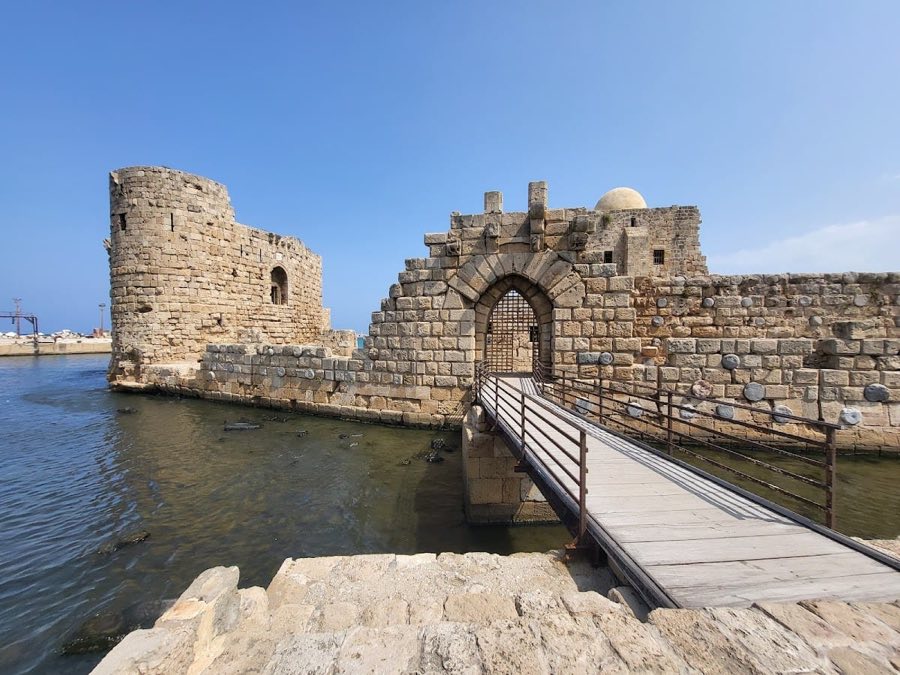
See all castles in LebanonSidon Sea Castle is located on a small island just off the coast of Sidon, a city in modern Lebanon. The fortress was originally constructed in the 13th century by Crusaders, who built it as a defensive stronghold during their campaigns in the region. This strategic position allowed control over the harbor and surrounding coastal areas.
Before the castle’s establishment by the Crusaders, the island had been a significant site in antiquity. It once held a temple dedicated to Melqart, a god of the Phoenicians closely associated with Heracles from Greek mythology. This temple endured cycles of damage and reconstruction over the centuries, reflecting the island’s long-standing religious importance. It is also thought that the site may have contained a Phoenician king’s palace and other monuments, which were destroyed by the Assyrian ruler Esarhaddon, along with damage from later earthquakes.
The castle experienced major upheaval after the Mamluk forces took Sidon from the Crusaders. During this time, the fortress was heavily damaged. The Mamluks then undertook rebuilding efforts, restoring the structure and notably adding a lengthy causeway, about 80 meters in length, to connect the island to Sidon’s mainland. This causeway improved access and helped integrate the castle more closely with the city.
Following a period of abandonment and disuse extending over several centuries, the castle underwent restoration in the 17th century under the leadership of Emir Fakhr ad-Din II. He focused on repairing the most severely damaged sections, preserving the fortress’s defensive role and maintaining its physical integrity.
Historical records also highlight the island’s role as a refuge during military attacks on Sidon. Assyrian king Sennacherib’s inscriptions mention fortifications, pastures, towers, and water storage structures known as cisterns in the area around Sidon, supporting the idea that the island served as a protected haven in times of conflict.
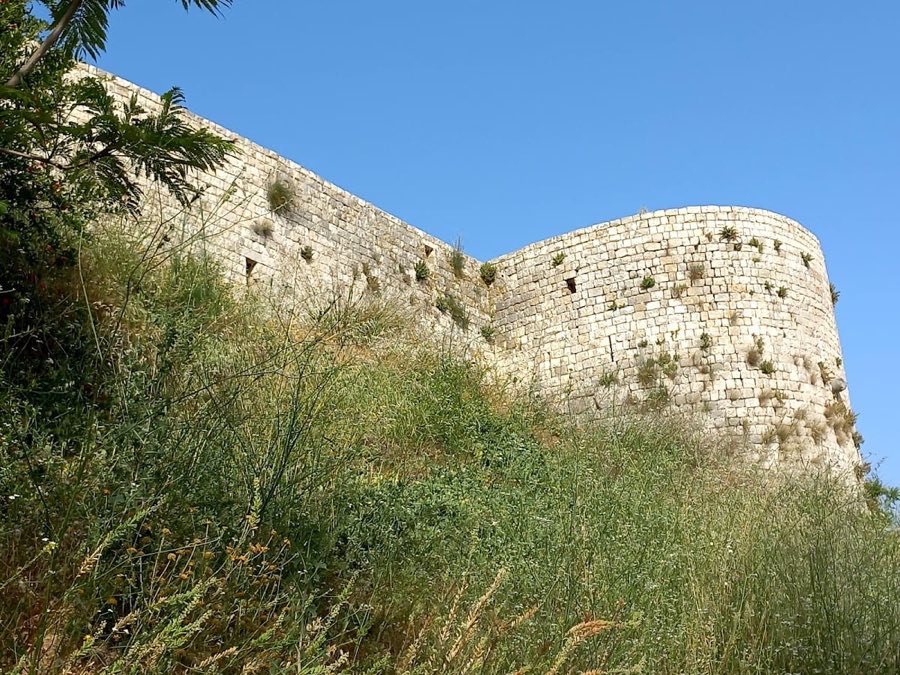
The current remains of Sidon Sea Castle center on two main towers linked by a defensive wall, forming the core of the fortress. This layout reflects typical military architecture from the Crusader period, adapted and modified in later centuries. The western tower stands to the left of the entrance and is rectangular in shape. It is better preserved than the eastern tower, providing a clearer picture of the original Crusader design.
Structural reinforcements in the outer walls include horizontally embedded Roman columns. Incorporating these ancient elements was a common practice in constructions near or on former Roman sites, both to strengthen walls and to repurpose available materials. Inside the western tower, visitors can find a large vaulted hall—a vaulted hall is a space with an arched stone ceiling—where fragments of carved capitals (decorative tops of columns) and rusted cannonballs remain. A spiral staircase inside leads to the tower’s roof.
Atop the western tower is a small mosque with a domed roof, dating to the Ottoman era. Although not part of the original Crusader design, this structure reflects the castle’s continued use and adaptation under later rulers. From this rooftop vantage point, one can see the old city of Sidon and its fishing harbor.
The eastern tower reveals a more complex construction history. Its lower portion is attributed to the Crusader era, while an upper section was added by the Mamluks following their conquest. This tower is less intact than its counterpart, offering just fragmentary evidence of its full form.
Beneath the water around the castle, archaeological investigations have uncovered numerous remains from the ancient Phoenician city submerged in the sea. These finds include sections of walls, columns, staircases, statues, and cisterns, providing evidence of a once-thriving settlement now partly underwater. These underwater ruins connect the castle to its deep historical roots and the maritime heritage of Sidon.
No. 15373
No. 52216
No. 96238
No. 27984
Comments
Comments for Sidon Sea Castle will require a verified account before posting.
We'll send a verification link before your first comment is published.