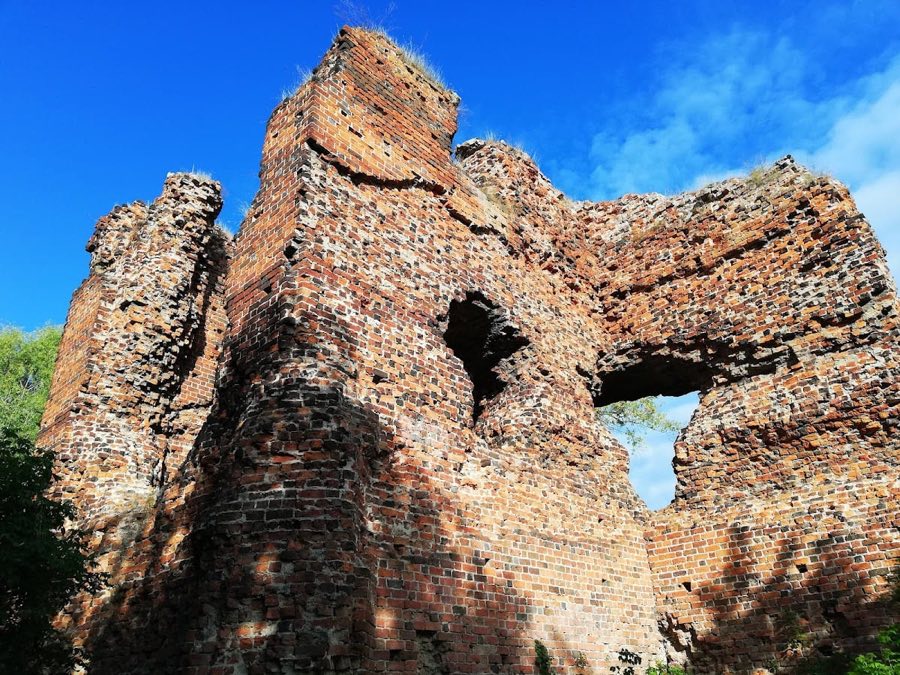
No. 10150
Złotoria Castle
Poland
CastleRuin19th century
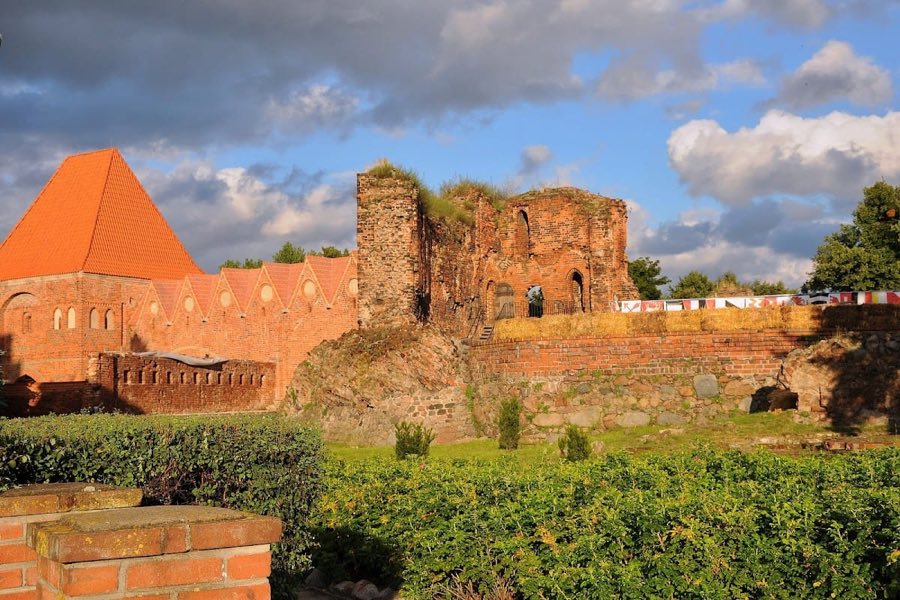
No. 73765
Castle · Poland
No. 73765 · 53.009 N, 18.611 E
Quick summary
Toruń Castle is a castle in Poland with origins associated with the 13th century.
See all castles in PolandToruń Castle, located in the town of Toruń in modern Poland, was erected by the Teutonic Knights in the mid-13th century. The site was originally part of land granted by Duke Conrad of Masovia to the Order, which used the castle as its first stronghold in the Chełmno Land region. This fortress served as the foundation for the Teutonic Knights’ campaign against the pagan Old Prussians and played a key role in establishing the Teutonic State.
Initial construction began around the 1230s and continued over roughly a century, coinciding with the growth of the medieval town of Toruń. The castle functioned primarily as the residence of the Teutonic commander and as a defensive bastion protecting the emerging settlement that developed around it. Over time, it became integrated into the fabric of the medieval town, which is today recognized as a UNESCO World Heritage Site.
Throughout its history, the castle witnessed several military and political developments. In 1410, during the conflict between the Teutonic Order and Polish forces, the castle was briefly captured by the Polish army but was later defended in a subsequent siege that same year. The structure suffered damage from a fire in 1420 but underwent repairs and restoration by 1446. In the early 1450s, the castle became a site of significant diplomatic meetings involving the Teutonic Grand Master and the Polish King.
A pivotal moment occurred in 1454 during a local uprising against the Teutonic Order. The small garrison stationed at the castle chose to negotiate surrender rather than fight, which resulted in their departure. Soon after, the castle was looted, and the town council made the decision to demolish the fortress to prevent its future use by the Teutonic Knights. This act marked the beginning of the Thirteen Years’ War, a major conflict that lasted from 1454 to 1466.
In the centuries that followed, the castle’s remains underwent various transformations. Parts of its stones were reused for constructing a burgher manor house after 1485, while the courtyard area became a refuse dump. In the 17th century, a small bastion was built on the site, and during the 19th century, the ruins were incorporated into the defenses of the Toruń Fortress under Prussian control. Archaeological excavations and restoration efforts took place in 1966, commemorating the 500th anniversary of the Second Peace of Thorn. Further conservation projects continued into the 21st century, preserving what remains of this important medieval site.
Toruń Castle was originally laid out on a horseshoe-shaped plan featuring two wings, a departure from the later typical rectangular four-wing designs of Teutonic castles. This horseshoe configuration may reflect earlier earth and timber defensive structures previously occupying the location. The earliest stone construction, dating from around 1236 to 1260, included thick walls arranged in this characteristic shape, with a prominent rectangular convent house set along the southern side facing the Vistula River.
A chapel dedicated to the Holy Cross was documented as early as 1263, highlighting the castle’s religious function beside its military role. In the early 14th century, an octagonal main tower about ten meters in diameter was erected, alongside an eastern building connected to the tower by a bridge. This bridge led to a stone gallery supported by a single pillar, which in turn linked to a gdanisko—an octagonally shaped tower serving defensive purposes as well as housing latrines. The gdanisko tower originally stood taller than it does today and remains the largest surviving structure on the site, situated above a stream flowing toward the nearby Vistula River.
The castle’s defensive system included a second ring of stone walls and a barbican, a fortified gateway structure with at least one upper floor added during the 14th century. Surrounding the complex was a moat supplied with water from the Postolec River valley and a nearby stream called Młynówka, while a pond known as the komtur pond lay to the east. A Gothic dam dating from the late 13th century was built to regulate water levels in the moat during times of attack. This dam is notable for its pointed arch openings, a typical Gothic feature.
Additional medieval elements at the site include Gothic gates located in the northeastern part of the outer bailey and an enclosing outer bailey wall from the late 14th century. Over the centuries, adaptations and additions extended the castle’s defensive reach. A 19th-century Prussian fortification wall was constructed on foundations established in earlier periods, blending historical structures with newer military architecture.
Beneath the castle, vaulted cellars have survived and have been restored in recent years. These underground spaces originally served various functions, including an armory, kitchen, dormitory, scriptorium (a room for manuscript writing), and a mint. Following the castle’s demolition after the 1454 uprising, the main tower was dismantled and significant portions of the defensive walls were removed with funding from the Old Town Council, altering the site’s original silhouette.
Beyond the castle walls stands the Upper Mill on the left bank of the Toruń Stream, first recorded in 1262. Although rebuilt in the 19th century, it still retains elements of its Gothic architectural heritage, linking it historically and spatially to the castle complex.
Today, the remains of Toruń Castle offer a layered glimpse into its evolution from a strategic fortress and administrative center of the Teutonic Knights to a historical ruin shaped by warfare, urban development, and successive periods of conservation.
No. 10150
No. 55876
No. 71567
No. 67956
Comments
Comments for Toruń Castle will require a verified account before posting.
We'll send a verification link before your first comment is published.