No. 14525
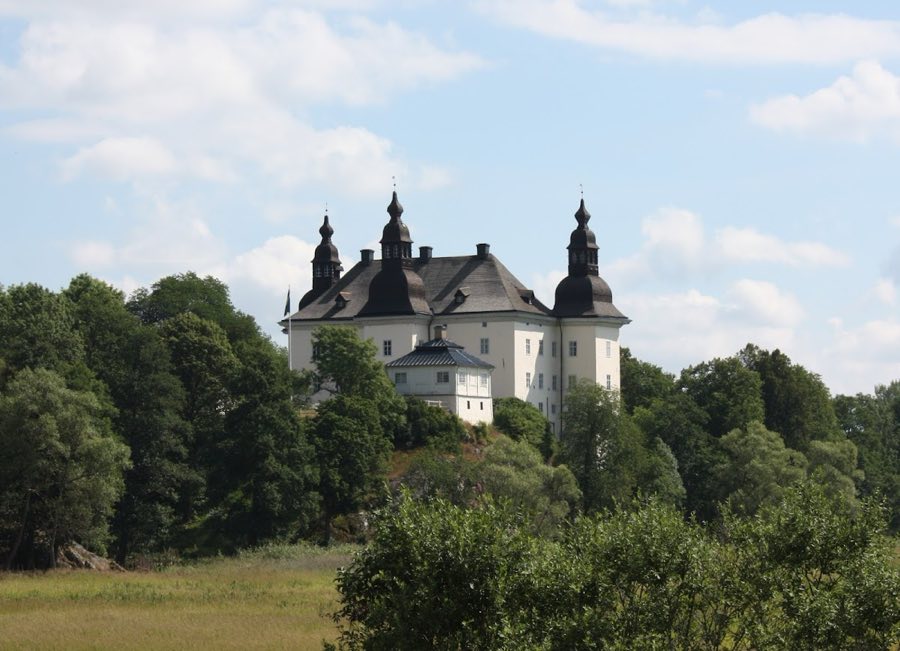
Ekenäs Castle
Sweden
CastleRestoredFor events14th century
No. 36677
Palace · Sweden
No. 36677 · 58.446 N, 14.884 E
For events
Vadstena Castle is marked as a château or castle venue lead. Capacity, indoor/outdoor spaces, catering rules, and accommodation options are published only after public verification.
Event types: Weddings, Private events, Cultural gatherings, Filming and photography
Ceremony spaces: Ceremony setting to verify
Quick summary
Vadstena Castle is a palace in Sweden with origins associated with the 16th century.
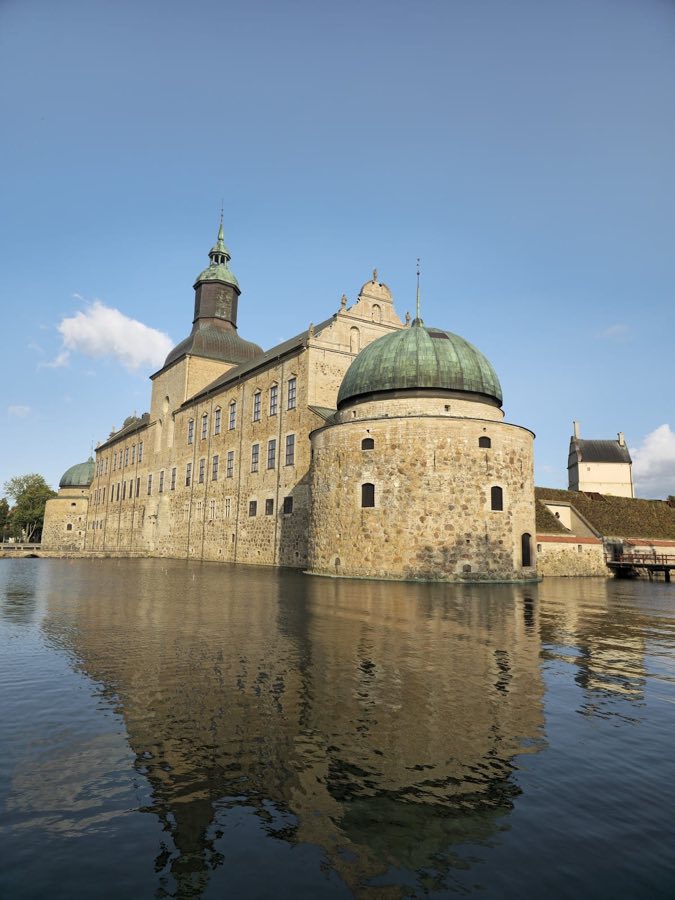
See all castles in SwedenVadstena Castle is located in the municipality of Vadstena in Sweden. The fortress was constructed in the mid-16th century by the Swedish kingdom during the reign of King Gustav Vasa.
The castle’s origins lie in a strategic effort to guard the Swedish heartland against threats from Danish forces and unrest in the nearby Småland region. In 1545, Gustav Vasa initiated the building of a fortress on a site known as Sanden, which was characterized by its natural protection of surrounding water and marshland. The establishment of the castle involved relocating local craftsmen and residents to clear the area for construction. Initially designed for military defense, the stronghold was to protect Stockholm and the surrounding territories following the suppression of the Dacke War, a notable peasant uprising.
Around a decade after the start of construction, the castle’s defensive role began to diminish. In 1555, Gustav Vasa granted the duchy of Östergötland to his son Magnus, prompting the transformation of the fortress into a Renaissance-style palace suitable for a ducal residence. Magnus spent much of the late 16th century living within its walls until his death in 1595. This shift marked Vadstena’s evolution from a strict military installation into a center for noble residence and courtly life.
Further expansions occurred during the reign of Magnus’s elder brother, Johan III. He oversaw the addition of a third floor around the early 1600s, which included large ceremonial halls and a chapel. Construction was temporarily delayed due to a fire in 1598, but the enhancements were completed, establishing the castle as an important royal household. In the following decades, Vadstena Castle served as a royal residence well into the 18th century. It witnessed significant events such as parliamentary sessions convened by King Gustav II Adolf and early opera performances hosted by Queen Christina, reflecting the site’s growing cultural and political importance.
With the decline of royal use in the 18th century, the castle adapted to more practical purposes. Its grand chambers were converted for various functions, including damask weaving and storage of grain. By the end of the 19th century, in 1899, the castle took on a new administrative role as the provincial archives found a home within its vaults, a function it continues to serve in the present day. Recognizing its historical value, the Swedish government declared Vadstena Castle a state building monument in 1935.
Between 1994 and 1999, significant restoration efforts focused on recovering parts of the original defensive landscape, including the earthworks and square towers that had been removed during the 19th century to accommodate harbor construction. Archaeological excavations carried out in this period also uncovered remains of the medieval Sanden district underneath the castle’s ramparts, providing insight into the earlier settlement that preceded the castle. Today, the castle’s garden, established concurrently with the castle in the 16th century, is preserved as a historic park blending ornamental and practical plantings, and it holds status as a cultural and recreational area of national interest.
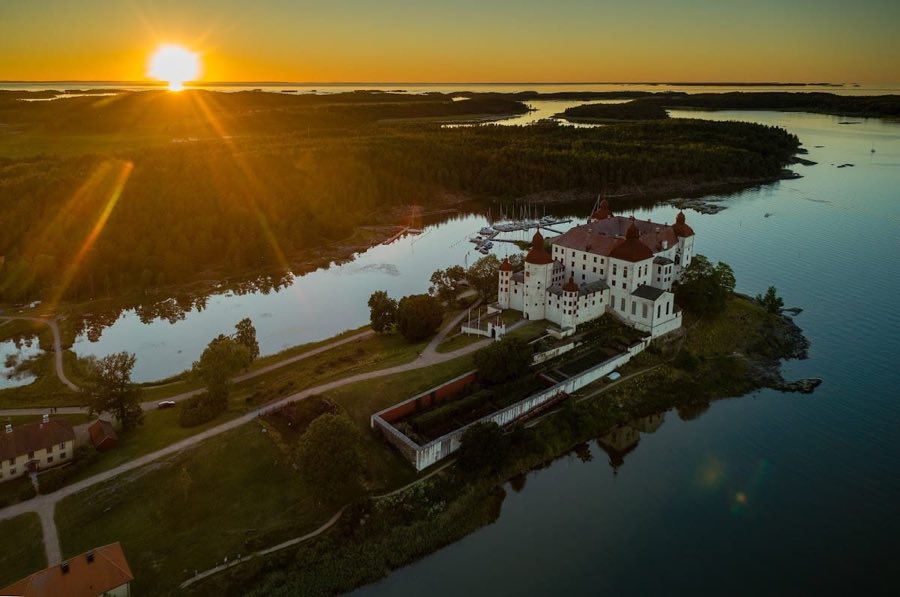
Vadstena Castle is a well-preserved example of Renaissance architecture situated on the shores of Lake Vättern. Its original layout comprises three stone residential wings arranged in a near-rectangular plan, surrounded by wide defensive walls and a moat filled with lake water. Four round bastion towers anchor the corners of the fortress, embodying the military design of the mid-1500s. Access was controlled by a drawbridge, a defensive feature that has been reconstructed in recent times to protect original 16th-century entrance portals adorned with ducal coats of arms.
The castle’s walls are substantial, approximately 30 meters long and 3 meters thick, constructed of stone to withstand attacks of the period. Within the southern courtyard, two square towers were part of the original complex and underwent faithful reconstruction in the late 20th century as part of restoration projects. These towers, along with the corner bastions, served as defensive artillery positions and observation points controlling the castle’s approaches.
The building itself features distinctive two-story pavilions linked by single-story wings. Notable additions from the mid-16th century, under the guidance of the master builder Arendt de Roy, include stair towers and portal staircases that enhanced both functionality and architectural grandeur. The top floor, completed around 1620 during Johan III’s reign, houses two large halls and a chapel space designed for ceremonial and religious purposes.
Inside, the castle retains several significant rooms with historical functions. The ground floor includes the Herreköket, or main kitchen, and soldiers’ quarters known as the Borgstugan. Upstairs, on the second floor, are the Drabantsalen and the Bröllopssalen, or Wedding Hall, the latter historically used for performances such as summer operas. The third floor contains the Great and Small Rikssalen, or state halls, alongside the chapel. The western portion of this floor is furnished with period-appropriate furniture loaned from Sweden’s Nationalmuseum, providing an authentic glimpse into the castle’s aristocratic interior.
Among the four cannon towers, each has a distinct current use and condition. The northwest tower is open to visitors, allowing direct access, while the southwest tower is available only during guided tours or special exhibitions. The northeast tower has been adapted for modern use by the archives located within the castle. The southeast tower remains the most intact but is closed to the public, preserving its original state.
The defensive earthworks and outer ramparts surrounding the castle were dismantled during the 19th century to make way for harbor development. However, these features were carefully rebuilt between 1994 and 1999 using archaeological evidence and surviving historical measurements. The restoration aimed for a naturally aged appearance rather than a strict replication of the 17th-century forms to ensure long-term structural stability.
Excavations conducted during the restoration uncovered remnants of the medieval settlement of Sanden beneath the castle ramparts. Archaeologists found evidence such as wooden and clay floors, postholes indicating building frameworks, ovens, foundations of earlier structures, and a variety of artifacts including metal objects, animal bones, and ceramic fragments. These finds illuminate the domestic and craft activities that took place before the fortress’s construction.
Adjacent to the castle lies one of Sweden’s oldest gardens, rooted in its 16th-century origins. The garden combines decorative layouts with useful plantings typical of Renaissance landscaping. Over time, it has expanded to include an English-style park element added in the late 19th century. Key features include a historic gardener’s residence predating 1705 and an octagonal pavilion documented in maps from the 17th and 18th centuries, which highlight the garden’s long-standing role as a cultivated and managed landscape.
The castle chapel contains several important historical furnishings and artworks. These include a baptismal font made from red limestone dating to 1660 and sculpted by Johannes Andersson, as well as a wooden altar reconstructed following its original design from 1709. The pulpit is notable for its 17th-century construction incorporating figures salvaged from a 15th-century altarpiece. Paintings by prominent artists such as Anthonis van Dyck and Andrea Schiavone decorate the chapel interior. A historic organ, built in 1736 and originally from Gistad Church, was restored and installed in the chapel in 2013, continuing the site’s musical heritage.
Externally, the castle features a vaulted brick passageway and Renaissance-style portals marking the entrances. The drawbridge protecting the main gate dates from 1995 and was constructed to safeguard original elements of the fortress’s historic entry. Today, Vadstena Castle stands as a state-protected monument, its preservation governed by regulations established in 2007. It functions both as an archival center and a cultural heritage site, embodying centuries of Swedish history through its architecture, artworks, and archaeological remains.
No. 14525
No. 89681
No. 32421
No. 57521
Comments
Comments for Vadstena Castle will require a verified account before posting.
We'll send a verification link before your first comment is published.