No. 99013
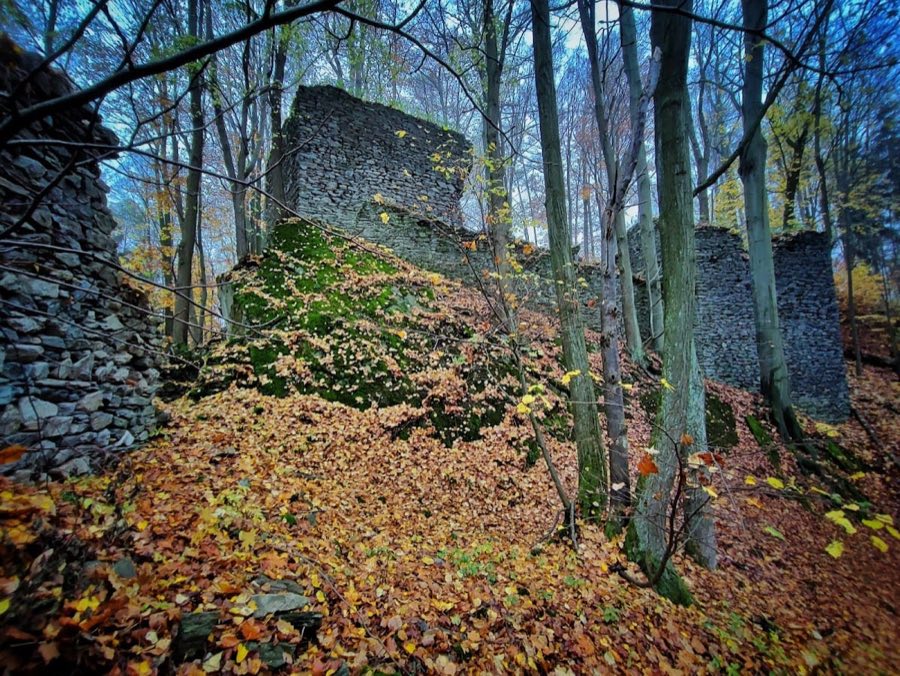
Nový hrad
Czechia
CastleRuin15th century
No. 37997
Castle · Czechia
No. 37997 · 50.023 N, 17.031 E
Quick summary
Velké Losiny Castle is a castle in Czechia with origins associated with the 16th century.
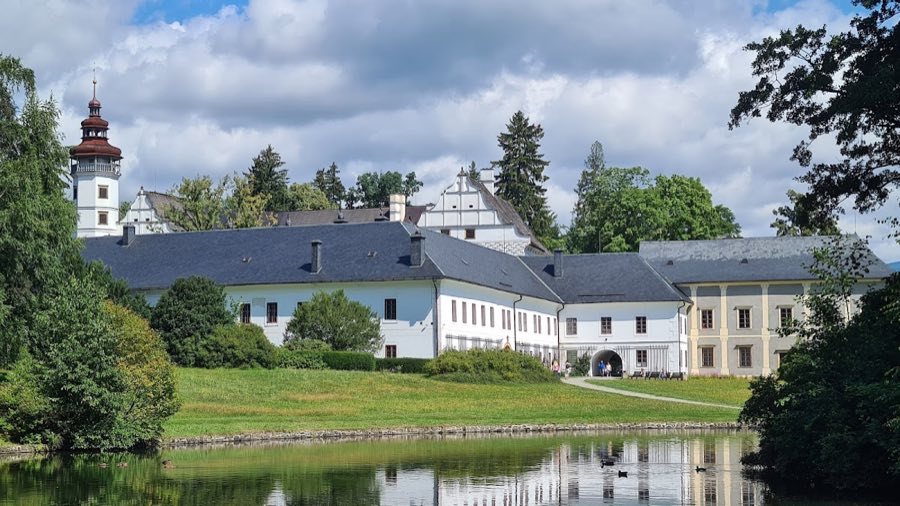
See all castles in CzechiaThe Castle in Velké Losiny, Velké Losiny, Czechia, is a historic castle complex whose development spans the late medieval and early modern periods and was built and altered by successive local noble owners. A fortified water castle with a surrounding moat stood here by the late Middle Ages, and major rebuilding in Renaissance form around the end of the 16th century established the complex that would shape its later appearance. The site became important regionally as a noble residence and estate centre, and it is also known for a set of late 17th-century witch trials that had a profound local impact.
A masonry stronghold surrounded by water is reported from the 15th century, representing the medieval phase of occupation. In 1562 the property passed into the ownership of the nearby town of Šumperk, and a rebuilding in 1569 converted the fortress into a late Renaissance residential seat, making it the administrative core of a sizable landed estate.
Between 1580 and 1589 Johann von Žerotín (Zierotin) carried out substantial construction, creating a multi-winged Renaissance castle arranged around an arcaded court. This phase produced much of the arcaded courtyard and the overall plan that defined the complex through subsequent alterations, and it established rooms and galleries that housed the household and collections of the owners.
From 1678 to 1696 the castle was the scene of bitter witch trials, prosecutions led by the inquisitorial judge Heinrich Franz Boblig von Edelstadt. Contemporary records link dozens of local victims to those proceedings; one count gives 56 victims in the trials, while other tallies cite roughly 100 people executed regionally, of whom 56 came from Velké Losiny.
In 1693 the complex was enlarged with a Baroque addition of three wings and a formal French-style garden was laid out, reflecting changing tastes and the desire to modernize the residence. Financial pressures led to a sale in 1802, when the indebted estate passed to the Liechtenstein family. The Liechtensteins undertook adjustments to the grounds and interiors, rebuilt parts of the gardens in the 19th century, and developed the property as their family residence; during this period a library wing was added and the forecourt and outer wall were reconstructed in the Empire manner.
The Liechtenstein owners were expropriated in 1945 and the castle entered state hands. A general reconstruction of the arcades in the upper part of the castle took place between 1964 and 1966. Filmmaker Otakar Vávra used the site for the 1969 movie Kladivo na čarodějnice (A Virgin for the Inquisitor), a drama inspired by the local witch trials. In 1995 the whole complex was declared a national cultural monument of the Czech Republic; after that some interior rooms were used as a picture gallery and the park and castle grounds were opened for public access.
The complex presents a large enclosed plan centered on a broad rectangular courtyard with arcaded galleries on multiple levels. The castle preserves the Renaissance arrangement of wings around an arcaded court produced in the late 1500s, while later building phases yield a near quadrangular enclosure with arcades rising on three floors in parts. Exterior façades are richly treated with sgraffito decoration, providing a textured surface to the masonry and reflecting decorative fashions of the Renaissance and later periods.
The internal courtyard retains arcaded galleries whose arches rest on rusticated voussoirs, a heavily cut stone style that anticipates later Baroque tastes. These arcades were the focus of a structural restoration in the mid-1960s and today appear as a restored sequence of covered walkways and openings that link the principal rooms and stairways. The courtyard plan and its galleries show the successive layering of Renaissance planning and later Baroque enlargement.
The west wing contains two private chapels, named the Chapel of the Angel and the Chapel of the Virgin Mary, which carry painted decoration completed in 1742 by Johann Christoph Handke. Interior ceremonial and reception spaces survive, including a dining room, a knight’s hall (Rittersaal) distinguished by a richly coffered ceiling, and an ancestral hall (Ahnensaal) hung with portraits of members of the Žerotín family. Many rooms display woven hangings and tapestries that form part of the historic fit-out, with much of the interior described as well preserved.
Movable collections connected with the residence include a picture collection featuring works by Italian, Flemish, and Dutch painters and a historical weapons collection; some of these paintings have been installed in rooms used as a picture gallery. From earlier phases of the building there are glazed ceramic tiled stoves (kachelöfen), which remain in situ in several rooms as examples of period heating technology.
The castle occupies landscaped grounds that combine a formal French garden laid out after the 1693 enlargement with later 19th-century reworking by the Liechtenstein family and an English-style park providing a more relaxed landscape with a pond and a variety of trees, notably conifers. Conservation work over the 19th and 20th centuries, the 1964–66 arcade reconstruction, and the 1995 designation as a national cultural monument have shaped the present appearance and condition of both building and park, while chapel paintings, many interior decorative schemes, and the principal galleries survive as standing features.
No. 99013

No. 54341
No. 51747
No. 52339
Comments
Comments for Velké Losiny Castle will require a verified account before posting.
We'll send a verification link before your first comment is published.