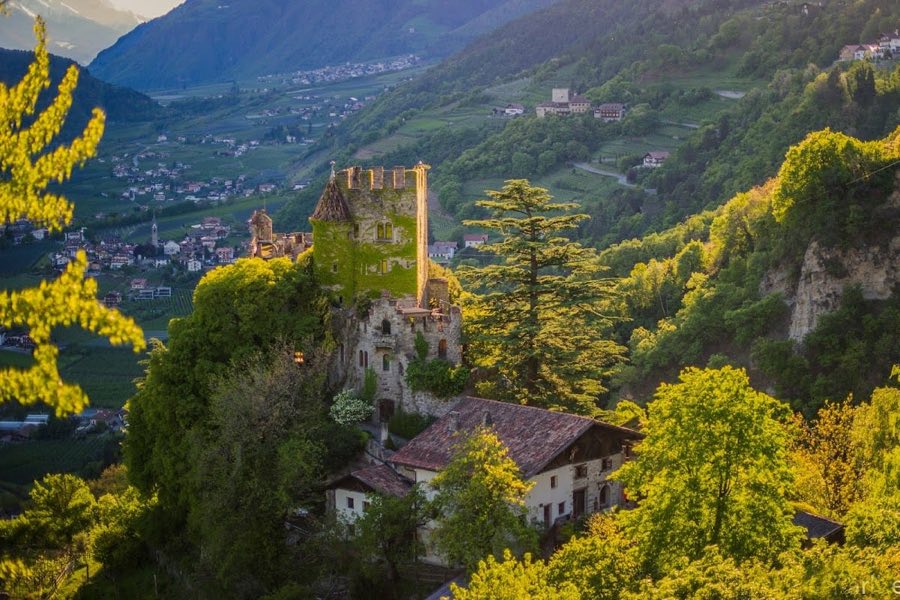
No. 71767
Brunnenburg
Italy
CastleRuin13th century
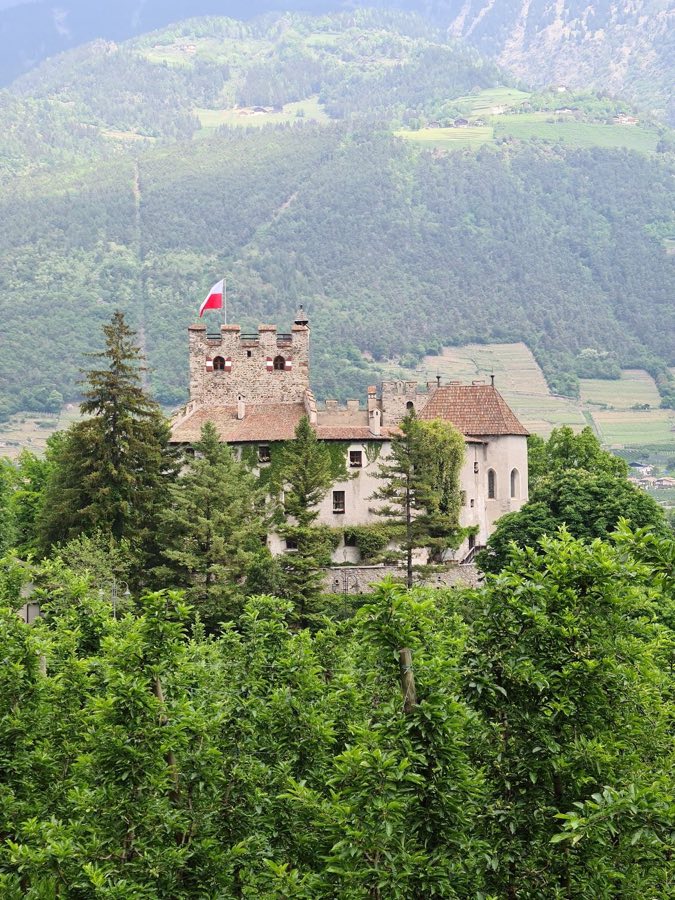
No. 83592
Castle · Italy
No. 83592 · 46.678 N, 11.120 E
For rent
Vorst Castle is marked for bookable castle accommodation. Nightly pricing, sleeps count, stay rules, and amenities are displayed only when public operator data is available.
Rental type: Hotel / bookable stay, Short-stay rental
Short-term availability: Bookable accommodation signal
Quick summary
Vorst Castle is a castle in Italy with origins associated with the 13th century.
See all castles in ItalyVorst Castle is situated in the municipality of Algund in modern-day Italy and was constructed by medieval builders in the late 13th century. It occupies a strategic position on a rocky hill along the right bank of the Adige River, marking its place within the landscape of South Tyrol.
The earliest recorded administrator of the castle was Ulrich von Vorst, a Tyrolean ministerial who governed the site in the early 14th century. After Ulrich’s death in 1302, the castle came into the hands of Albert von Camian, who adopted the name von Vorst following his investiture as a fief holder in 1311. Albert and his wife Floridiana von Schlandersberg were notable for their religious patronage, endowing an altar and providing a benefice in the nearby St. Nikolaus church of Merano. The von Vorst lineage was connected to the noble Counts of Eschenlohe, and historical accounts suggest that Albert von Vorst and Heinrich von Eschenloch may have been illegitimate sons of the Tyrolean ruler Meinhard II.
Following Albert’s passing, ownership shifted through marriage when Floridiana wed Wilhelm von Enn in 1338. Their line held the castle until the mid-14th century, when Rudolf von Enns is recorded as the proprietor. By 1395, the fief was acquired by Sigismund von Starkenberg and his wife Osanna von Enns, thereby transferring the estate into the hands of the Starkenberg family. This family was allied with the Elefantenbund, a noble alliance that was eventually suppressed by Duke Frederick IV of Tyrol. As a consequence, the castle was confiscated from the Starkenbergs.
Ownership continued to change over the following centuries; by 1470, Burghard von Brandis was in possession of the castle, succeeded in 1497 by Wolfhard Fuchs von Fuchsberg. The latter’s tenure gave rise to the alternate name “Neufuchsberg” applied to the castle. Eventually, ownership returned to the Brandis family when Hildebrand Fuchs sold the property back in 1519. The Brandis line maintained control over Vorst Castle until 1860. Notably, in 1814, Joseph Count von Brandis transformed the fief into a hereditary estate subject to land taxation.
A significant recorded military event took place in 1423 when Duke Frederick the Empty-Pocket laid siege to Vorst Castle. During this conflict, the well-known minstrel Oswald von Wolkenstein was imprisoned within the castle’s dungeons for several months. Another setback occurred in 1803, when a fire consumed large portions of the castle and its interiors, including a distinguished Gothic altar housed in the chapel. Restoration efforts followed under Alois von Schrott and later Giovanni Troyer, the latter adapting the castle into a historic hotel, which has since ceased operation.
In the 19th and early 20th centuries, the castle passed through various hands, including the families d’Andriano, Fuchs, and Brandis. Today, the estate is owned by the Fuchs family, who are also proprietors of the nearby Forst brewery, integrating some of the castle’s spaces into beer production activities.
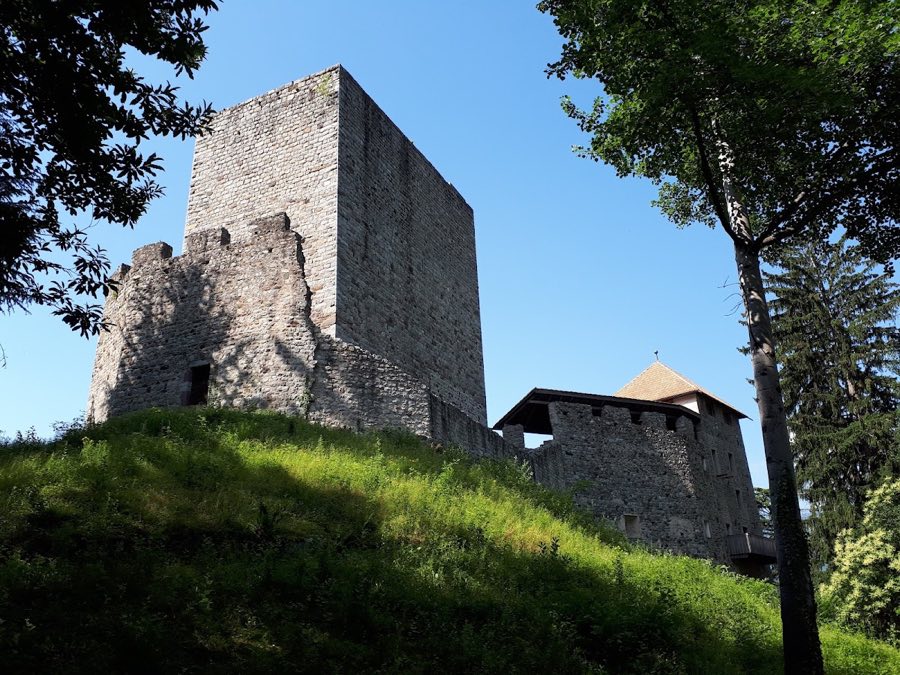
Vorst Castle is built on a small rocky hill approximately 350 meters in elevation, located on the right bank of the Adige River. Its layout consists of a bergfried, the main tower typical of medieval fortifications, a residential wing, and a chapel, all arranged around a scenic inner courtyard. This design reflects adaptations suited to the topography and defensive needs of its location.
The chapel, dedicated to the apostles Peter and Paul, features a polygonal choir end, an architectural element where the area around the altar forms a multi-sided shape rather than a simple rectangle. Inside, the choir is covered by a Gothic net rib vault, which is a complex stone ceiling structure characterized by intersecting ribs that create a decorative “net-like” pattern. Throughout the Middle Ages, this chapel was the setting for four Quatember masses each year—special church services held during the Ember seasons—and an additional foundation mass on the eve of the feast day celebrating its patron saints.
The castle complex includes a five-story structure, a large curvilinear palace, and a tower designed for residence rather than strictly military purposes. Surrounding these buildings is a spacious courtyard that would have served as a central outdoor area within the castle walls. The interiors preserved fragments of original furnishings alongside some paintings dating from the 17th and 18th centuries, though much was lost in the devastating fire of 1803. Among the casualties was the Gothic altar of the chapel, a significant piece of religious art for the castle.
While the castle’s position along the Adige River allowed for some control over the right bank of the valley, its military significance was relatively limited compared to larger fortresses. In more recent times, parts of the castle have been repurposed to aid in the production of beer for the Forst brewery, demonstrating the ongoing adaptive use of the historic structure.
Vorst Castle has been under protection as a monument since the mid-20th century, ensuring the preservation of its architectural and historical legacy despite changing ownership and functional transformations over the centuries.
No. 71767
No. 49462
No. 72501
No. 14108
Comments
Comments for Vorst Castle will require a verified account before posting.
We'll send a verification link before your first comment is published.