No. 80498
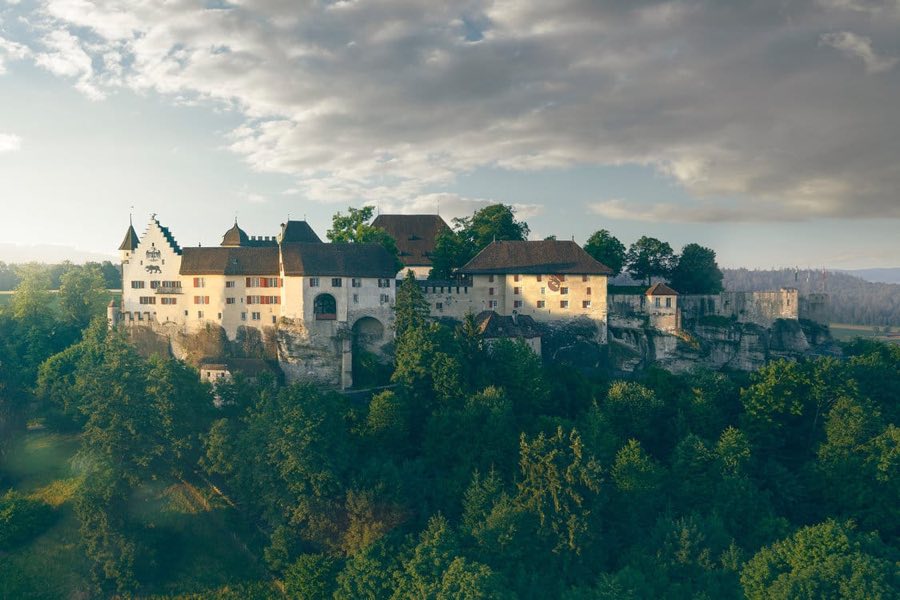
Lenzburg Castle
Switzerland
CastleRestoredFor events11th century
No. 44962
Castle · Switzerland
No. 44962 · 47.421 N, 8.170 E
Quick summary
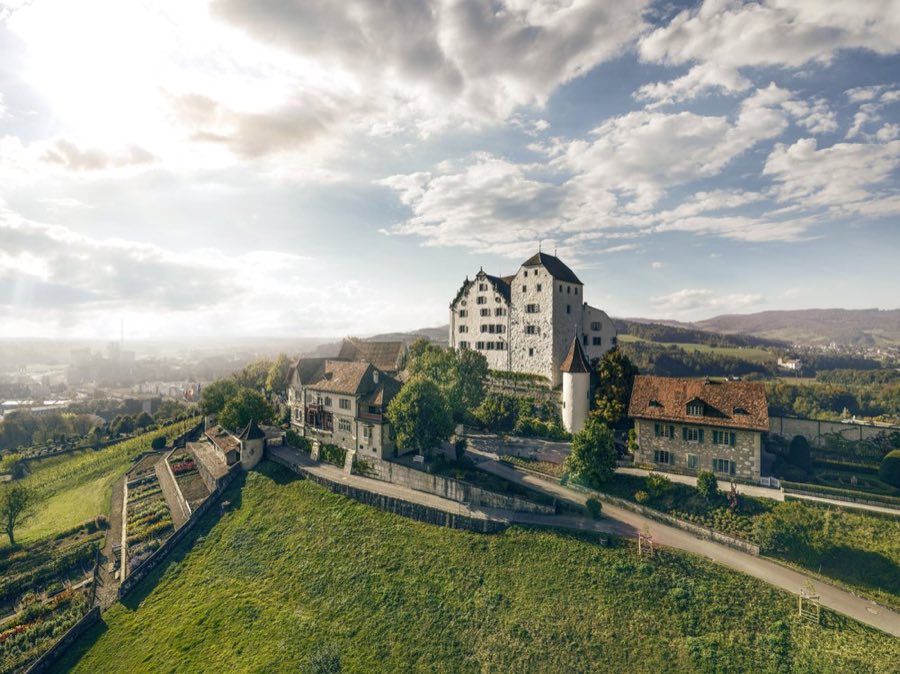
Wildegg Castle is a castle in Switzerland with origins associated with the 12th century.
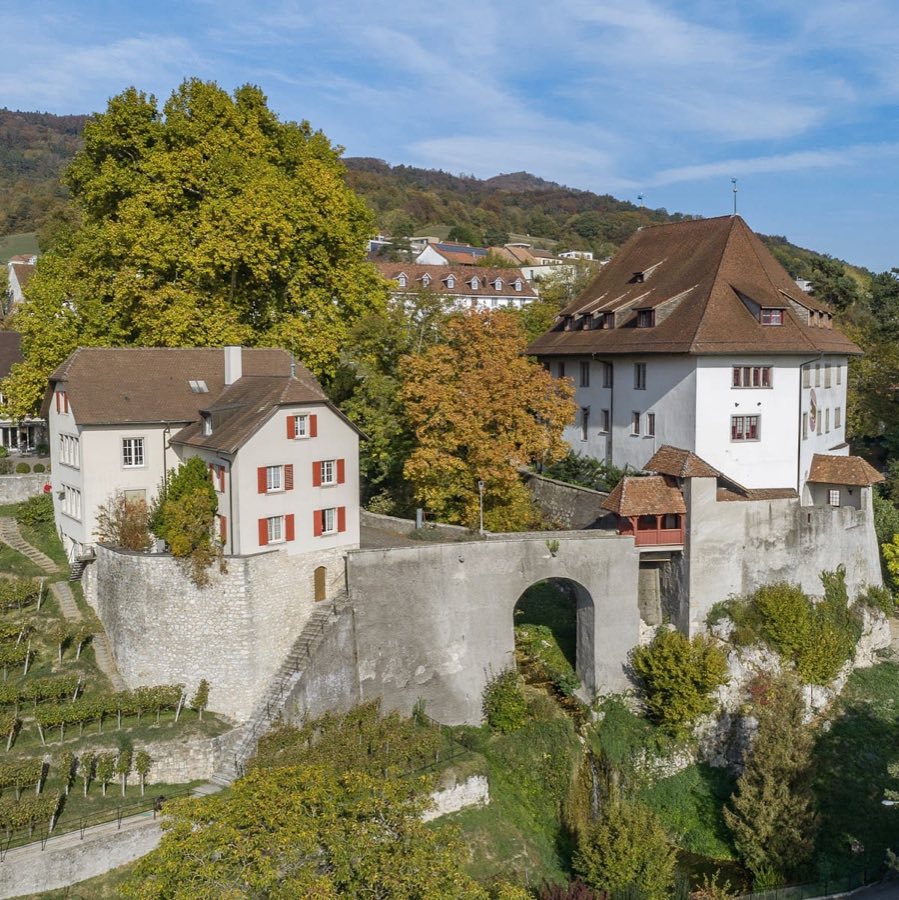
See all castles in SwitzerlandWildegg Castle in Möriken-Wildegg, Switzerland, was established by Habsburg ministeriales, the servant-knights of the medieval Habsburg household, in the early to mid-13th century as a fortress. Built to guard the southwestern edge of Habsburg core territory and to control a key crossing on the Aare River, the site appears in surviving records in 1242. The stone stronghold and its hall formed a focal point for local power in the high Middle Ages and anchored Habsburg influence in this part of the Aare valley.
The stronghold was held by the Truchsessen family tied to the Habsburgs and by a branch called Wildegg until that line died out. Around 1340 ownership passed to Johann I von Hallwyl. In 1437 Peter von Gryffensee bought the property, and twenty years later, in 1457, he returned the feudal holding to the city of Bern, which had become the regional overlord after 1415.
During the later 15th century the fief changed hands several times. About 1462 it came into the possession of three brothers named von Ballmoos. Around 1480 Albin von Silenen assumed the fief, a move that alarmed Bern. The city then took control and in 1483 and 1484 granted the estate, together with local church patronage and lower jurisdiction over Holderbank and Möriken, to Kaspar Effinger of Brugg for 1,730 gulden. The Effinger family kept the estate by inheritance for eleven generations; in 1830 the property was placed into the family chest or foundation.
On a summer day in 1552 a lightning strike set the castle ablaze and left only the masonry intact. The building was made habitable again over the following years. From 1684 the complex underwent a substantial rebuilding and was reshaped into a Baroque residential castle, reflecting changing tastes and the reduced military role of such hilltop sites. In the 19th century the ensemble acquired new domestic buildings, with the Erlachhaus erected in 1825 and a country-house style villa placed opposite it in 1886.
Julie von Effinger, last of her line, died in 1912 and left the castle, almost all its furnishings, and the surrounding domain to the Swiss Confederation. The Confederation entrusted the property to the Swiss National Museum and sponsored a restoration carried out under Eduard Vischer to prepare the house for museum use, work that continued until 1917. In 1999 the estate’s agricultural operations were leased to the politician Alois Huber. On 1 January 2011 legal ownership moved to a foundation set up by the canton of Aargau and Museum Aargau assumed responsibility for museum operations that same day. The cantonal parliament had approved an annual allocation for that arrangement in January 2010 by a vote of 104 to 22, and a Confederation-funded renovation finished in summer 2011. Also in 2011 the castle archive was transferred to the State Archive of Aargau. Since then the entire domain has been administered by the Stiftung Schlossdomäne Wildegg and is regarded as a cultural landscape of national importance.
The castle stands on a steep rock outcrop at roughly 460 meters above sea level and keeps an irregular, roughly triangular plan inherited from the medieval fortification. The present complex essentially rests on those original foundations, producing a compact ensemble that follows the rock’s contour
No. 80498
No. 61696
No. 44314
No. 17362
Comments
Comments for Wildegg Castle will require a verified account before posting.
We'll send a verification link before your first comment is published.