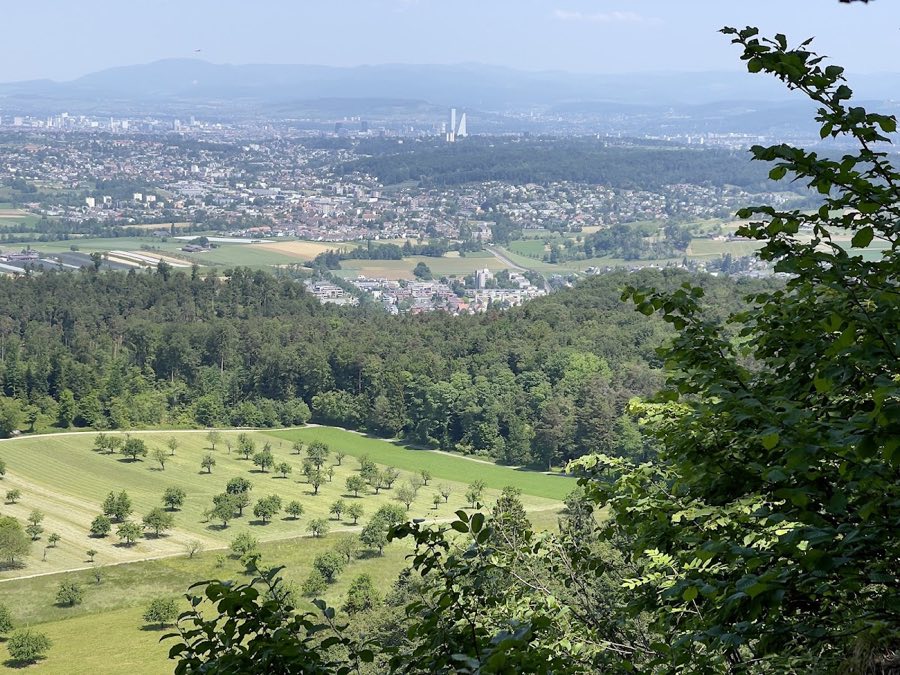
No. 58282
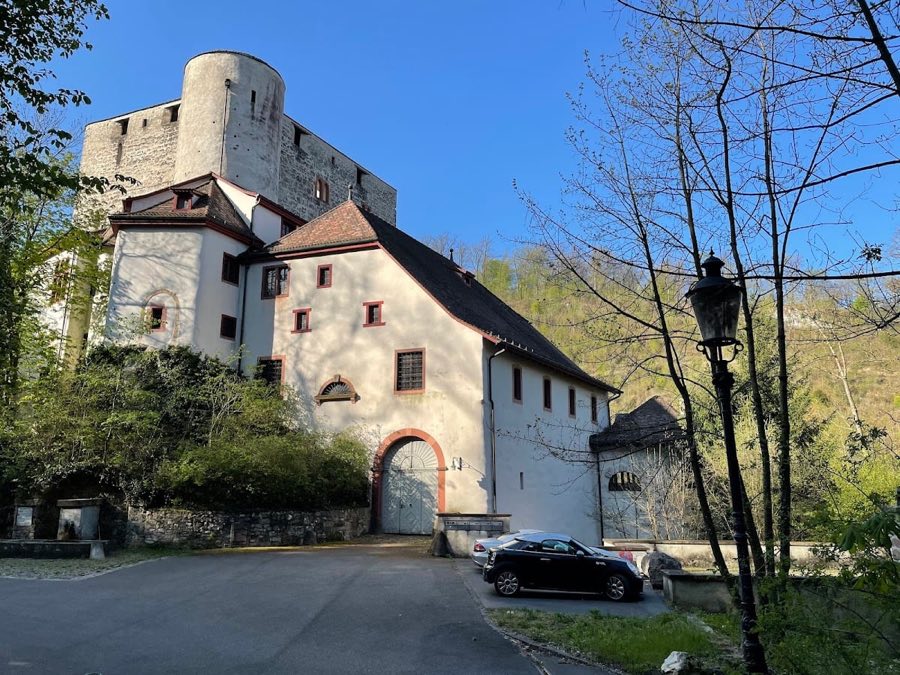
Fürstenstein Castle
Switzerland
CastleRuin14th century
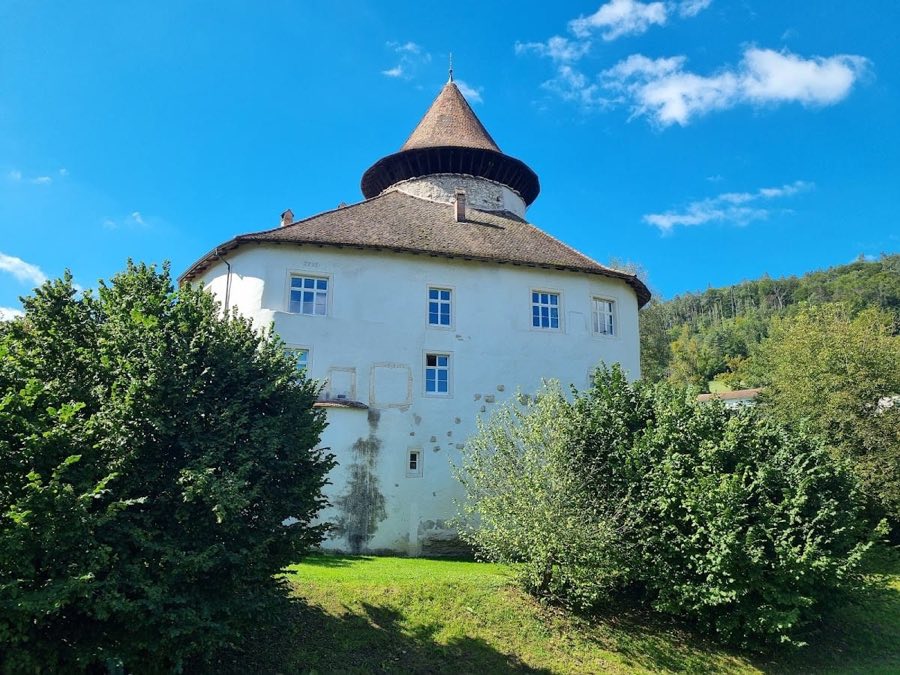
No. 36414
Castle · Switzerland
No. 36414 · 47.438 N, 7.527 E
Quick summary
Zwingen Castle is a castle in Switzerland with origins associated with the 13th century.
See all castles in SwitzerlandZwingen Castle with bridge is located in the municipality of Zwingen, Switzerland. It was built by the medieval civilization of the region, with origins dating back to the mid-13th century, though exact construction dates remain undocumented.
From at least 1312, the castle was under the ownership of the Freiherren, or Barons, of Ramstein, who held it as a fief granted by the Bishop of Basel. The Ramstein family served as ministeriales—unfree knights who managed estates for the bishop—and during their tenure, they expanded the castle. Their efforts included the ambitious plan to establish a small town within the castle’s walls. This settlement was intended to rival the nearby town founded by the bishop in Laufen and to enhance the Ramstein’s power in the area.
Despite these plans, the town foundation failed. The bishop successfully opposed the Ramstein’s expansion, halting further construction within the complex. The Ramstein lineage ended in the 15th century with the death of Rudolf von Ramstein. Afterward, the bishop reclaimed the fief and appointed a bailiff to administer the castle and surrounding lands.
In the 16th and 17th centuries, the castle saw significant renovations. Among these was the rebuilding of the Oswald Chapel between 1571 and 1575, reflecting both religious and structural renewal. Following the social and political upheavals of the late 18th century, particularly those connected to revolutionary movements, the castle was sold into private hands in 1795.
In the early 20th century, specifically 1913, the site was purchased by the Zwingen paper factory, whose stewardship contributed to the castle’s preservation. Since 1993, ownership passed to the municipality of Zwingen. The castle’s historical significance is also marked by the birth of Sigismund von Roggenbach in 1726, a notable native of the site.
The castle complex at Zwingen is uniquely built on a series of islands formed within the Birs River, which once flowed around the site in multiple branches. Today, some of these former river arms have dried up or been drained, but the castle remains largely encircled by water. The layout combines elements typical of a fortress and a planned town, reflecting its dual purpose during construction. It features a bergfried, a large round keep used for defense and as a stronghold, alongside a walled enclosure designed to surround a settlement, though the intended town was never fully realized.
The outer bailey, or Vorburg, lies to the east on its own island and is dominated by a gate tower crowned with battlements. Originally, this section was defended by a drawbridge crossing one arm of the Birs River, which was subsequently replaced by a stone bridge. Strong curtain walls enclose much of this area, reinforced on the southeast corner by a shell tower—a rounded defensive structure intended to strengthen vulnerable spots.
Connecting the outer bailey to the main castle is a covered wooden bridge, notable for preserving much of its original timber framework. Beneath this bridge, the Birs arm that once flowed has since dried, though its course remains visible today.
The Hauptburg, or main castle, occupies the central islands. Its core is an approximately oval-shaped structure that originally stood on a small island now merged with adjacent land. The round bergfried, the earliest major construction phase of the castle, forms the central feature, with several additional buildings added over time to create a unified core complex. Along the northern side, several latrine turrets protrude over the river, utilizing the flowing water for natural waste flushing.
Two significant gates once controlled access to the Hauptburg. While these gates have disappeared, large sections of the curtain walls that surrounded these entrances still stand on the central islands. The castle’s southeast corner houses the Oswald Chapel, rebuilt in the late 16th century as part of the extensive renovation during that period.
Inside the castle’s walls, the area was never completely filled with buildings, a reflection of the failed attempt to establish a full town within the fortifications. One of the buildings incorporating medieval structural elements has been adapted over time and currently serves as the municipal administration building for Zwingen.
The western island, distinct from the castle’s core and connected to it by an artificially filled ditch, was likely never developed as part of the castle complex. Industrial activity in this area has obscured archaeological remains, leaving few traces of earlier occupation.
The careful maintenance of the site by the local paper factory, which owned the castle during the 20th century, has contributed significantly to the preservation of its various elements, allowing much of the complex to survive in relatively good condition to the present day.
No. 58282
No. 73548
No. 22990
No. 53257
Comments
Comments for Zwingen Castle will require a verified account before posting.
We'll send a verification link before your first comment is published.