No. 40676
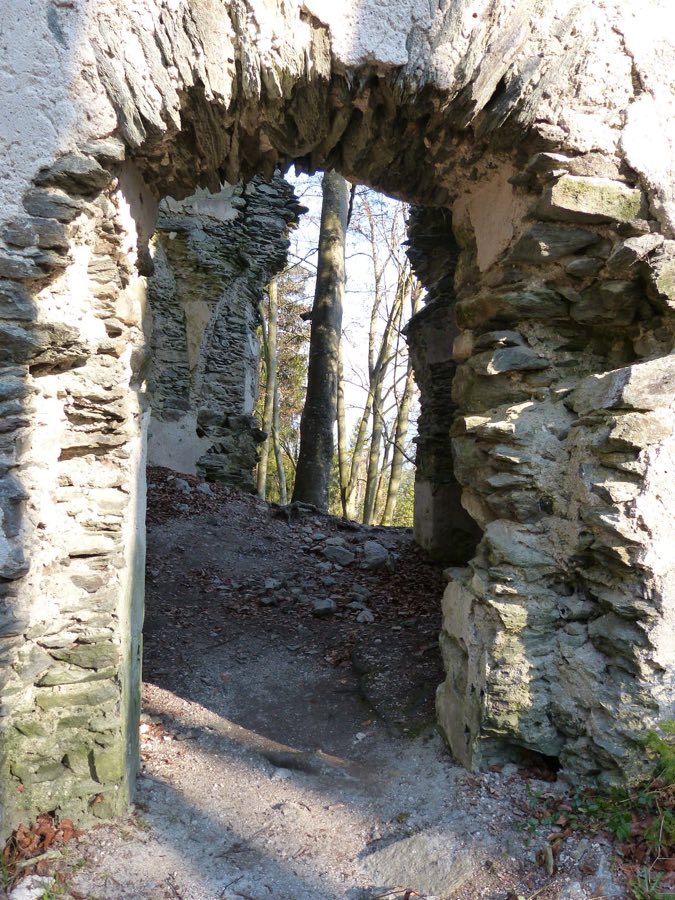
Burgruine Hohenwart
Austria
CastleRuinFor events12th century
No. 98037
Castle · Austria
No. 98037 · 46.644 N, 13.960 E
Quick summary
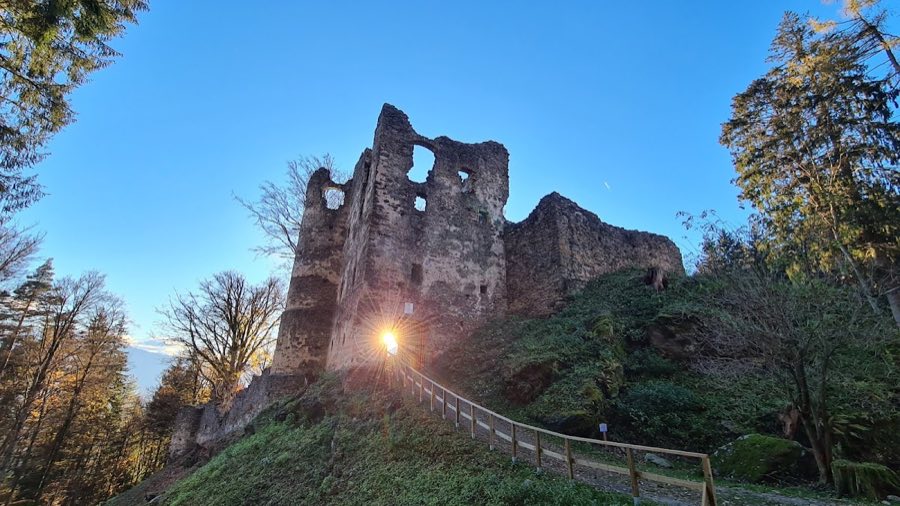
Aichelberg Castle is a castle in Austria with origins associated with the 6th century.
See all castles in AustriaAichelberg Castle stands in the municipality of Wernberg, Austria, and was constructed during the medieval period under the influence of the Duchy of Carinthia.
The hilltop shows evidence of an earlier fortified site, and one account places construction of the castle around 1200. The place first appears in written records in 1224 with the tournament knight Reinher de Eychelberc, whose family served as ministeriales, or service nobility, to the Carinthian ducal household through the later thirteenth century.
In 1431 Duke Ernest handed the stronghold to Hans Khevenhüller as a pledge. Four years later, in 1435, that holding was converted into full freehold ownership, making Aichelberg the first allodial residence of the ascending Khevenhüller family.
The castle suffered severe damage in 1484 during the fighting between Emperor Frederick III and King Matthias Corvinus of Hungary. The Khevenhüllers rebuilt the complex in the late fifteenth century and around 1500, transforming it into a residence adapted to resist artillery, and adding a newly vaulted residential hall and large rectangular windows.
In the sixteenth century the original main tower was taken down, a change made to rationalize the gun platform on the summit rock. Economic difficulties together with the Khevenhüllers’ conversion to Protestantism led to the sale of Aichelberg to Hans Siegmund Graf von Wagensberg in 1629. By 1688 Aichelberg appeared as a ruin in a sketch by Valvasor, showing collapsed roofs and plants taking hold, and ownership later passed to the counts Orsini-Rosenberg.
The castle sat abandoned until structural failure threatened its survival in the 1990s. In 2016 the owning family, the local municipality, the provincial government and the federal monuments authority began a phased conservation program that ran for six years, stabilizing the residential block, removing invasive trees, documenting medieval building phases archaeologically and adding discreet visitor infrastructure at a cost of about €600,000. Since September 2022 the site has been accessible to the public from April to October, and guided ruin walks are offered.
Aichelberg occupies and crowns an 850 meter spur, and the surviving masonry is predominantly the work of the late fifteenth and early sixteenth centuries layered on a late‑Romanesque core. The layout rises from a southern forecourt toward the summit, with compact stone construction that was adapted in the late medieval rebuilding to meet the needs of artillery defence.
The principal residential block preserves the changes made around 1500. Archaeological evidence shows a newly vaulted residential hall was inserted at that time and large rectangular window openings were cut into the façades, all set within robust stone walls. The four‑storey living wing retains late‑Gothic mouldings on hooded doorways and fragments of Renaissance plaster survive on interior faces. The restored masonry of this block has been stabilized in recent conservation work and remains largely in situ.
Defences on the southern approach comprise a forecourt protected by a stout enclosing wall. Access onward to the high ward was controlled by a three‑storey gate tower whose projecting round turret once housed a spiral stair. A three‑storey gate range with its projecting round tower is recorded as still well preserved, showing substantial medieval walling and vertical articulation from the rebuilding around 1500.
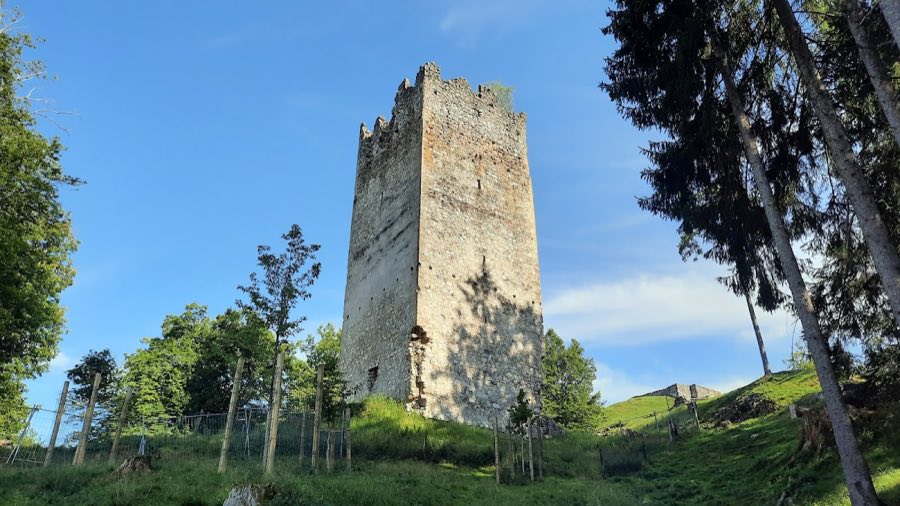
The former main tower was deliberately dismantled in the sixteenth century to streamline the summit as a gun platform, a recorded alteration to the castle’s defensive profile. Traces of the outer bailey, the walls that enclosed the suburb or outer court below the main enclosure, survive as fragmentary masonry on the slopes.
Recent conservation and archaeological work has cleared invasive vegetation that was taking root among the walls, consolidated the residential block and recorded the sequence of medieval building phases in situ, leaving the ruin accessible and legible while maintaining its conserved condition.
No. 40676
No. 49558
No. 92212
No. 83348
Comments
Comments for Aichelberg Castle will require a verified account before posting.
We'll send a verification link before your first comment is published.