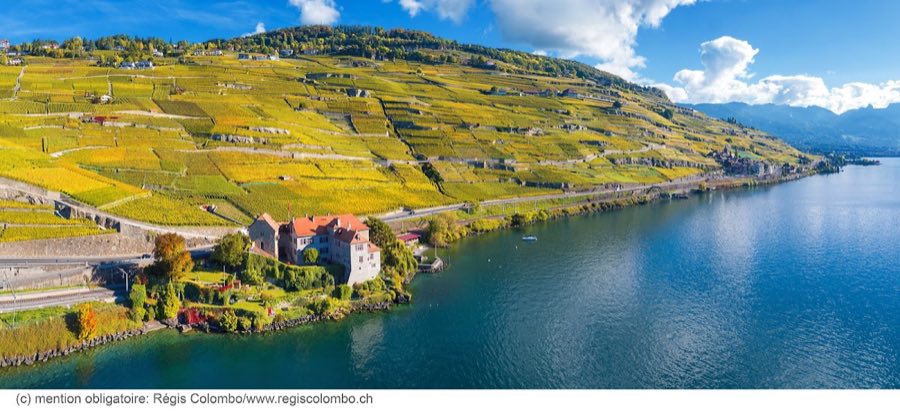
No. 30748
Château de Glérolles
Switzerland
ChâteauRuinFor events11th century
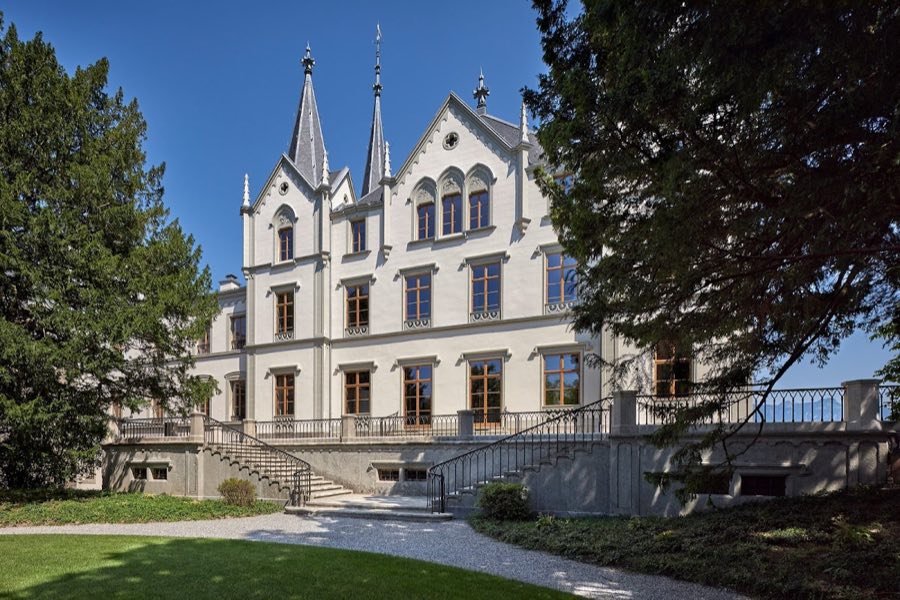
No. 65075
Castle · Switzerland
No. 65075 · 46.459 N, 6.841 E
For rent
Aile Castle, Vevey is marked for bookable castle accommodation. Nightly pricing, sleeps count, stay rules, and amenities are displayed only when public operator data is available.
Rental type: Hotel / bookable stay, Short-stay rental
Short-term availability: Bookable accommodation signal
Quick summary
Aile Castle, Vevey is a castle in Vevey, Switzerland with origins associated with the 19th century.
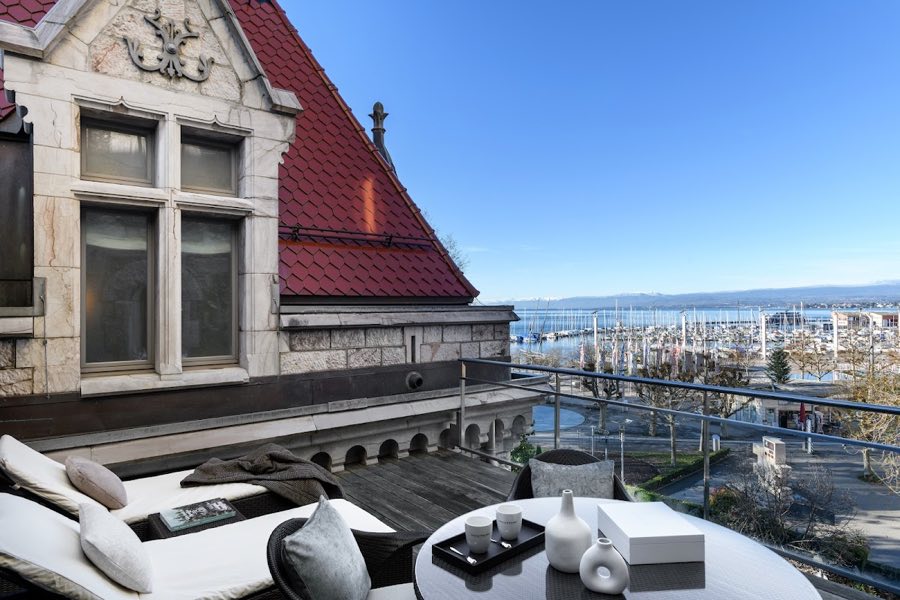
See all castles in SwitzerlandAile Castle in Vevey, Switzerland, stands as a mid-19th-century neo-Gothic private residence built on a site used by the city for market halls and an inn since the 16th century. The building visible today dates to the 1840s and reflects a deliberate reworking in a style inspired by English Gothic forms. The site is recognised for its national cultural value in Switzerland and has long been tied to the urban life of Vevey.
From 1545 the plot fronting the lake and the town square held the municipal market halls together with a neighbouring inn. The inn’s sign showed an uprooted wing, and the place name Aile, which echoes the Latin word ala for wing or halls, preserves that early association. Toward the end of the 17th century the owner Vincent Hertner cleared the earlier structures and around 1680 raised a pleasure castle notable for its corner turrets.
In the first half of the 19th century Jacques-Edouard Couvreu, a banker with training in Heidelberg and Paris, undertook an extensive transformation of the property. After a trip to England in 1827 that acquainted him with English Gothic and its revival forms, he began planning work in 1828, postponed major activity until 1839 and completed the replacement building between 1840 and 1846. He remodelled the house into a neo-Gothic monument drawing on English models, and the richly carved façades together with painted ceilings and inlaid wood floors date to his campaign.
During the 20th century the château served as a private residence; from 1948 until 1976 it was home to the French diplomat and writer Paul Morand and his wife Hélène Chrisoveloni. The city of Vevey bought the property in 1988 with the aim of converting it for hotel use, but that plan did not go forward and the site was occupied as a squat. After a 2007 popular vote the estate passed into private hands and was developed from 2008 to 2014 into a high-end residence divided into four apartments, one of them exceeding 1,500 square metres. Historical records relating to the property are preserved in the Couvreu de Deckersberg archival fonds, covering the period 1650–1966 and including plans for the domain and house.
The château occupies a narrow parcel between the shore of Lake Geneva and Vevey’s Market Square, a location that shaped its successive uses. The present house, completed in the 1840s, replaced an earlier pleasure castle of about 1680. That 17th-century building was distinguished by corner turrets, a feature noted in descriptions of the earlier phase, and it gave way when the mid-19th-century reconstruction took place.
The 19th-century remodelling produced the decorative elements most visible today. The façades are richly worked and include carved details executed in molasse, molasse being the local sedimentary sandstone used in many regional buildings. Inside, ceilings feature painted decoration and the floors include marquetry, marquetry meaning patterned inlaid woodwork. These ornamental programs date to the period when the house was reshaped into a neo-Gothic residence.
Later interventions altered the building’s use and internal layout. In the late 20th century the municipality purchased the estate for conversion to a hotel but the plan did not proceed and the property was occupied informally. Between 2008 and 2014 a major conservation and redevelopment campaign transformed the house into four luxury apartments, preserving and restoring the 19th-century decorative schemes while adapting spaces for contemporary living. The château’s status as a cultural property of national significance reflects both its historic phases and the survival of these architectural and decorative features.
The historical documentation associated with the house complements the physical fabric. Plans and archival material survive in the Couvreu de Deckersberg fonds, a collection spanning 1650–1966 that includes layouts of the grounds and the residence, providing direct evidence of the building’s evolution across centuries.
No. 30748
No. 49077
No. 75705
No. 24311
Comments
Comments for Aile Castle, Vevey will require a verified account before posting.
We'll send a verification link before your first comment is published.