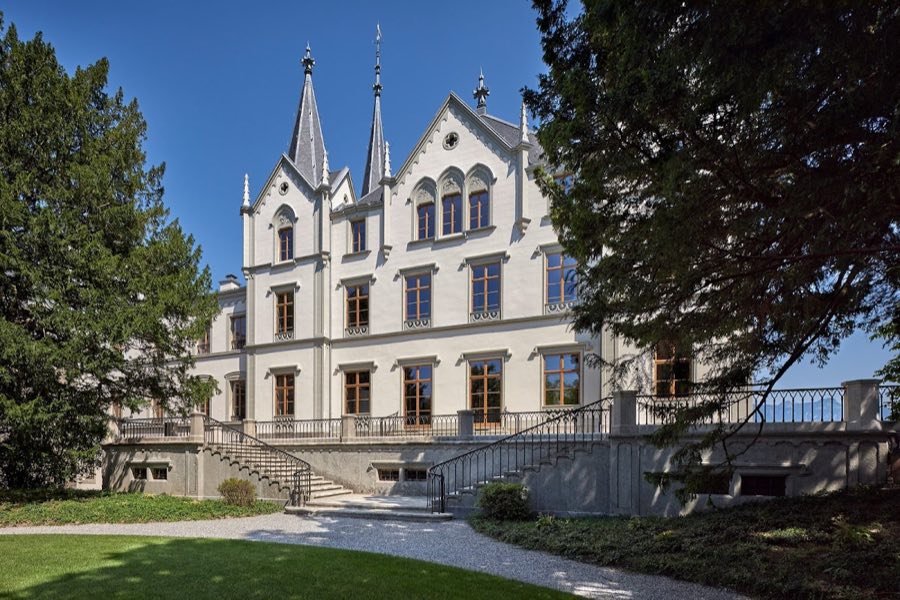
No. 65075
Aile Castle, Vevey
Vevey, Switzerland
CastleIntactFor rent19th century
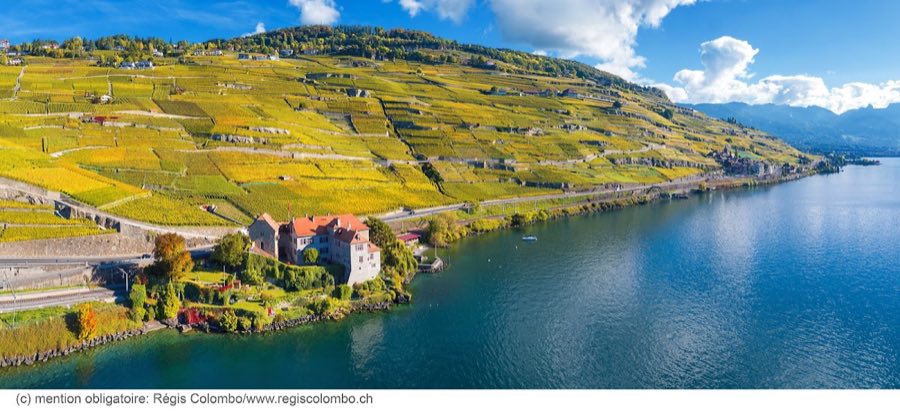
No. 30748
Château · Switzerland
No. 30748 · 46.474 N, 6.787 E
For events
Château de Glérolles is marked as a château or castle venue lead. Capacity, indoor/outdoor spaces, catering rules, and accommodation options are published only after public verification.
Event types: Private events, Cultural gatherings, Filming and photography
Quick summary
Château de Glérolles is a château in Switzerland with origins associated with the 11th century.
See all castles in SwitzerlandChâteau de Glérolles, Saint-Saphorin, Switzerland, is a medieval episcopal castle whose oldest fabric dates to the 11th century and whose main surviving forms reflect medieval defensive and residential building. Erected by the bishops of Lausanne on the ruins of a former Gallo-Roman settlement, the site controlled a narrow stretch of the road between Lausanne and Vevey and served both military and episcopal functions across the Middle Ages and early modern period.
The place first held a Gallo-Roman village called Glerula, a name derived from the Latin word for gravel. That settlement was destroyed by the Tauredunum landslip and tsunami in 563 and was not rebuilt; a new community to the east became Saint-Saphorin. After the conflict between Pope Gregory VII and Emperor Henry IV, and Henry’s penance at Canossa in 1077, Henry granted the Lavaux area, including this site, to the Diocese of Lausanne, bringing it under episcopal control.
Around the middle of the 12th century the bishop ordered construction of a keep on the rock at the lake edge to secure the road linking Lausanne and Vevey. The castle appears in written records around 1270–1271 when Bishop Jean de Cossonay enfeoffed it to Hugo de Palézieux. At the turn of the 14th century the diocese reclaimed the property and strengthened its defenses.
During the late 15th and early 16th centuries Bishops Aymon and Sébastien de Montfalcon rebuilt the living quarters and upgraded fortifications, a transformation that led contemporaries to compare the site to the better-known castle at Chillon. In 1531 the castle supplied ten cannons to Vevey to fire salutes for the arrival and departure of Charles III, Duke of Savoy. Five years later, in 1536, Bishop Sébastien tried to mount resistance to the invading Bernese forces from this position but failed and fled.
From the 16th century onward the castle ceased to serve as an active fortress and its role shifted. The upheavals of 1798, when the Bernese were expelled and the Lemanic Republic formed with French assistance, resulted in the castle passing into the hands of the people. In 1803, as Napoleon reorganized the region, the new cantonal government sold the property into private ownership, and it changed hands several times thereafter. Nineteenth- and twentieth-century modifications converted the stronghold into a more refined residence. In recent decades the building has housed the Glérolles vineyard operations and has been used as a venue for private events; it was sold in 2010 to developer Daniel‑Henry Rey, who had acquired the estate’s vines two years earlier. The site is listed as Swiss Cultural Property of Regional Significance (List B, no. 6491).
The castle occupies a rocky promontory on the northern shore of Lake Geneva, within the municipality of Saint-Saphorin, and sits below the village of Rivaz. The plan combines a compact medieval core with later residential ranges and landscaped grounds that face the lake. Stone construction throughout reflects typical medieval masonry for defensive works, while later rebuilding introduced domestic finishes and garden terraces.
The dominant medieval survivor is a rectangular keep measuring roughly seven by 6.4 metres. This quadrangular keep (bergfried, a tall defensive tower) dates to the original period of fortification and retains on its south side a double-door opening formed in the twelfth to thirteenth centuries. An engraving made in 1784 shows the tower with a pyramidal roof rising above the complex; during the nineteenth century the tower was reduced to about half its earlier height after vibrations from the newly built Simplon railway threatened structural failure.
On the east side of the castle a residential range was rebuilt at the end of the fifteenth and the start of the sixteenth centuries under Bishops Aymon and Sébastien de Montfalcon. One large hall in that wing preserves decorative ceiling beams and a late Gothic fireplace, evidence of the conversion from strict military use to comfortable episcopal lodging. Interior fittings also once included a first-floor confinement device known as la cage aux sorcières, the witches’ cage, a thick-planked chest reinforced with iron and fitted with a grille that allowed only limited light and air for anyone imprisoned within.
Nineteenth- and twentieth-century work reshaped much of the complex into an elegant dwelling. The present plan comprises about thirty rooms, among them a meeting space called La Salle des Chevaliers, the Knights’ Hall, and a garden that faces Lake Geneva with a private dock. The estate includes terraced vineyards covering approximately five hectares within the Saint-Saphorin sector of the Lavaux appellation. Grape varieties raised on the terraces include primarily Chasselas, with plantings of Pinot Noir, Gewürztraminer, Merlot, Cabernet Franc, Syrah and the specialty Humagne Rouge.
No. 65075
No. 75705
No. 49077
No. 24311
Comments
Comments for Château de Glérolles will require a verified account before posting.
We'll send a verification link before your first comment is published.