No. 64041
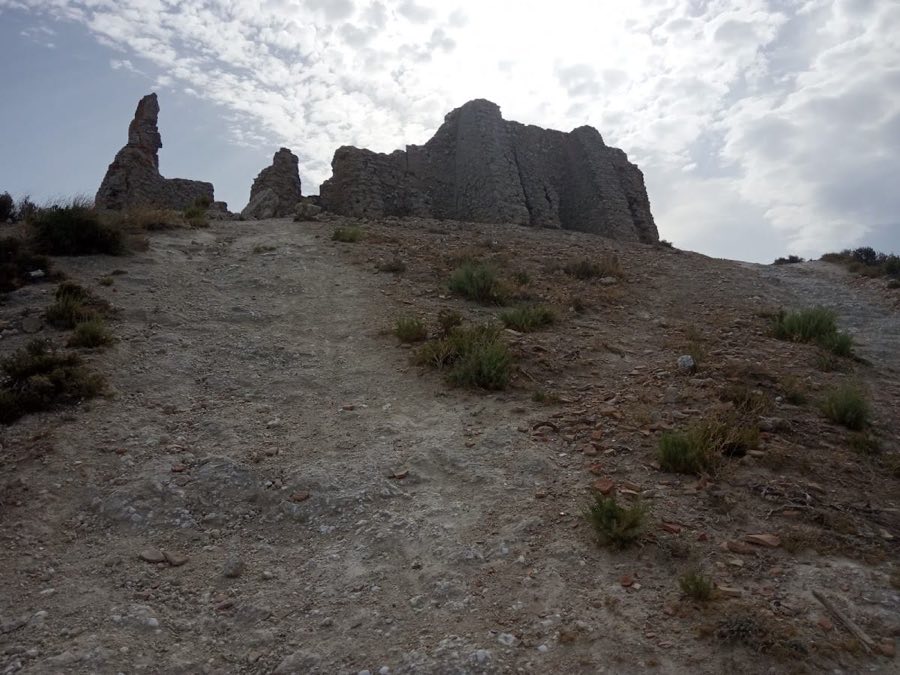
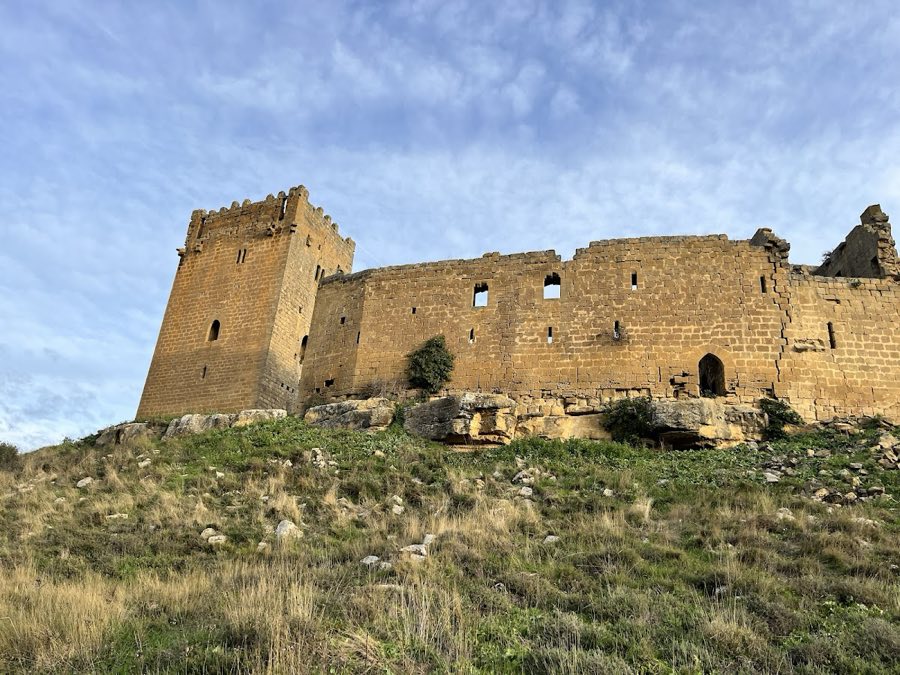
Castle of Santa Bárbara, Zaragoza
Zaragoza, Spain
CastleRuin13th century
No. 33729
Palace · Spain
No. 33729 · 41.656 N, 0.897 W
Quick summary
Aljafería Palace is a palace in Spain with origins associated with the 11th century.
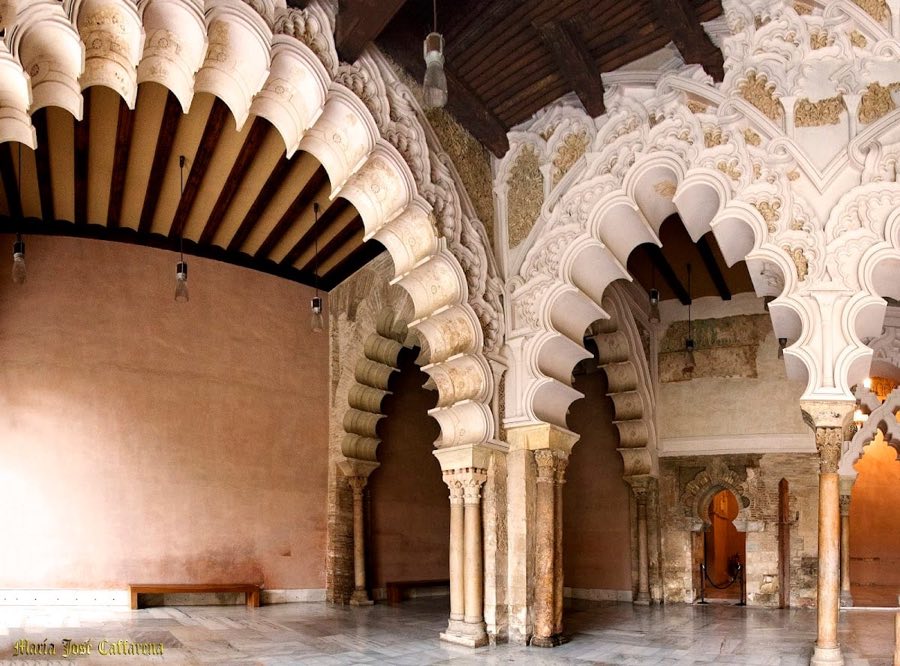
See all castles in SpainThe Aljafería Palace is located in Zaragoza, Spain, at C. de los Diputados, s/n, 50004. It was originally built by the Muslim rulers of the Taifa of Zaragoza in the 11th century. Construction took place mainly between 1065 and 1081 under Abu Ya’far Ahmad ibn Sulaymán al-Muqtadir Billah, leader of the Banu Hud dynasty. The palace was named Qasr al-Surur, meaning “Palace of Joy,” and served as a fortified royal residence and administrative center for the Hudid kings.
In 1118, the Christian king Alfonso I the Battler conquered Zaragoza, ending Muslim rule. The Aljafería then became the residence of the Christian kings of Aragon. During the 14th century, King Pedro IV, known as “the Ceremonious,” expanded the palace. He introduced Gothic-Mudéjar architectural elements and added the Church of San Martín, blending Christian and Islamic artistic traditions.
The Catholic Monarchs, Ferdinand and Isabella, ordered a significant renovation between 1488 and 1495. They added a new upper floor with richly decorated wooden ceilings in the Mudéjar style and incorporated heraldic symbols reflecting their reign. This transformed the Aljafería into a royal palace reflecting the Christian monarchy’s authority.
From 1593 onward, the palace was converted into a Renaissance-style military fortress. Italian engineer Tiburzio Spannocchi designed pentagonal bastions and reinforced walls to improve its defenses. Later, the building served as military barracks and suffered damage during the sieges of the Peninsular War in the early 19th century.
Between the late 15th century and early 18th century, the Aljafería also functioned as a prison for the Spanish Inquisition. The Torre del Trovador, a prominent tower within the complex, was used as a dungeon during this period.
Restoration efforts began in the mid-20th century under architect Francisco Íñiguez Almech, lasting from 1947 to 1982. These works aimed to preserve the palace’s original Islamic and Mudéjar features. In 1986, the Aljafería was included in the UNESCO World Heritage site “Mudéjar Architecture of Aragon.” Further restoration of original parts was completed by 2001. Since 1998, the palace has served as the seat of the Cortes of Aragon, the regional parliament.
The Aljafería is a fortified complex with an irregular quadrangular layout. Originally, it was surrounded by sixteen semicircular towers. The oldest surviving structure is the Torre del Trovador, a five-story square tower dating from the late 9th or mid-10th century. Its base features thick alabaster stone walls, while upper levels use lighter lime and gypsum concrete. Inside, horseshoe arches and cruciform pillars support the floors. Access was originally through a high door reached by a portable ladder, and the tower was once surrounded by a moat.
The main palace follows the design of early 8th-century Umayyad desert castles. It centers on a rectangular courtyard with water basins, flanked by royal halls and living quarters. The northern sector includes a two-story portico and the Salón Dorado, or Golden Hall. This reception room has a blind arch where the ruler sat, decorated with geometric patterns inspired by the mihrab lattice of the Mosque of Córdoba. The hall’s walls were richly painted in red, blue, and gold stucco reliefs, with alabaster panels and white marble floors.
A private mosque remains within the palace, oriented southeast toward Mecca. It features a horseshoe arch with distinctive S-shaped supports, columns with geometric leaf capitals, and a decorated frame called an alfiz. The mosque’s walls display blind interlaced arches and vegetal stucco motifs. Although the original octagonal dome is lost, the mosque’s mihrab niche remains intact.
The Patio de Santa Isabel is an open garden courtyard measuring about 24 by 39 meters. It retains the original southern water basin, while the northern basin is now covered. Surrounding arcades have been restored with polylobed arches based on original fragments. The southern portico displays a tripartite arrangement of polylobed and mixed-curvilinear arches with intricate laceries and vegetal stucco reliefs, considered a precursor to the decoration found later at the Alhambra.
Additions from the 14th century by Pedro IV include large Mudéjar halls with wooden coffered ceilings called alfarjes. A small octagonal wooden-domed chamber was built above the mosque. Pointed arches from this period were integrated carefully with the original Islamic structures.
The Catholic Monarchs’ renovation added a second floor over the northern wing. This included a grand noble staircase with geometric plaster balustrades and Gothic-Mudéjar window tracery. The ceilings are richly painted wooden coffers featuring heraldic motifs such as the yoke, arrows, and the motto “Tanto monta.” The Salón del Trono, or Throne Hall, measures about 20 meters long and 8 meters high. It has a coffered ceiling with intersecting eight-pointed stars and deep square panels containing octagons with central rosettes ending in pinecone pendants, symbols of fertility and immortality. The hall is surrounded by a gallery of conopial (lobed) arches with pierced parapets and a carved cornice featuring vegetal and animal motifs. A Gothic Latin inscription praises Ferdinand and Isabella and dates the hall’s construction to 1492.
The palace was originally protected by a wide moat about 20 meters across, with drawbridges on the east and north sides. Renaissance military upgrades added pentagonal bastions and a crenellated wall with a walkway for guards. In the 18th century, King Charles III remodeled the western façade and converted interior spaces into simple barracks rooms. Four neo-Gothic towers were added in 1862, two of which remain today.
Decorative elements include alabaster capitals, some reused from the earlier Caliphate period, marble floors, and polychrome stucco panels with vegetal motifs called atauriques. Inscriptions in Kufic script feature Quranic verses and the name of al-Muqtadir. Restoration has preserved many original Islamic and Mudéjar features, though much of the original paint and stucco decoration has been lost or repainted. Some original arches and decorative fragments are conserved in museums in Zaragoza and Madrid.
Today, the palace is surrounded by a small landscaped garden that separates it from the surrounding urban area.
No. 64041
No. 72998
No. 17125
No. 53854
Comments
Comments for Aljafería Palace will require a verified account before posting.
We'll send a verification link before your first comment is published.