No. 57334
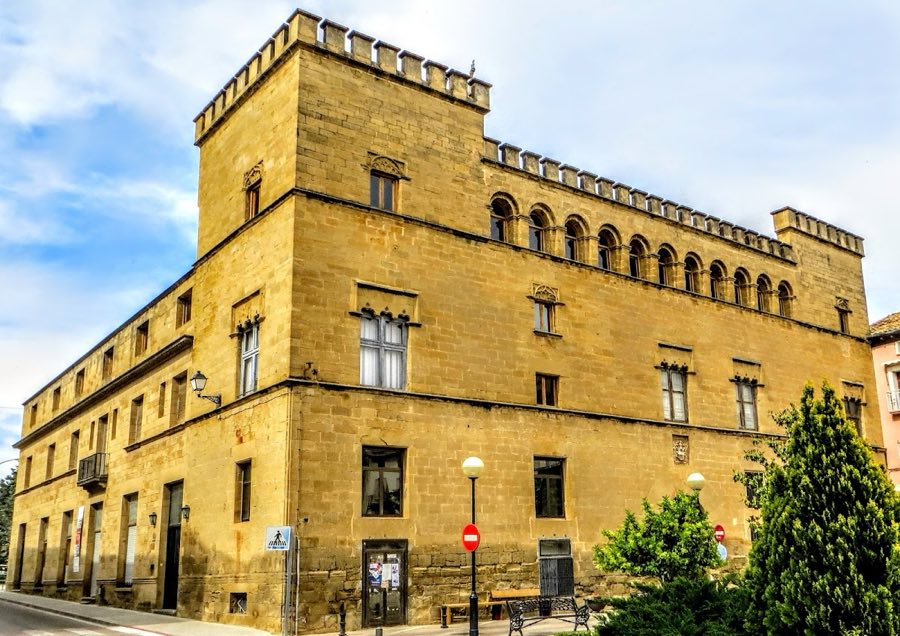
Palacio de Ayerbe
Spain
CastleRestored15th century
No. 53854
Castle · Spain
No. 53854 · 42.205 N, 0.875 W
Quick summary
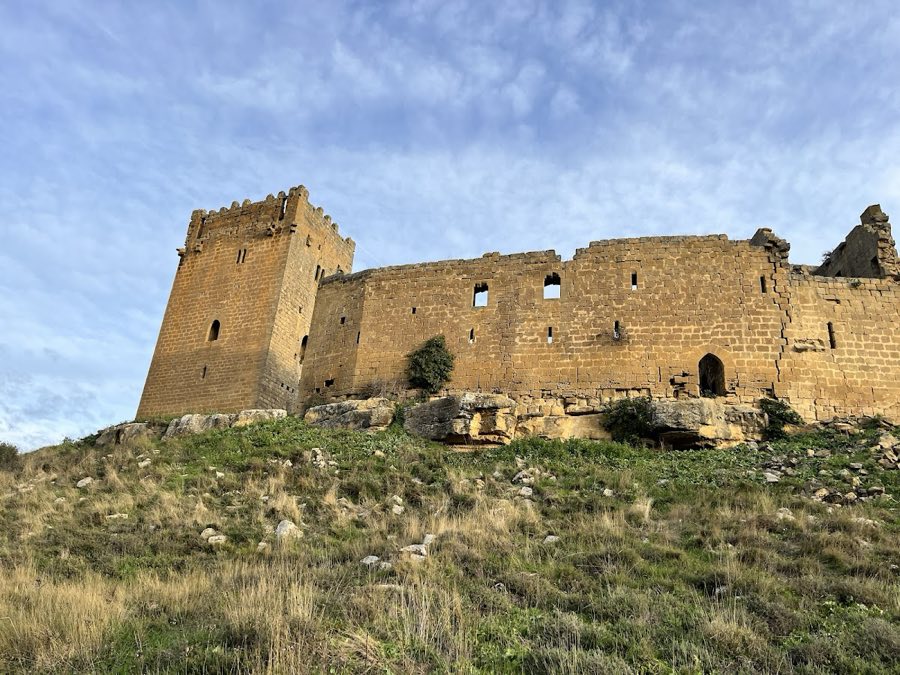
Castillo de Yéquera is a castle in Spain with origins associated with the 11th century.
See all castles in SpainCastillo de Yéquera stands in the municipality of Luna, Spain, and appears to have begun as a Muslim fortification.
The site likely has roots in the tenth century as a Muslim stronghold, and it is first clearly involved in the Christian advance of the late eleventh century. Around 1093, King Sancho Ramírez ordered his merino Banzo Azcón to repopulate the area and to build a fortification to secure newly conquered territory. A settlement developed around that defensive work as the locality was settled under Aragonese control.
In the fourteenth and fifteenth centuries the place was reworked in the Gothic manner. A new Gothic fortification was raised over earlier ruins, and the later complex belonged to the powerful Luna family. During the medieval period Yéquera stood on an Aragonese frontier line facing al-Ándalus and guarded the road that linked Ejea and Luna with Huesca, working alongside the nearby castle of Obano. As the Reconquista moved forward this frontier lost its military purpose, the site was abandoned, and its former inhabitants relocated to the Ebro valley. The ruined settlement of Yéquera is also recorded under the names castillo de Yecra and castillo de Lacorvilla, reflecting its association with the nearby hamlet of Lacorvilla.
The surviving ruins form a compact, irregularly planned enclosure divided into two detached sectors, with the visible fabric reflecting Gothic enlargement and rebuilding carried out in the fourteenth and fifteenth centuries. The overall complex is modest in scale and shows the overlay of later Gothic work placed upon earlier medieval foundations.
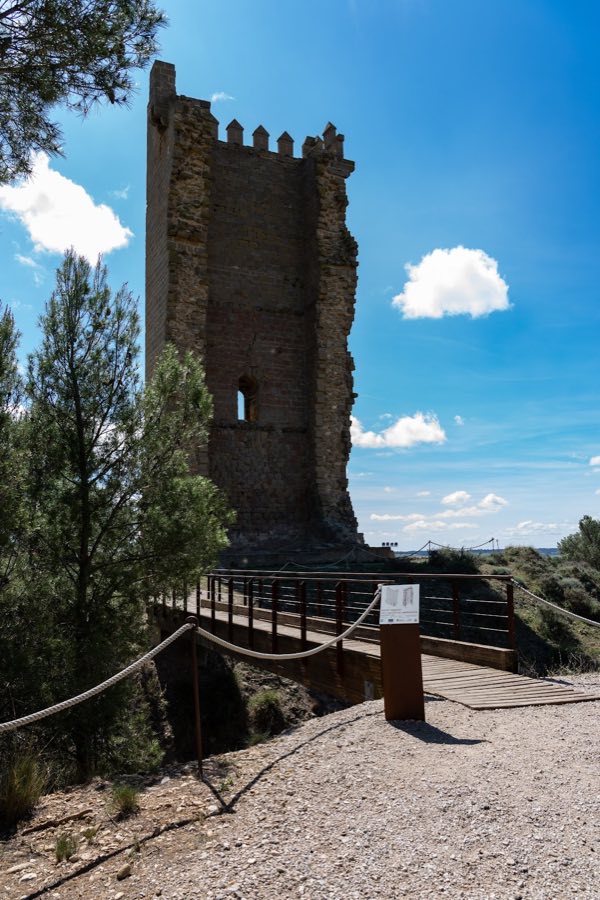
At one end of the enclosure stands a large Gothic tower with a rectangular footprint measuring about nine by seven metres and rising to roughly fifteen metres. Internally the tower is arranged on three floors and its principal access was through a rounded, semicircular-arched opening. The upper parts preserve fragments of crenellations and a series of corbels that likely supported corner watch platforms. The curtain walls near the tower retain several narrow vertical arrow slits.
On the opposite side of the compound lie the remains of a smaller, square-plan tower and an elongated hall attached to the larger tower at the other extremity of the enclosure. The entrance to the walled area survives with a semicircular arch, and a number of pointed, ogival windows are visible in the masonry, features that have been read as indications of the site’s function as a residence as well as a fortification. Overall the ruins are in a state of progressive decay.
No. 57334
No. 91994
No. 96617
No. 55877
Comments
Comments for Castillo de Yéquera will require a verified account before posting.
We'll send a verification link before your first comment is published.