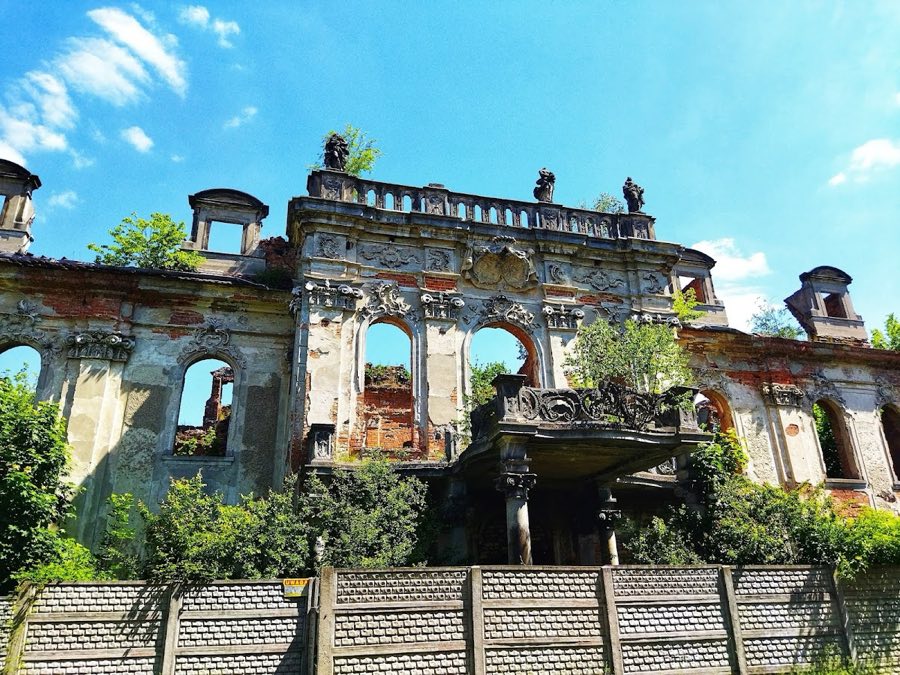
No. 85199
Goszcz Palace
Poland
Manor houseRuin18th century
No. 85903
Palace · Poland
No. 85903 · 51.516 N, 17.852 E
For rent
Antonin Palace is marked for bookable castle accommodation. Nightly pricing, sleeps count, stay rules, and amenities are displayed only when public operator data is available.
Rental type: Hotel / bookable stay, Short-stay rental
Short-term availability: Bookable accommodation signal
For events
Antonin Palace is marked as a château or castle venue lead. Capacity, indoor/outdoor spaces, catering rules, and accommodation options are published only after public verification.
Event types: Private events, Cultural gatherings, Filming and photography
Accommodation: Accommodation signal present
Quick summary
Antonin Palace is a palace in Poland with origins associated with the 19th century.
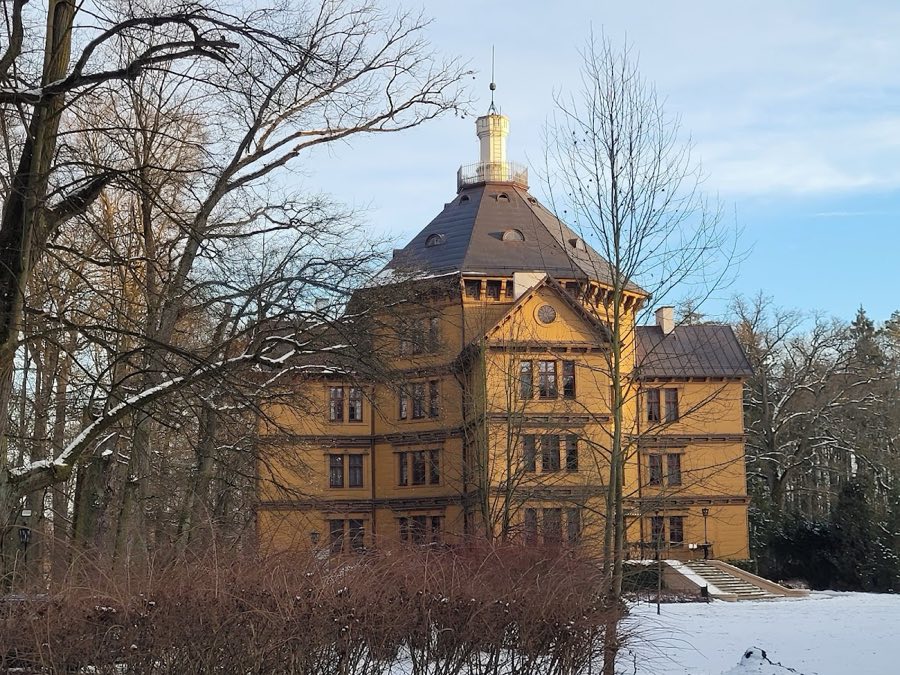
See all castles in PolandThe Palace in Antonin, in Antonin, Poland, is a small early 19th-century hunting palace built for the Radziwiłł family of the Polish-Lithuanian nobility and designed by the architect Karl Friedrich Schinkel. Constructed in the 1820s, the building combined a rustic retreat for aristocratic shooting parties with a setting for chamber music, and it became notable for its musical associations and for hosting important visitors. Its creation reflected the tastes of its owner and the period’s interest in purpose-built country houses that served both leisure and cultural functions.
Work on the house took place in the early 1820s, with construction completed around 1824. Erected in a forested landscape, the complex opened as a private hunting seat and as a venue for concerts given by the household. The owner was active as a cellist and composer, and the composer Frédéric Chopin visited the house in 1827 and again in 1829. A room in the palace preserves personal mementos associated with Chopin, including a death mask and a cast of his hand.
Following the partitions of the Polish–Lithuanian Commonwealth, the territory that includes Antonin came under the administration of the Kingdom of Prussia and remained so until the end of the First World War in 1918. In 1939 the then-owner, Prince Michał Radziwiłł, transferred the property to Adolf Hitler, and the palace remained in Hitler’s possession from 1939 until 1944. After the Second World War the house lay within the Polish People’s Republic and was taken into state ownership.
By the mid-1970s the estate was the focus of a restoration campaign led by the journalist and music critic Jerzy Waldorff. Repairs and rebuilding between 1975 and 1978 included the fitting of a small concert hall in the main block. A later restoration that concluded in 1994 received the Europa Nostra ’94 award. Today the complex continues to host musical events, including the International Festival “Chopin in the Colours of Autumn,” and it operates as a hotel and restaurant; the property is managed by the Centre of Art and Culture of Kalisz.
The palace sits within a large English‑style park with ponds, an island, and scattered commemorative and funerary features. The house itself is timber framed, built of thick horizontal logs and set on a masonry foundation, with the outer face covered by cladding and painted a deep imperial yellow. One account specifies the building timber as larch, a durable softwood used for exterior work.
The plan takes a Greek-cross form, a cross with four equal arms, organized around a central octagonal mass from which four lower wings extend at right angles. The central block contains a single, tall hall that rises through three storeys; its roof is capped by an elaborately carved decorative ceiling. In the middle of that space stands a large central column that houses the chimney flues, is faced with decorative tile, extends up through the roof, and serves as the mounting for a large collection of hunting trophies, mostly deer antlers.
One of the wings contains a stair that leads to internal balconies; from those galleries visitors reach the living rooms and guest chambers located in the three other wings. The adjacent pavilion spaces historically accommodated bedrooms, a library, and museum displays. A small concert hall was later fitted into the main block during the 1970s renovation.
The surrounding grounds include ponds with an island that holds a white marble tomb for the two daughters of the original owner, Frederica Helena and Louise, together with a funerary chapel and a small family cemetery. Monument trees and a memorial to Chopin stand in the park, and several nearby buildings were executed in a Tyrolean manner. Commemorative objects on the estate and on the facade include a plaque to Chopin and a sculpted bust of the composer. After conservation work in the late 20th century the palace and its park are conserved, maintained, and used for cultural events and hospitality functions.
No. 85199
No. 66375
No. 87949
No. 31647
Comments
Comments for Antonin Palace will require a verified account before posting.
We'll send a verification link before your first comment is published.