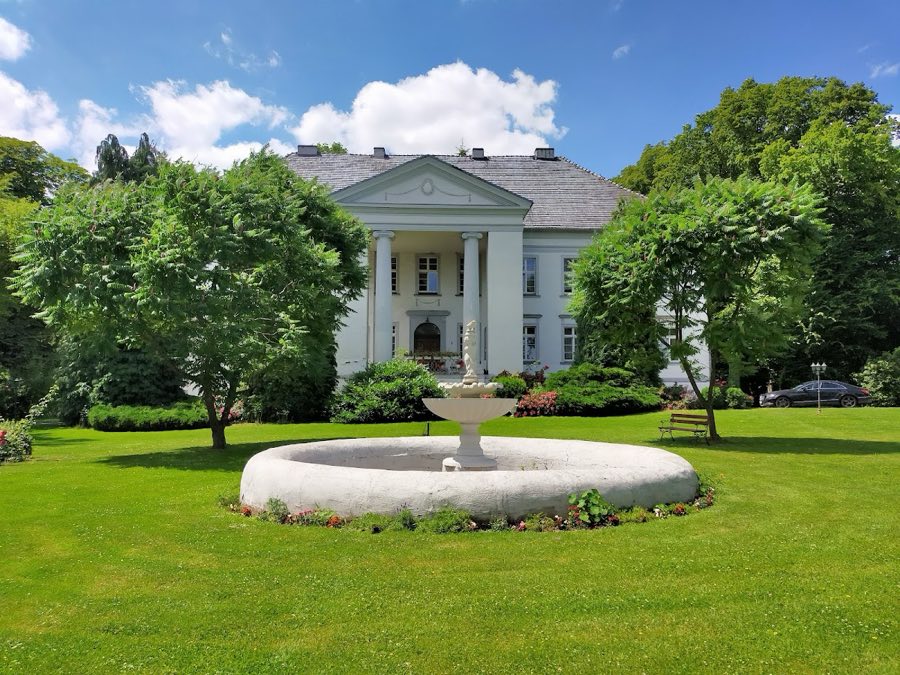
No. 77488
Maciejów Palace
Poland
Manor houseRuin18th century
No. 87949
Manor house · Poland
No. 87949 · 51.101 N, 17.860 E
For events
Woskowice Małe Palace is marked as a château or castle venue lead. Capacity, indoor/outdoor spaces, catering rules, and accommodation options are published only after public verification.
Event types: Weddings, Private events, Cultural gatherings, Filming and photography
Ceremony spaces: Ceremony setting to verify
Quick summary
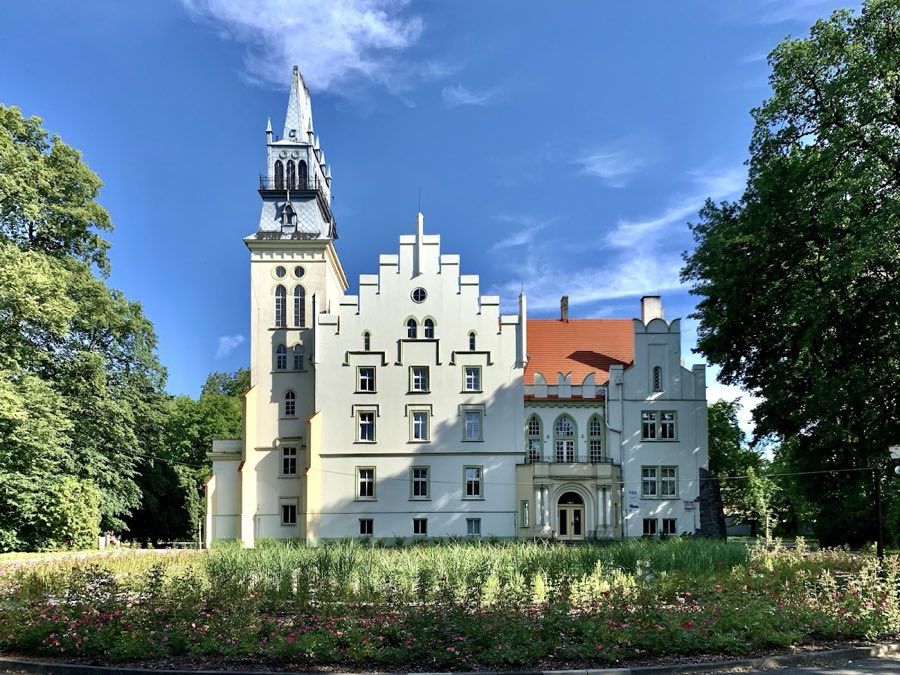
Woskowice Małe Palace is a manor house in Poland with origins associated with the 7th century.
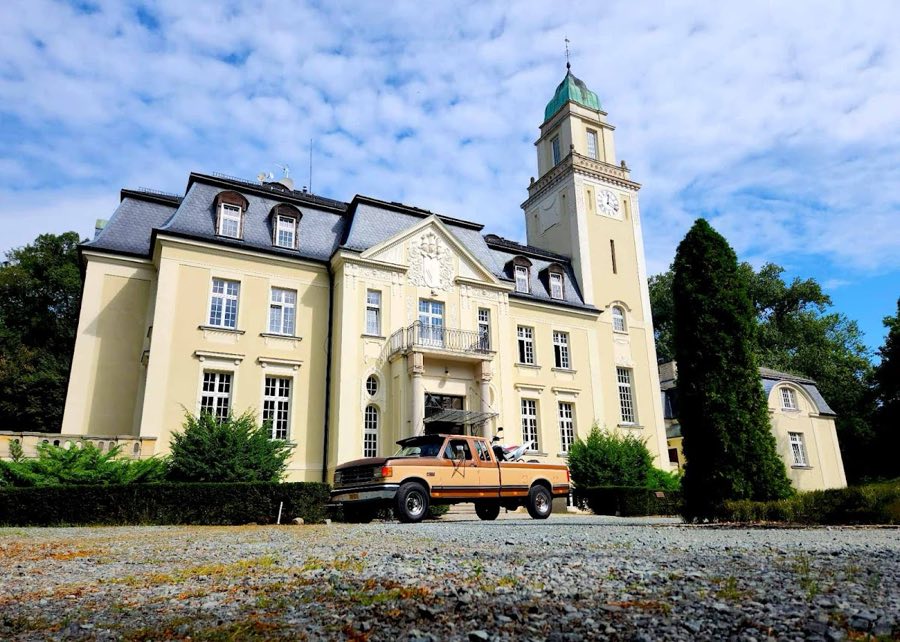
See all castles in PolandThe Palace in Woskowice Małe, Poland, is a manor house with origins on a seventeenth‑century site; the standing building was raised around 1800 and was given its present neo‑Gothic appearance in 1912. Built on earlier foundations, the estate became a significant landed property in Lower Silesia and served as the residence of the von Loesch family for much of the nineteenth and early twentieth centuries, during which the family supported the local church and managed a large agricultural operation.
Occupation of the plot goes back to the 1600s. Around 1800 a new house was constructed on those earlier foundations, forming the core of the present manor. In 1829 the property passed into the hands of the von Loesch family. Members of that family enlarged the house in the 1870s, and a final rebuilding in 1912 reshaped the exterior into the neo‑Gothic style visible today.
By the early twentieth century the estate covered several hundred hectares. In 1907 the holding measured about 755 hectares, and by around 1937 it was recorded at roughly 696 hectares, a total that included the outfarm known as Klein Lorzendorf. The estate farm was managed by a senior official and the property was kept as a family fideicommiss (a legally bound family entail restricting sale and division).
Several family members are linked to life at the manor. Konrad von Loesch (1899–1939) was one of the better‑known owners; he was partnered with Ingeborg, Countess von Zedlitz and Trützschler (1903–1948), who took part in the German Dendrological Society. In 1920 Sibylle von Loesch (1900–1966) married Fritz‑Erich von Leweinski, known as von Manstein, in a wedding held at the palace. The last private owner on record was Friedrich‑Botho von Loesch (1903–1973), who later owned land in Austria. The writer Maria Frisé (1926–2022), daughter of Konrad von Loesch, spent her childhood at the manor.
In the 1960s the house was adapted for public use as a drug‑therapy and addiction treatment centre, with records indicating use from 1960. The palace received legal monument protection in 1965; the adjoining park was placed under protection in 1981. The provincial register identifies the ensemble as the palace, an outbuilding (officina), and the park.
The site follows a compact, rectangular plan with a tall rectangular tower set to the east, and a designed park directly east of the building that covers about two hectares and contains a number of mature exotic trees. The main elevation presents a portico and an oriel, while one side of the house is finished with a stepped blind gable, a decorative end wall with stepped tiers but without openings. A granary built close to the house dates to 1894 and stands in immediate proximity to the manor.
Below ground and on the lower level the building preserves barrel vaults, a continuous arched ceiling form, running through the cellar and the ground floor. Interior finishes that survive include decorative stucco work and wood panelling, both of which remain in place in parts of the house. A later annex contains a two‑storey projecting bay topped by a balcony that carries the combined marital coats of arms of Karl Friedrich von Loesch (1864–1931) and Amaly Pauli von Schack (1878–1971) with an inscribed date element reading 12 □ 4‑1899; coats of arms for the Loesch and Schack families are recorded elsewhere on the building.
The ensemble also contains an outbuilding identified as an officina, grouped with the palace and park in the official register. Over time the manor has been adapted for new functions and was converted for use as an addiction treatment centre in the 1960s; despite these changes, the protected status of the building and park has helped preserve key structural elements and historic fittings.
No. 77488
No. 31647
No. 45328
No. 80954
Comments
Comments for Woskowice Małe Palace will require a verified account before posting.
We'll send a verification link before your first comment is published.