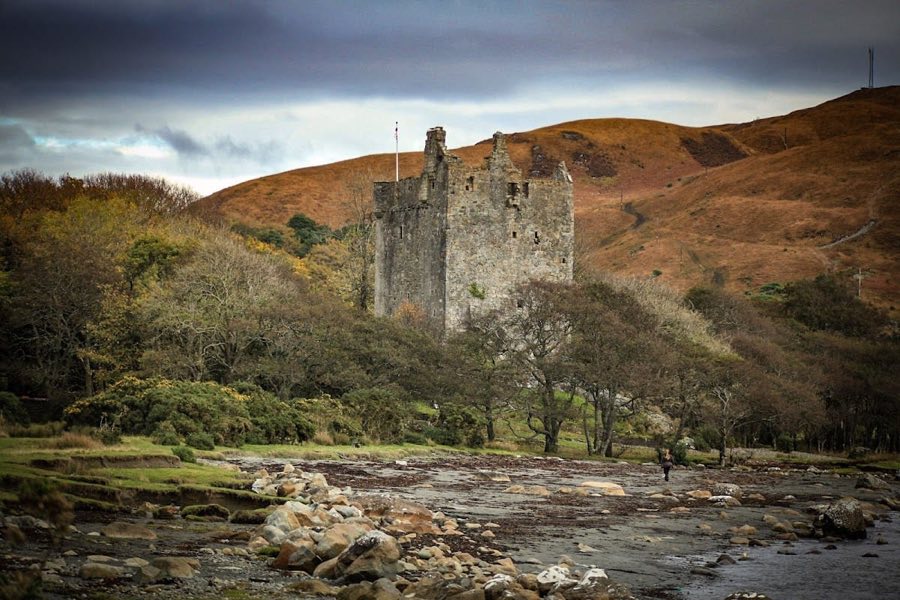
No. 33598
Moy Castle
United Kingdom
CastleRuin15th century
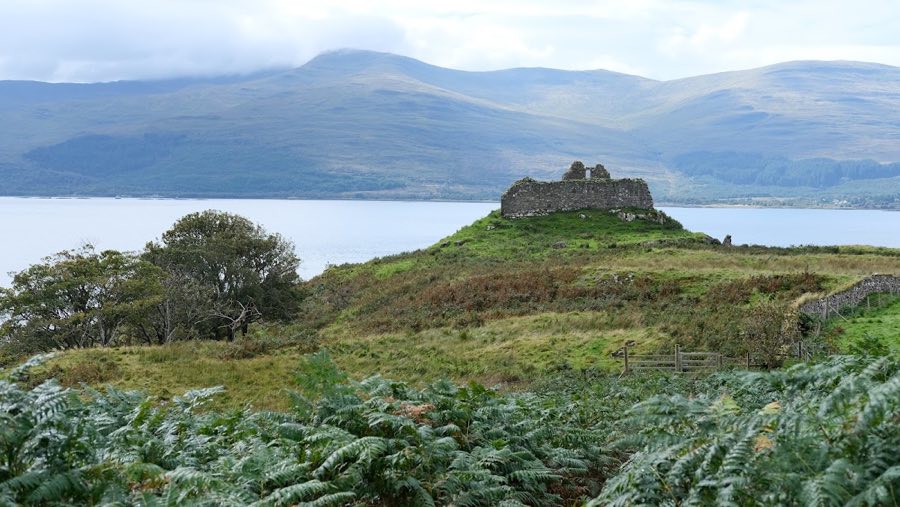
No. 28671
Castle · United Kingdom
No. 28671 · 56.519 N, 5.754 W
Quick summary
Ardtornish Castle is a castle in United Kingdom with origins associated with the 14th century.
See all castles in United KingdomArdtornish Castle is situated on a promontory reaching into the Sound of Mull, within the area of Morvern in Scotland. The stronghold was established by the Norse-Gaelic rulers known as the Clan Donald, who held prominence from the early 14th century onward.
The earliest fortress on this site dates back to the mid-12th century under the leadership of Somerled, a key figure in the Norse-Gaelic world. Throughout the 14th century, Ardtornish Castle became a principal seat for the chiefs of Clan Donald. In the 1380s, John of Islay, the sixth leader of the clan and Lord of the Isles, died here. His funeral procession is recorded as having set out from Ardtornish across the Sound of Mull for burial on the sacred island of Iona, reflecting the castle’s role as a base for significant clan ceremonies.
John’s son, Donald of Islay, continued to use Ardtornish as a power center. From this location, he issued official documents written in both Latin and Gaelic, demonstrating the bilingual and administrative sophistication of his rule. Donald’s fleet is historically noted as having sailed from the castle to Ross-shire to assert his claim to the Earldom of Ross, an event that culminated in the Battle of Harlaw in 1411.
In 1461, the castle gained further historical importance as the site of the Treaty of Ardtornish-Westminster. Here, John of Islay’s great-grandson, the last Lord of the Isles, negotiated with envoys from King Edward IV of England a pact that proposed dividing Scotland into three parts among himself, his ally Donald Balloch of Dunnyvaig and the Glens, and the displaced Earl of Douglas. This agreement was contingent on these leaders swearing allegiance to the English crown. When the treaty became public knowledge in 1474, it triggered severe consequences including the loss of the Earldom of Ross by 1475 and the complete forfeiture of the Lordship of the Isles in 1493.
Following the downfall of the Lords of the Isles, the lands around Ardtornish were taken under direct royal control before being granted to the Clan MacLean, who were based at Duart Castle and already held significant territory in Morvern. Control of the castle eventually passed through further hands until the late 17th century, when the Campbells, Earls of Argyll, seized the MacLean estates. By this period, Ardtornish Castle was likely deserted.
The ruins of Ardtornish Castle occupy the southern tip of a rocky promontory that extends into the Sound of Mull, approximately two kilometers southeast of the village of Lochaline. The site’s position provided commanding views over the water, offering natural defensive advantages favored by its medieval builders.
As a recognized scheduled monument, the castle’s remains are legally protected, underscoring their historic importance. While specific details of its construction are not extensively documented, the ruins indicate a typical medieval fortress layout situated to maximize control over the surrounding seaways and land approaches.
No particular inscriptions, mosaics, or decorative features have been recorded on the surviving ruins. The materials and methods used to erect the castle were likely typical of the period and region, utilizing local stone for strength and durability against both weather and conflict.
Today, the castle is a fragmentary site, with its structural elements standing in ruin yet visibly marking the former fortress’s footprint. The ruins preserve the memory of its long history as a center of clan authority, maritime activity, and political negotiation in the western Highlands of Scotland.
No. 33598
No. 55120
No. 51895
No. 99903
Comments
Comments for Ardtornish Castle will require a verified account before posting.
We'll send a verification link before your first comment is published.