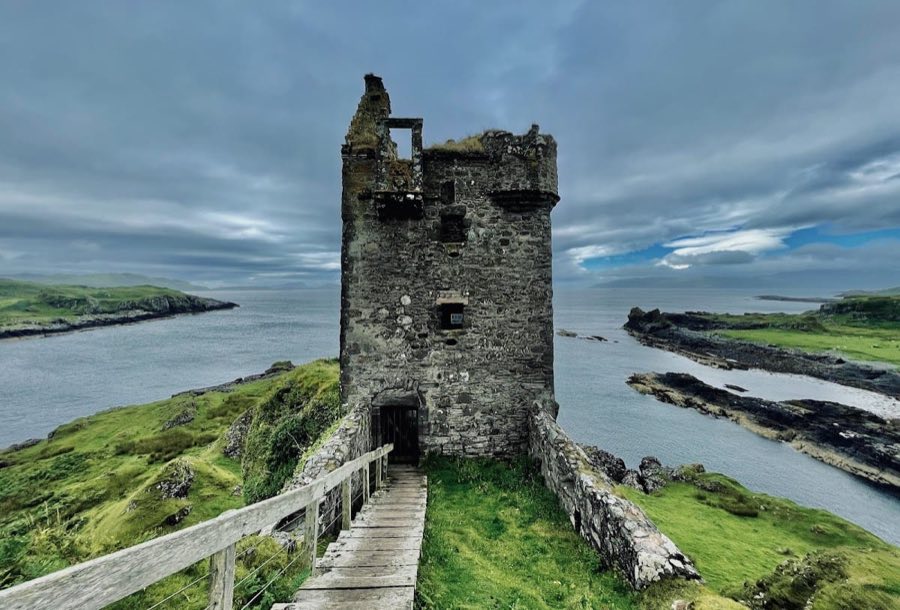
No. 55120
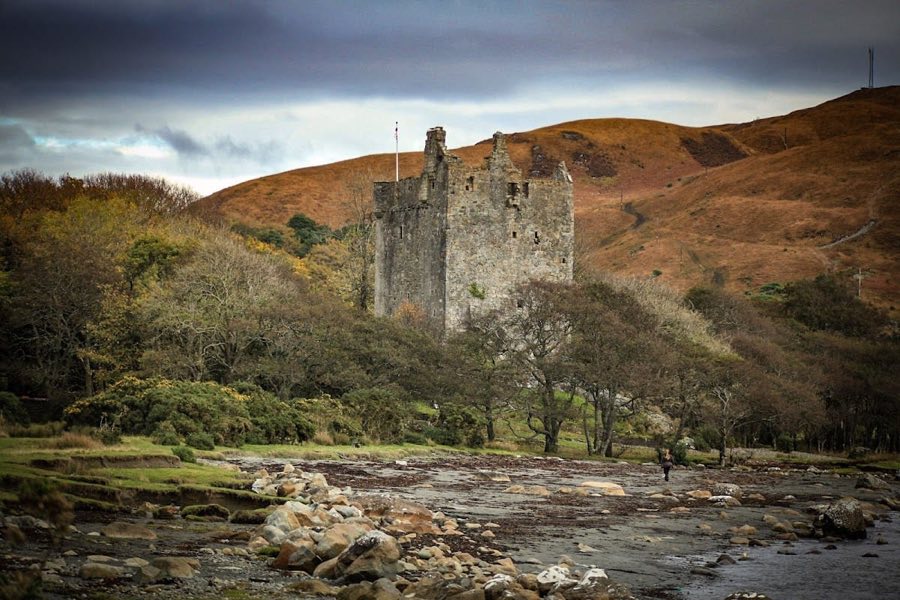
Gylen Castle
United Kingdom
Tower houseRuin16th century
No. 51895
Tower house · United Kingdom
No. 51895 · 56.511 N, 5.402 W
For events
Barcaldine Castle is marked as a château or castle venue lead. Capacity, indoor/outdoor spaces, catering rules, and accommodation options are published only after public verification.
Event types: Private events, Cultural gatherings, Filming and photography
Quick summary
Barcaldine Castle is a tower house in United Kingdom with origins associated with the 17th century.
See all castles in United KingdomBarcaldine Castle is situated in the municipality of Benderloch, within modern Scotland. It was constructed by the Scottish Clan Campbell during the early 17th century.
The castle’s origins date to between 1601 and 1609, when Sir Duncan Campbell, the seventh Laird of Glenorchy, built the tower house on lands his family had acquired just a few years earlier, in 1597. Serving primarily as a family residence, Barcaldine Castle also had a military role, evidenced by its garrisoning in 1645 and again in 1687.
Later in the 17th century, the Campbells of Barcaldine sought to assert their influence further by attempting an armed incursion into Caithness with the aim of reclaiming debts. Although this military action did not succeed as planned, the family was compensated through the granting of the Earldom of Breadalbane, reflecting their standing in Scottish nobility.
By the end of the 17th century, around 1698, the castle fell into poor condition despite some repair attempts in the early 1700s. The Campbells eventually relocated to a nearby residence known as Barcaldine House by 1724, signaling a shift away from the castle as their main home.
In the mid-18th century, members of the Barcaldine branch of the Campbell family were connected to a notorious historical event: the 1752 murder of Sir Colin Campbell of Glenure, nicknamed the “Red Fox.” This incident was famously immortalized in Robert Louis Stevenson’s novel Kidnapped and remains a poignant element of the clan’s history.
The family gained further distinction in the 19th century with their elevation to baronetcy in 1841, followed by the sale of Barcaldine Castle in 1842. However, the Campbells regained possession of the property in 1896. Soon after, from 1897 to 1911, significant restoration efforts were undertaken under the guidance of Alexander Buttar to revive the castle from a state of ruin.
Barcaldine Castle also played a role in the turbulent events surrounding the 1692 Massacre of Glencoe, during which it came under attack. Its historical and architectural importance was formally recognized in 1971 when it was designated a Category A listed building, marking it as a site of national significance.
Throughout the 20th and into the 21st century, the castle changed ownership multiple times. In 2009, it was acquired by David Whitehead. Today, although it remains privately owned, Barcaldine Castle holds a well-documented place in Scotland’s layered historical landscape.
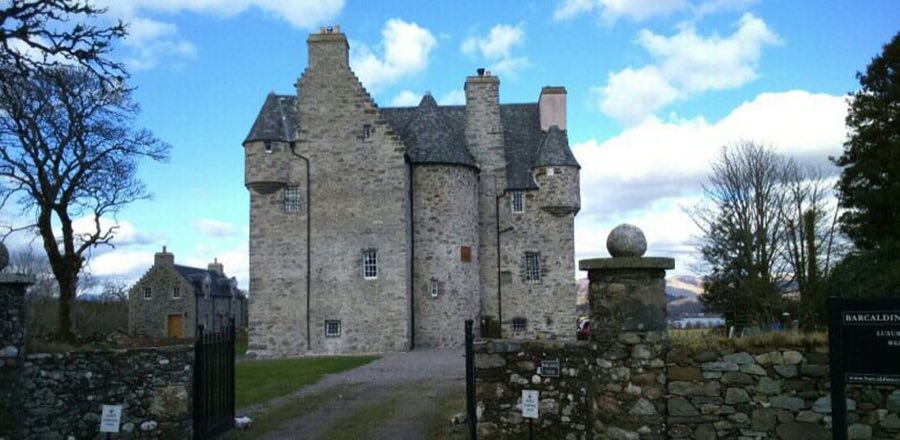
Barcaldine Castle is a three-story tower house featuring an L-shaped design typical of Scottish strongholds from the early 1600s. The primary construction material is rubble stone, a rough masonry technique common at the time. Within the lower levels, a vaulted basement houses the kitchen and storage cellars, demonstrating functional use of space for household operations and food preservation.
At the inner corner where the two wings of the “L” meet stands a round stair tower crowned with a conical roof. This tower contains the main entrance, accessed through an oak door reinforced by an iron gate, combining defensive and practical architectural elements of the period.
Each corner of the castle’s main block is punctuated by turrets. Notably, three of these are oriel towers, which project outwards and are covered by half-conical roofs made from slate, a durable local material. The entire roof is pitched and also clad in slate, featuring dormer windows that admit light into the attic spaces.
The outer walls have undergone recent restoration using traditional harling, a Scottish technique involving a roughcast render applied to stone surfaces, which both protects the masonry and preserves the castle’s historic appearance.
Among the more intriguing internal features are a bottle dungeon—a small, windowless prison chamber often shaped like an upside-down bottle—and two concealed passageways, the latter hinting at the castle’s defensive and secretive functions in times of conflict or unrest.
The castle overlooks Loch Creran and the surrounding Glen Coe mountains, situated about 500 meters south of the loch’s shoreline. This strategic setting would have afforded its inhabitants commanding views of the landscape and waterways.
Before the major restoration at the turn of the 20th century, the castle’s roof had collapsed, and the structure had fallen into ruin. The revival of the castle brought it back to stable condition while retaining its historical character.
Near the castle, west of the main A828 road and north of Barcaldine itself, stand the Barcaldine Stones. These two standing stones are part of the site’s archaeological context, adding a prehistoric dimension to the landscape surrounding the castle.
No. 55120
No. 28671
No. 68417
No. 33598
Comments
Comments for Barcaldine Castle will require a verified account before posting.
We'll send a verification link before your first comment is published.