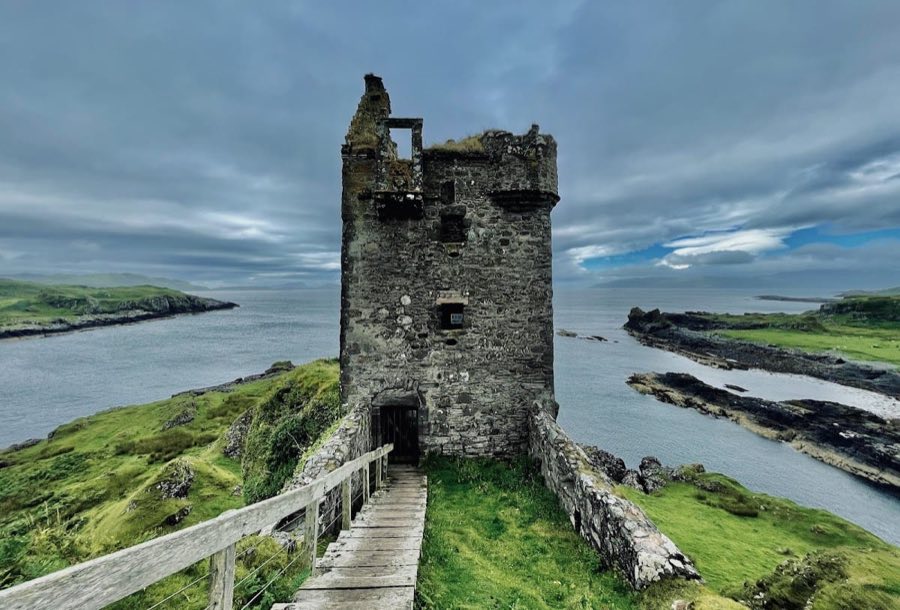
No. 55120
Gylen Castle
United Kingdom
Tower houseRuin16th century
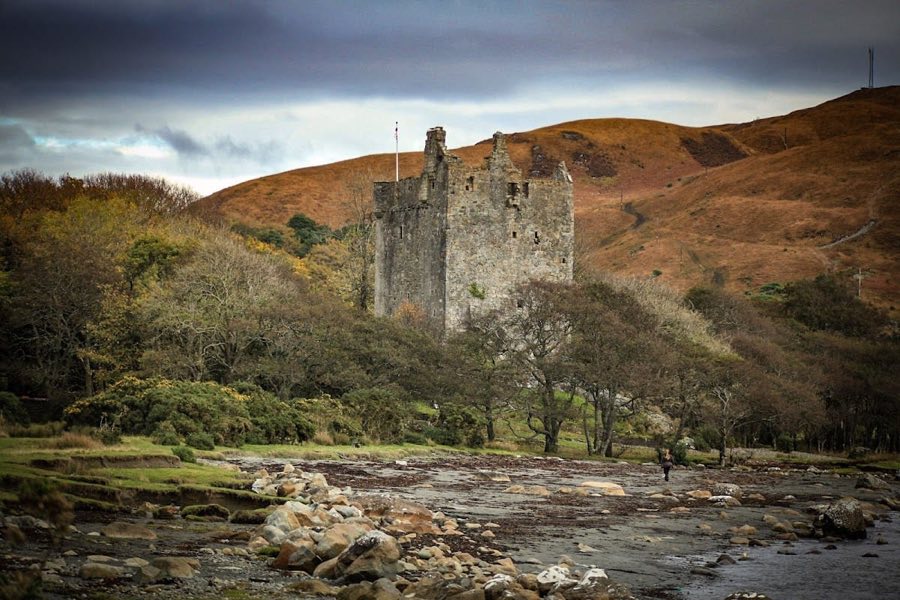
No. 33598
Castle · United Kingdom
No. 33598 · 56.355 N, 5.859 W
Quick summary
Moy Castle is a castle in United Kingdom with origins associated with the 15th century.
See all castles in United KingdomMoy Castle is located near Lochbuie on the Isle of Mull, Scotland. It was constructed by the Scottish Clan Maclean of Lochbuie and served as their hereditary stronghold. The lands where the castle stands were granted in 1360 to Hector Reaganach Maclean, the first Laird of Lochbuie. The castle’s main structure was most likely begun during the early 15th century by John Maclean, the third Laird of Lochbuie, and was completed under his son Hector, the fourth Laird.
The first written record of Moy Castle dates from a royal charter issued in March 1494, which confirms that John Maclean, the fifth Laird, held the property under the Lord of the Isles. Throughout the 17th century, Moy Castle was involved in Scotland’s religious tensions. Around 1690, the castle briefly fell to the Clan Campbell due to the Macleans’ participation in the Jacobite uprising of 1689. However, control of the castle was eventually restored to the Macleans.
By the mid-18th century, specifically 1752, Moy Castle was abandoned after the construction of a newer estate house nearby, marking the end of its role as a family residence. In 1773, the castle gained some literary note when the famous writers Samuel Johnson and James Boswell visited. More recently, Moy Castle featured in the 1945 British film I Know Where I’m Going! and has been the focus of preservation efforts beginning in the early 21st century, reflecting its ongoing importance as an historic site.
Moy Castle is a tower house built on a rocky outcrop at the head of Loch Buie, occupying a footprint about 10.7 meters square and rising to nearly 17.5 meters in height. The castle consists of three main floors plus a garret, a small attic space just below the roof level. Its stone walls, dating mainly from the early 15th century with some modifications around the late 15th century and circa 1700, stand largely intact at full height to the gables. The structure features a crenellated parapet, a low protective wall with alternating raised sections used for defense on top of the walls, and two cap-houses—small rooms above the main tower that likely provided access to the roof. The castle rests on a natural rocky platform and is surrounded on the northwest side by remains of a rocky ditch, a defensive feature to hinder attackers.
Inside, the ground floor houses a well approximately 1.8 meters deep that holds fresh water, an unusual feature because its water level lies well above the surrounding ground, ensuring a reliable water source within the castle walls. Adjacent to the southeast side of the tower were the remains of a small enclosure, known as a barmkin, which would have served as a protected courtyard area for storage or shelter for livestock during times of trouble. The current condition of Moy Castle benefits from recent conservation efforts carried out between 2006 and 2015, which have stabilized the ruins and prevented further deterioration, allowing it to remain a prominent example of 15th-century Scottish fortified residences.
No. 55120
No. 28671
No. 29370
No. 51895
Comments
Comments for Moy Castle will require a verified account before posting.
We'll send a verification link before your first comment is published.