No. 90975
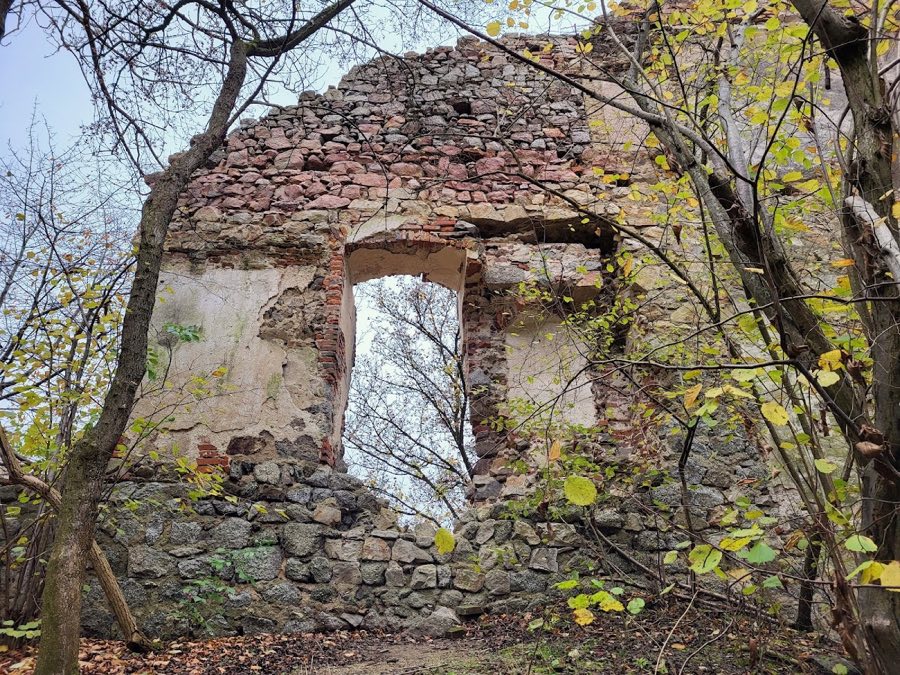
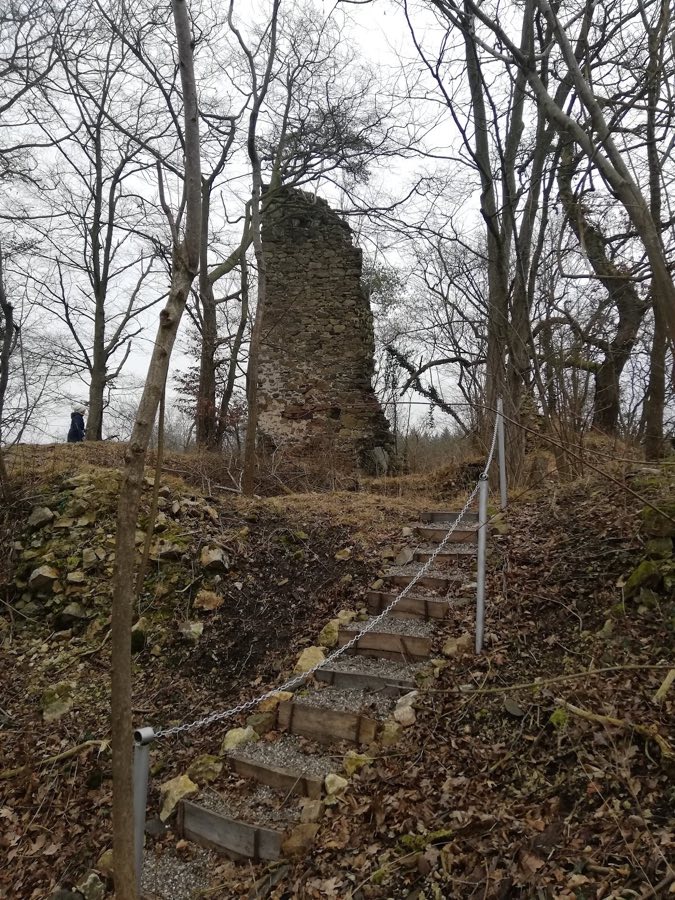
Burgruine Zelking
Austria
CastleRuin14th century
No. 75537
Castle · Austria
No. 75537 · 48.242 N, 15.203 E
Quick summary
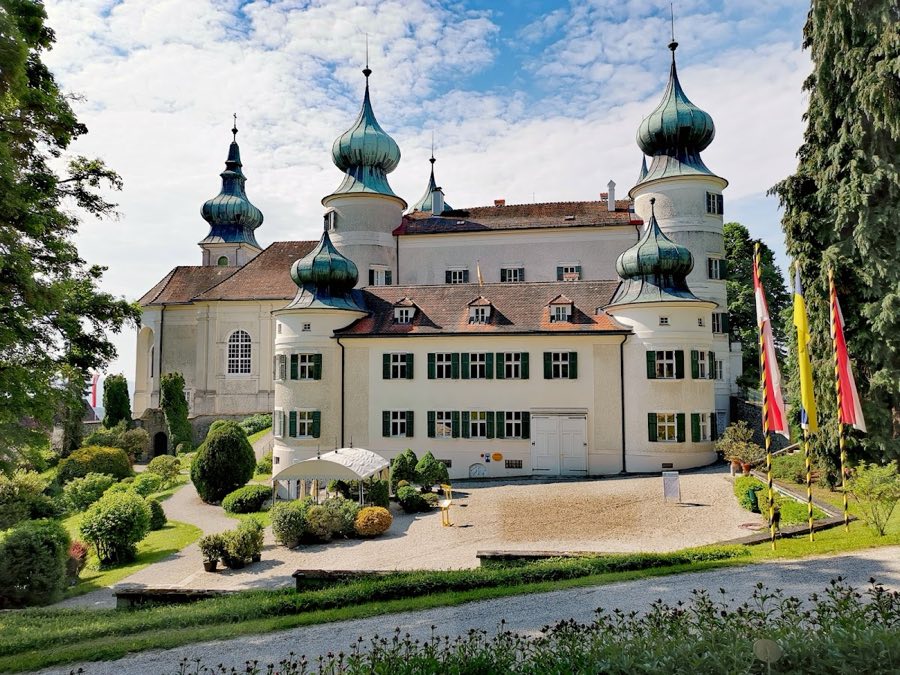
Artstetten Castle is a castle in Austria with origins associated with the 13th century.
See all castles in AustriaArtstetten Castle in Artstetten, Austria, grew up under medieval feudal hands and first appears in records from 1263, its early fabric reflecting the high-medieval building activity of local noble families. By the sixteenth century the site took on Renaissance form, and over the centuries it acquired further layers of rebuilding and adaptation that linked it to imperial and Habsburg family history. The castle became particularly important in the late nineteenth and early twentieth centuries as a family seat and burial place for members of the Hohenberg line, and it has been reshaped repeatedly to serve residential, ceremonial, and later museum purposes.
During the Middle Ages the estate belonged to the von Aerendorf family until the fifteenth century, and the standing complex grew out of that medieval predecessor. In the later sixteenth century the medieval structure was replaced or substantially rebuilt in Renaissance style, work that took place between about 1560 and 1592 and included a new south façade in the 1570s. At the end of the seventeenth century further enlargement produced two new wings and, at the same time, the adjacent parish church was extended and transformed into a Baroque hall between 1691 and 1698.
The settlement and castle suffered destructive fires in the eighteenth century, with at least two major blazes recorded in 1730 and again in 1760. In 1823 the complex was bought for the imperial crown by Emperor Francis I of Austria and intended as a residence for a dowager empress. Ownership within the imperial family moved in succession to Archduke Franz Karl and then Archduke Karl Ludwig, and in 1889 the estate passed to Archduke Franz Ferdinand, who carried out a program of modernization and aesthetic remodelling around the turn of the century and into the 1910s. Roof forms were changed and a lower front with two towers was added in 1912, and parts of the grounds were laid out as formal terraces just before the First World War.
Archduke Franz Ferdinand and his wife Sophie were murdered in Sarajevo in 1914, and their eldest son inherited the property as a minor, with a guardian administering the estate until he reached adulthood. The 1919 abolition of noble privileges in the new Republic of Austria removed the family’s legal noble status. After the 1938 annexation of Austria the heir Maximilian Hohenberg was dispossessed and, together with his brother Ernst, was deported to Dachau; the family property passed into state hands under the National Socialist regime. The castle returned to Maximilian Hohenberg in 1949. In later decades the property remained in the family line, became the principal Hohenberg residence after 1921, and in 1982 a museum dedicated to Archduke Franz Ferdinand was established in part of the complex by Anita Hohenberg and her husband. The castle and its park were renovated and reorganized over the late twentieth and early twenty-first centuries and placed under a family foundation in 2003, while archives were modernized in 2011 and official heritage protection measures have been applied.
The castle complex today presents a palimpsest of medieval fortress planning, Renaissance rebuilding, Baroque additions, and early twentieth-century historicizing forms. The ground plan preserves the sequence of medieval origins followed by a sixteenth-century reconstruction, late seventeenth-century lateral wings, and the early 1900s insertion of dome-like roofs and a lowered façade with twin towers. A museum wing was incorporated in the late twentieth century, and major parts of the building remain in private family use while other rooms are arranged for public display and interpretation.
The parish church of St. James stands on the east side of the castle and connects down to the lower-lying market by a flight of steps. Originally a free-standing Gothic church, it was extended toward the castle and converted into a Baroque hall between 1691 and 1698, and underwent further historicizing remodelling prior to the First World War. The church sits directly above the principal burial chambers, and its position close to the castle underlines the long relationship between the religious building and the estate.
Beneath the church are two linked crypts. A crypt (burial chamber beneath a church) entered from the north side near the castle and church contains the sarcophagi of the assassinated archducal couple. A passage connects that older chamber to a newer vault created to accommodate additional family burials, including the sarcophagi of two sons of the archduke and their wives. A larger family vault for twelve places was contracted in 1909 beneath the church to replace an earlier castle vault, and that burial area was later enlarged under the church forecourt in 1955; the older castle vault was rehabilitated for later descendants.
The park and grounds reflect nineteenth-century landscape ideas and early twentieth-century formal interventions. The surrounding landscape was laid out from about 1861 as a historicist landscape garden associated with the then-owner, and parts of that nineteenth-century design survive intact. An octagonal garden house rises in the grounds with an upper tambour-like storey, a tented roof and an internal spiral stair, and a stone-lined water basin sits before it. Two sculpted fountain figures date to the nineteenth century. Around 1900 two approach ways were set out, one forming a representational forecourt to the south and another providing an automobile approach from the north, and formal terraced areas close to the castle were installed in 1914.
Materials and condition reflect continuous care and adaptation. The park is preserved largely in its nineteenth-century historicist phase and enjoys legal protection as a garden-architectural monument listed under state preservation rules. The castle remains in the possession of family descendants and of the family foundation, with conservation work, museum fitting, and archive updating carried out in recent decades to maintain the complex and its funerary, ecclesiastical, and garden features.
No. 90975
No. 86970
No. 28535
No. 33683
Comments
Comments for Artstetten Castle will require a verified account before posting.
We'll send a verification link before your first comment is published.