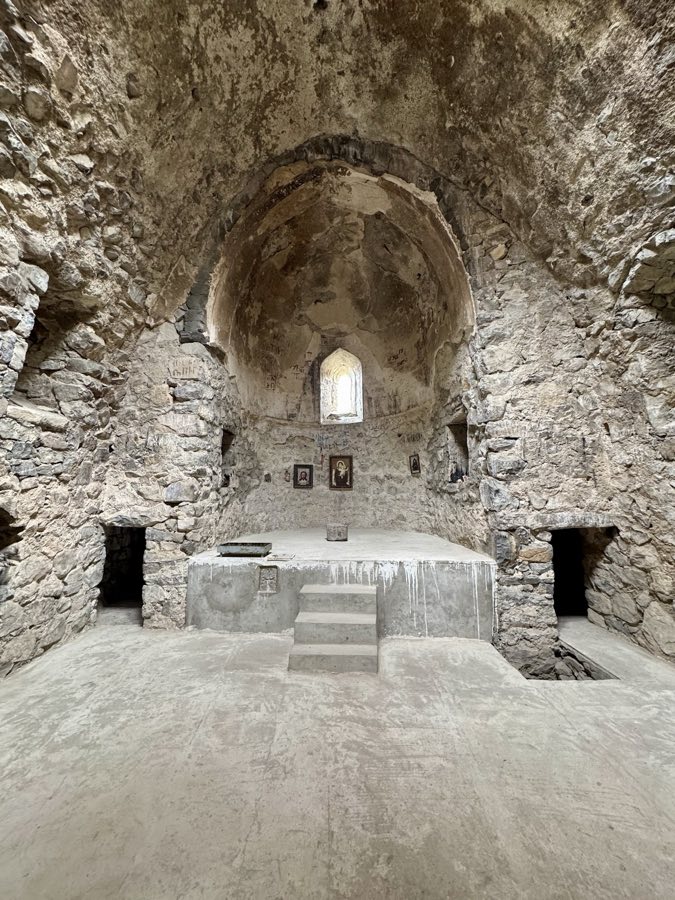
No. 81595
Halidzor Fortress
Armenia
CastleRuin17th century
No. 71812
No. 71812 · 39.215 N, 46.278 E
Quick summary
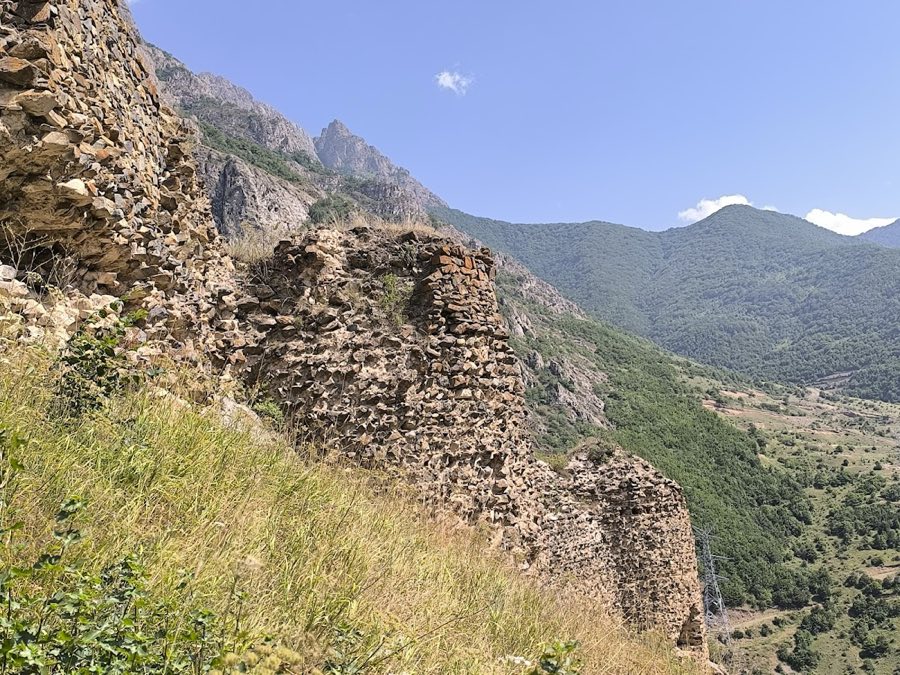
Baghaberd is a castle in Armenia with origins associated with the 12th century.
See all castles in ArmeniaBaghaberd, in the Kapan municipality of Armenia, is an Armenian-built fortress whose occupation spans several centuries.
Traditions and attributions place the fortress’s origins in the early historic period. Some accounts date its foundation to the third or fourth centuries, and one tradition identifies a fourth-century founder named Baghak of Sisak Nahapet. Medieval narratives describe Baghaberd as active in the fourth century during fights with the Sassanid Empire. The medieval chronicler Stepanos Orbelian relates that a prince named Andovk attacked a city belonging to the Sassanid king Shapur II, withdrew to Baghaberd with supplies when Shapur counterattacked, and there repelled three of Shapur’s detachments by rolling rocks down the cliff; Orbelian adds that Andovk later went to Constantinople and received honors from Emperor Theodosius I. Orbelian also records that the fortress stood in the year 350 and that Arshak II used it during his war with Shapur.
Baghaberd remained in use through the medieval period. After the nearby city of Kapan was destroyed in 1103, Baghaberd served as the final capital of the kingdom of Syunik. In 1170 the fortress fell to Seljuk (Turkic) forces; its treasures were taken and in excess of 10,000 manuscripts were destroyed, an event that is cited as marking the fall of the Syunik kingdom. Over time the site has been known by several names, including David Bek’s Castle and Kapani berd, as well as its Armenian name Baghaberd.
The site occupies a ridge above the Voghji River and sits between Kapan and Kajaran near the village named David Bek and the meeting point of the Geghi and Voghchi rivers. Reported elevations vary, with figures of about 1,438 metres and 1,267 metres above sea level, while a Russian account places the fortress roughly 200 metres above the river level. The position on a high ridge gives the complex a commanding outlook over the valley below.
Archaeological and photographic evidence show the fortress as a ruin with visible summit remains and general degraded structures across the ridge. A surviving portion of the outer defensive wall is still present and can be seen close to the north–south highway. These surviving elements attest to the site’s long defensive use between the early centuries of the first millennium and the later medieval period. The fortress’s role as a capital after 1103 and its capture in 1170 are reflected in the ruined condition of the standing fabric today. Oral and written tradition recorded by medieval authors links particular cliff-top defensive actions and storied episodes to specific parts of the site.
No. 81595
No. 94695
No. 84061

No. 94402
Comments
Comments for Baghaberd will require a verified account before posting.
We'll send a verification link before your first comment is published.