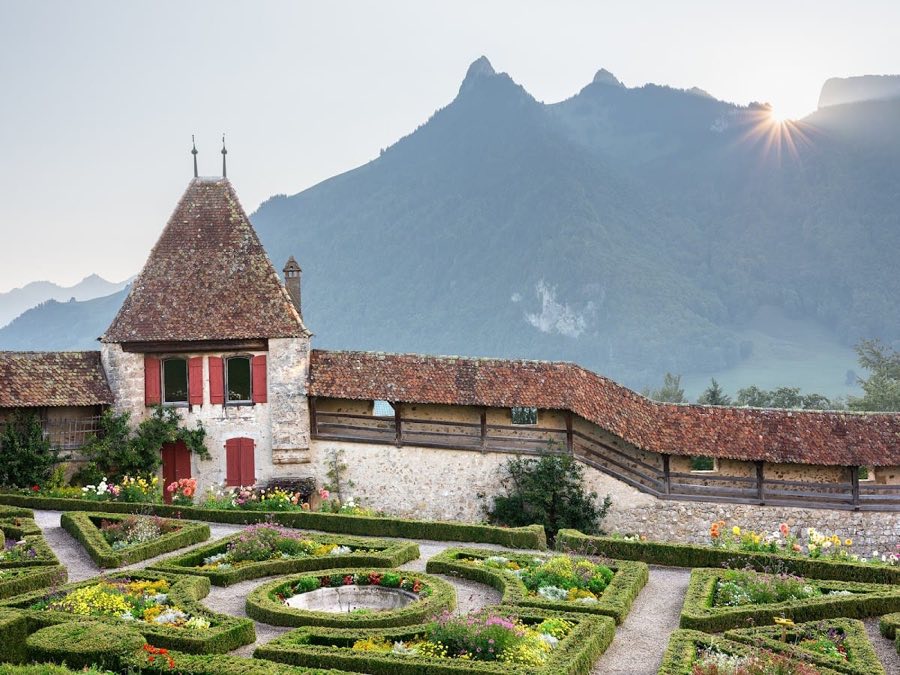
No. 77368
Castle of the Counts of Gruyères
Switzerland
CastleRestoredFor events11th century
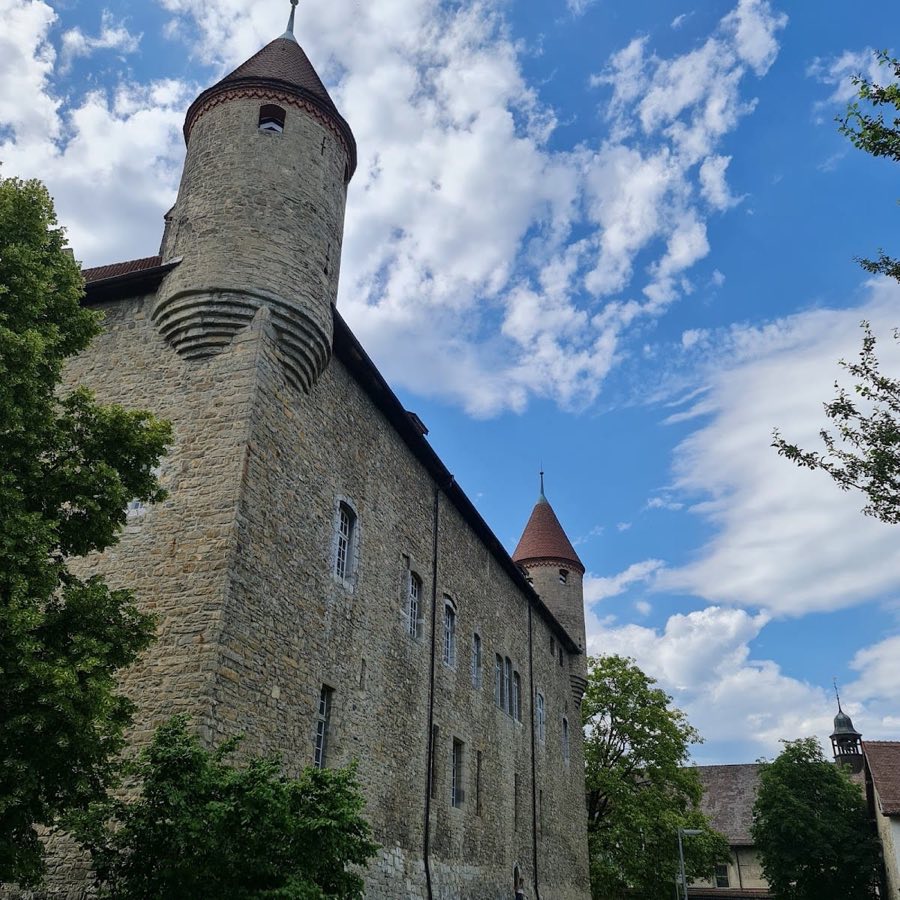
No. 62858
Castle · Switzerland
No. 62858 · 46.617 N, 7.058 E
Quick summary
Baillival Castle in Bulle is a castle in Switzerland with origins associated with the 13th century.
See all castles in SwitzerlandBaillival Castle is located in the town of Bulle, within the Canton of Fribourg in Switzerland. It was built between 1291 and 1331 under the authority of the bishops of Lausanne. Positioned on the south side of Bulle’s market square, the castle served as a fortified residence for the bishops, asserting their control over the region.
The castle’s design reflects the influence of the House of Savoy, despite ongoing conflicts between the bishops of Lausanne and the Savoy family over the bishopric since 1239. A Savoy coat of arms discovered during renovations suggests that an earlier Savoyard structure may have existed on the site before the current castle was built.
In 1476, during the Burgundian Wars, Baillival Castle avoided destruction by aligning with the city of Fribourg, which protected it from looting. Later, in 1536, when Bern conquered the Vaud region, Fribourg took control of Bulle and repurposed the castle as the residence of the bailiff, an official who administered the district. This arrangement was formalized with the bishop of Lausanne in 1614.
Between 1763 and 1768, the castle underwent renovations that updated the bailiff’s living quarters and the audience hall. In 1798, amid the French invasion, local citizens expelled the governor from the castle. After this event, the building served as the district’s administrative center.
Starting in 1854, prison cells were added to the castle, reflecting its continued use for official purposes. Despite several major fires in the town, the castle was never destroyed and has maintained much of its historical appearance. A restoration project took place from 1921 to 1930, preserving the structure. Today, Baillival Castle remains the seat of the Greyerz district administration and is recognized as a Swiss heritage site of national importance.
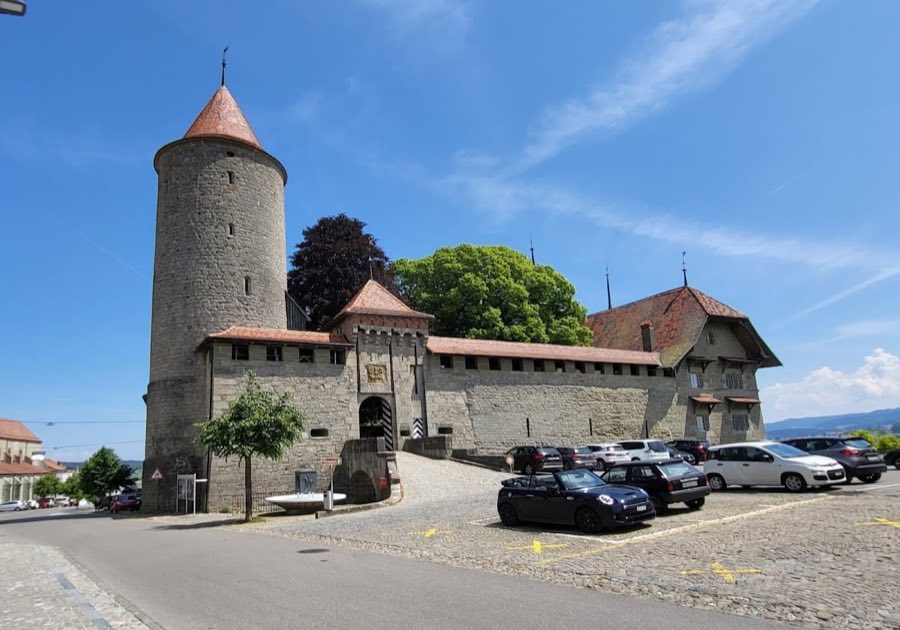
Baillival Castle has a nearly square layout measuring about 41 by 44 meters. It is built around an inner courtyard enclosed by surrounding buildings. The castle’s design shows clear architectural influence from Savoyard castles in the nearby Vaud region.
The southwest corner features a large main tower, known as a bergfried or donjon, standing 33 meters tall with thick walls over two meters wide at the base. The other three corners have smaller turrets called “Pfefferbühchsen” or pepper pots. These turrets have conical roofs, rows of windows, decorative friezes, and arrow slits shaped like crosses and keys for defense.
A wide moat, originally 17 meters across, surrounds the castle. It was once filled with water from the Les Usiniers canal, though parts were filled in or built over by the 18th century. The main entrance on the north side once had a wooden drawbridge, later replaced by a stone bridge. Remains of the drawbridge’s anchoring system are still visible.
The north entrance features a Gothic portal topped with the coat of arms of Bulle. A secondary arched entrance exists on the east side. Inside the courtyard, several Romanesque portals lead to cellars and other areas. A stair tower stands near the gate, and a well is located within the courtyard. Covered arcades create a second roof level beneath the main roof.
The castle’s walls rise to about 25 meters. Roofs include dormer windows and chimneys added during Baroque-era renovations, while some original Gothic windows remain, especially in the northeast corner. Defensive features include multiple arrow slits on the main tower and turrets, combining cross and key shapes to improve protection.
Despite fires in 1447 and 1805 that damaged much of the town, Baillival Castle has remained largely intact. Its medieval and Baroque architectural elements have been preserved through careful maintenance and restoration.
No. 77368
No. 30275
No. 61737
No. 90051
Comments
Comments for Baillival Castle in Bulle will require a verified account before posting.
We'll send a verification link before your first comment is published.