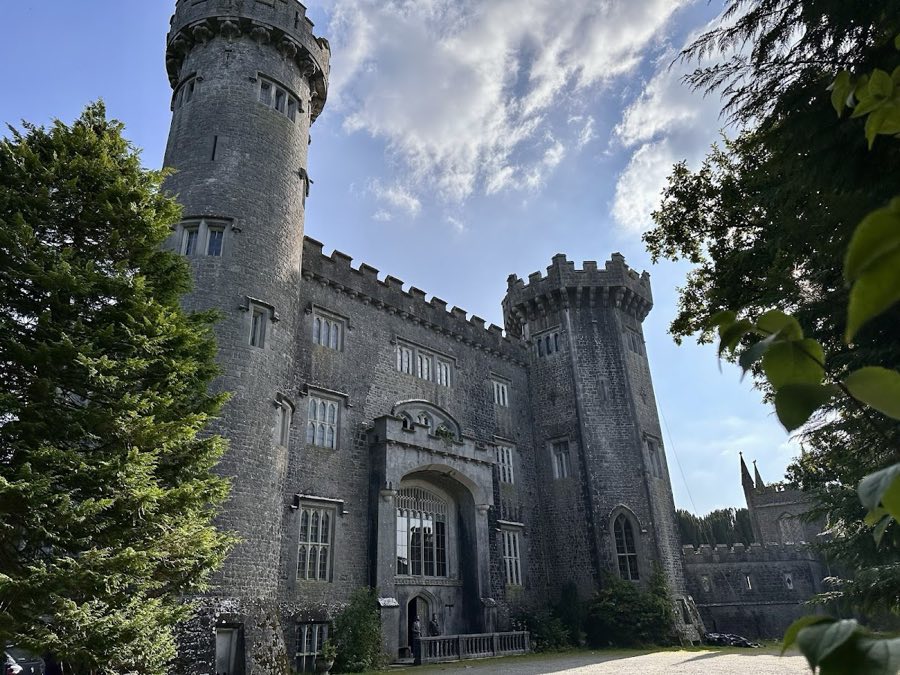
No. 74063
Charleville Castle
Ireland
CastleRestoredFor events17th century
No. 29541
Tower house · Ireland
No. 29541 · 53.276 N, 7.559 W
Quick summary
Ballycowan Castle is a tower house in Ireland with origins associated with the 16th century.
See all castles in IrelandBallycowan Castle stands in Culach, Ballycowan, Tullamore, Ireland.
The site occupies land that had been the seat of an earlier native stronghold called Baile-mhic-Abhainn, an O’Molloy castle or tower house that was destroyed by fire in 1557. In 1589 Thomas Morres erected a fortified house and residence on the same location, creating the building complex that became known as Ballycowan Castle.
In 1626 an additional tower was raised by Sir Jasper Herbert and his wife on land allotted during the plantation period. Contemporary references to the wife vary: some records name her as Jane Finglas, often styled Lady Jane Finglas, while an inscription on the building itself gives the name Mary Din Finglas and records construction in 1626.
The site saw armed conflict during the 1641 rebellion and the subsequent Cromwellian campaign. Forces under Oliver Cromwell engaged at Ballycowan and the castle suffered heavy damage in the fighting. During the Cromwellian period the southern portion of the building was blown up from a nearby hill located roughly one hundred yards (about ninety metres) away. Following the upheavals, the castle and its lands were taken into crown hands and, in 1666, granted to the Earl of Mountrath. Ballycowan also appears in Irish historical and literary tradition, being mentioned in the Annals of the Four Masters, in Michael O’Clery’s Annals of the Kingdom of Ireland (vol. 5, 1856), and in a poem by Ferganainm Mac Keogh that refers to Hugh O’Byrne of Glenmalur.
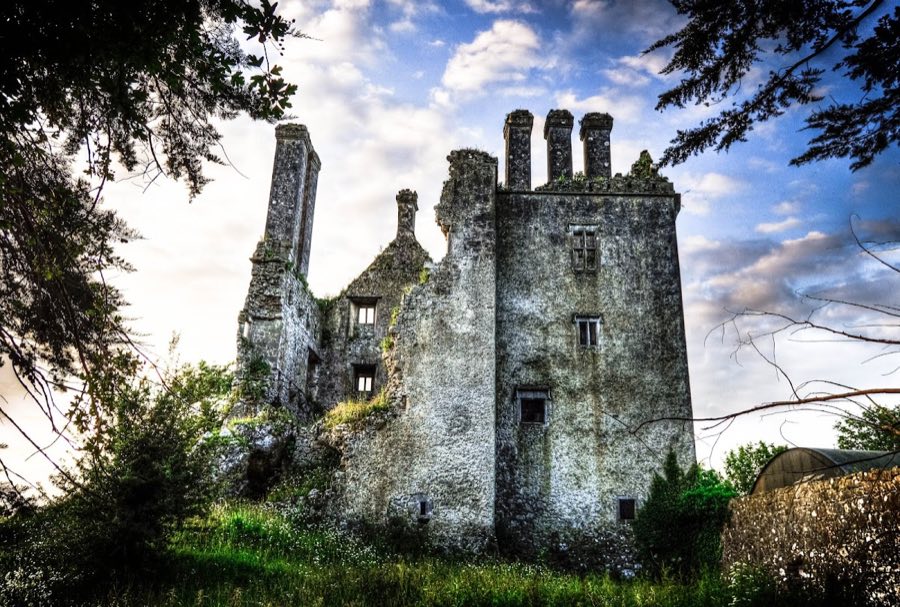
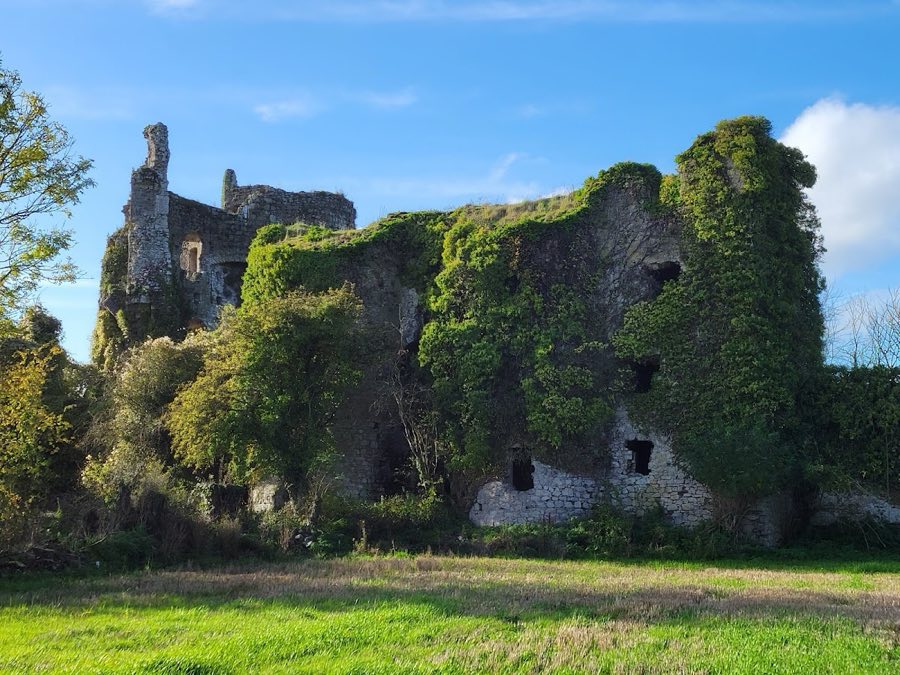
The plan of the ruined complex is L-shaped, reflecting its development as a fortified residence with later additions. Surviving structural fabric consists of the remains of the principal domestic ranges and associated outbuildings, and a number of chimney stacks that indicate where living and service rooms once stood. The residential ranges date to the late sixteenth century work of Thomas Morres, while the adjoining tower is associated with the 1626 construction by Sir Jasper Herbert and his wife.
The gable or fronton of the ruins preserves a carved heraldic device associated with Jasper Herbert, and an inscribed panel records the builders and the year of that phase of work; the inscription states that Sir Jasper Herbert and Mary Din Finglas built the house in 1626. Evidence of a former enclosing defensive wall is recorded for the site, but the surviving landscape now presents the castle as a series of ruinous ranges rather than a complete circuit. Adjacent to the castle stands the ruin of an ancient church, its remains lying close to the domestic structures and contributing to the site’s historic setting.
Damage incurred during mid-seventeenth century warfare is physically legible in the masonry, most notably at the castle’s southern extremity, which was demolished in an explosion that contemporary records place at about one hundred yards (ninety metres) distance on a nearby rise. Today the castle survives as fragmentary walls, chimneys, and masonry ranges, the carved coat of arms and the dated inscription remaining among the clearest in situ indicators of the site’s early seventeenth-century phase.
No. 74063
No. 35163
No. 62672
No. 20256
Comments
Comments for Ballycowan Castle will require a verified account before posting.
We'll send a verification link before your first comment is published.