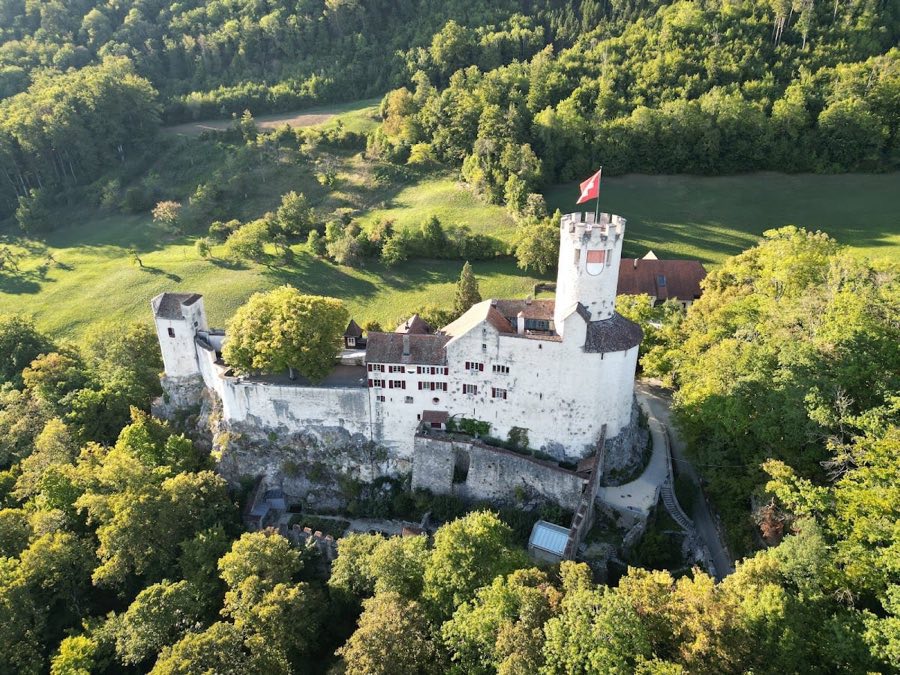
No. 42350
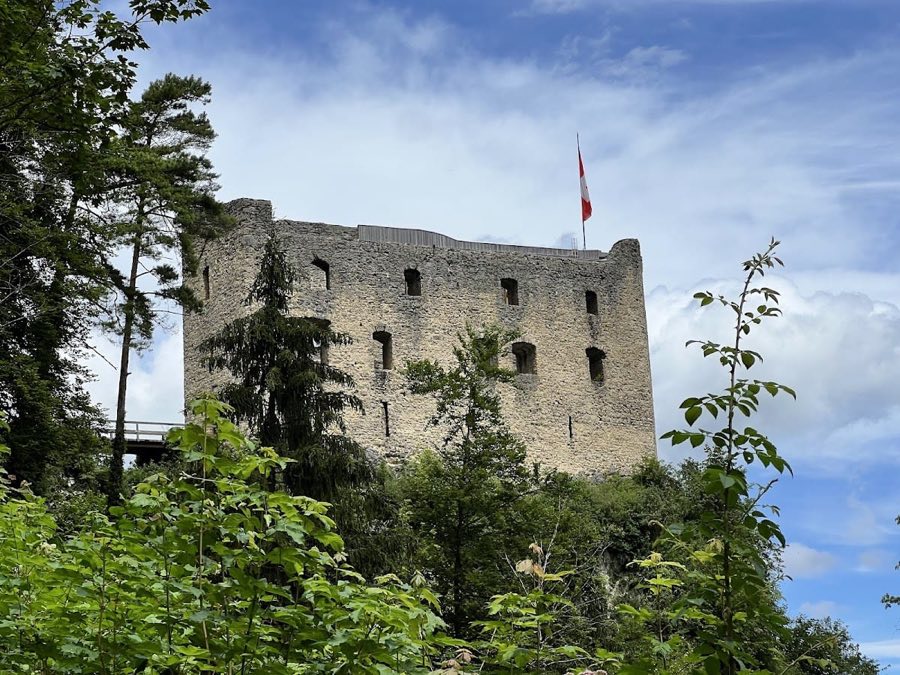
Neu Bechburg Castle
Switzerland
CastleRestored13th century
No. 66229
Castle · Switzerland
No. 66229 · 47.256 N, 7.555 E
For rent
Balm Castle is marked for bookable castle accommodation. Nightly pricing, sleeps count, stay rules, and amenities are displayed only when public operator data is available.
Rental type: Hotel / bookable stay, Short-stay rental
Short-term availability: Bookable accommodation signal
Quick summary
Balm Castle is a castle in Switzerland with origins associated with the 11th century.
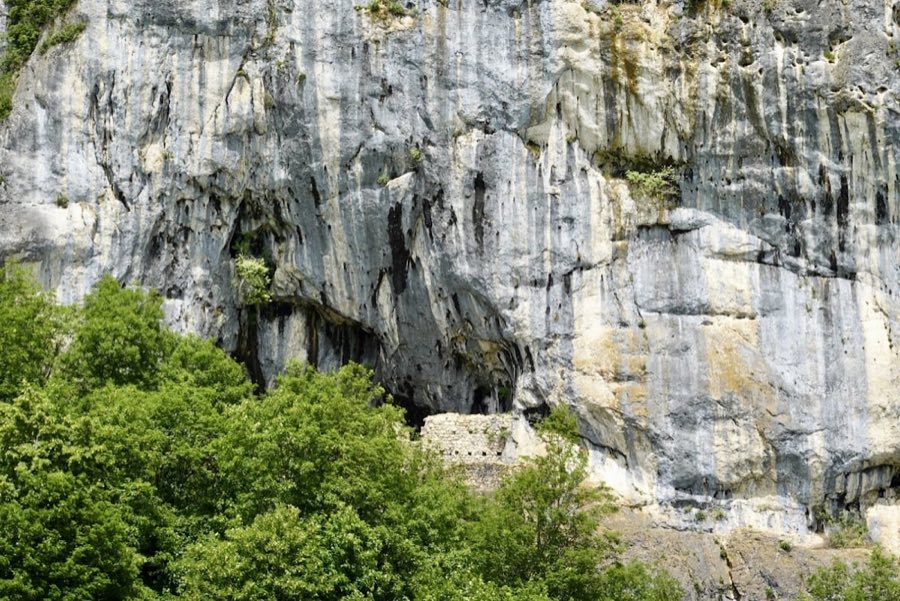
See all castles in SwitzerlandThe Balm ruins are located near Balm bei Günsberg in Switzerland and represent the remains of a fortified cave dwelling constructed by medieval settlers. The site, first known as “Balb,” derives its name from an ancient Celtic-Romance expression meaning “overhanging rock,” reflecting its setting beneath the Balmfluh cliff in the Jura Mountains.
The castle was built in the mid-11th century, making it one of the oldest fortifications in the region. It served as the stronghold of the free noble family known as the lords of Balm, who are first recorded from the 12th century. Early members included Fridericus von der Hüli and his son Guntram, as well as Burkart von Balm around the year 1200. As the focal point of a small lordship, its domain roughly matched the boundaries of today’s municipality of Balm. Eventually, the original family relocated to a new residence in Altbüron. Following this move, Balm was granted as a fief to a vassal, which spared the site from destruction when Duke Leopold ordered the demolition of Altbüron in 1308 after Rudolf II of Balm was implicated in the murder of King Albert.
Over the 14th century, ownership changed hands several times, passing from the Holy Roman Empire (Reich) to the Counts of Strassberg, and in 1320 to a Solothurn knight named Pantaleon von Gebstrasse. Seven years later, Count Rudolf of Neuenburg-Nidau acquired the castle. After Rudolf fell in battle against the Guglers—a group of mercenary soldiers—his heirs sold Balm in 1374 to the merchant family Peter Schriber from Solothurn, marking the transition from feudal control to private ownership.
In 1411, Arnold Bumann, heir of the Schriber family, sold Balm Castle to the city of Solothurn, which sought to extend its territorial influence in the area. By around 1400, the castle had fallen into considerable disrepair. In 1417, Solothurn leased the property to Hans Sigrist of Naters under the condition that he carry out necessary restorations. However, these repairs were either only partially completed or never fully undertaken. Archaeological evidence indicates the site was occupied until about 1450, but no major maintenance followed, and from the mid-15th century onward, the castle fell into ruin. Local farmers sometimes quarried stone from the remains. The ruins gained renewed attention in 1939 when the Historical Association of the Canton of Solothurn acquired the site and undertook archaeological excavations and preservation efforts over the next two years. In 1969, ownership passed to the canton itself, and the Balm Castle Association was established to safeguard and maintain the historic ruins.
Balm Castle was uniquely built inside a natural limestone cave carved into the Balmfluh cliff, approximately 20 meters above the ground. The cave itself measures about 20 meters wide and extends six meters deep, providing a natural shelter that shaped the castle’s design. The defensive perimeter included a thick outer wall made of stone, measuring roughly 2.4 meters in thickness, which enclosed the cave entrance. This wall featured two doorways and narrow slit windows intended for observation or defense.
Inside the cave, a lining wall was constructed to protect the damp rock surface from weathering. The main living quarters and internal structures were composed of a relatively simple two-story wooden framework. Evidence for this includes beam holes carved directly into the rock, indicating where wooden beams once supported floors and roofing. Over time, restoration work altered some of the original wall openings, changing their shapes from their medieval form.
Later in the castle’s history, an expanded forecourt was added, built directly against the rock face. This fortified building stretched nearly 29 meters in length and was about 3.5 meters wide inside. It likely acted as a defensive enclosure surrounding an agricultural area, perhaps used for storage or livestock. Access to the main cave dwelling was originally achieved by climbing a long ramp partially built of masonry and partly cut into the rock face of the cliff. Today, a modern reconstruction approximates this path but only partially reflects the original medieval approach, as the original connecting route between the forecourt and the main cave remains incompletely reconstructed.
Archaeological investigations have revealed that the site experienced continuous human activity long before the medieval fortress existed. Finds from the Azilian period—a Mesolithic era dating several thousand years before the castle—attest to its use over many millennia. These earlier layers highlight the cave’s significance as a sheltered location favored by humans for habitation or refuge well prior to the construction of the stone and wooden fortifications in the 11th century.
Since the mid-15th century, the castle has remained in ruin, its stone repurposed at times by locals. Nonetheless, parts of the original defensive wall and some elements of the cave interior persist today, preserved through careful archaeological work. The site stands as a rare example of a fortified cave dwelling in Switzerland, offering insight into early medieval defensive architecture intertwined with natural landscape features.
No. 42350
No. 80345
No. 27157
No. 97107
Comments
Comments for Balm Castle will require a verified account before posting.
We'll send a verification link before your first comment is published.