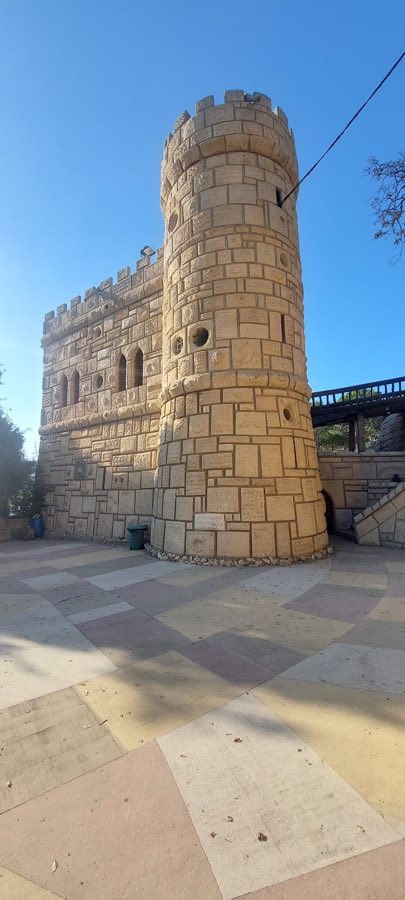
No. 15373
Moussa Castle
Lebanon
CastleIntact20th century
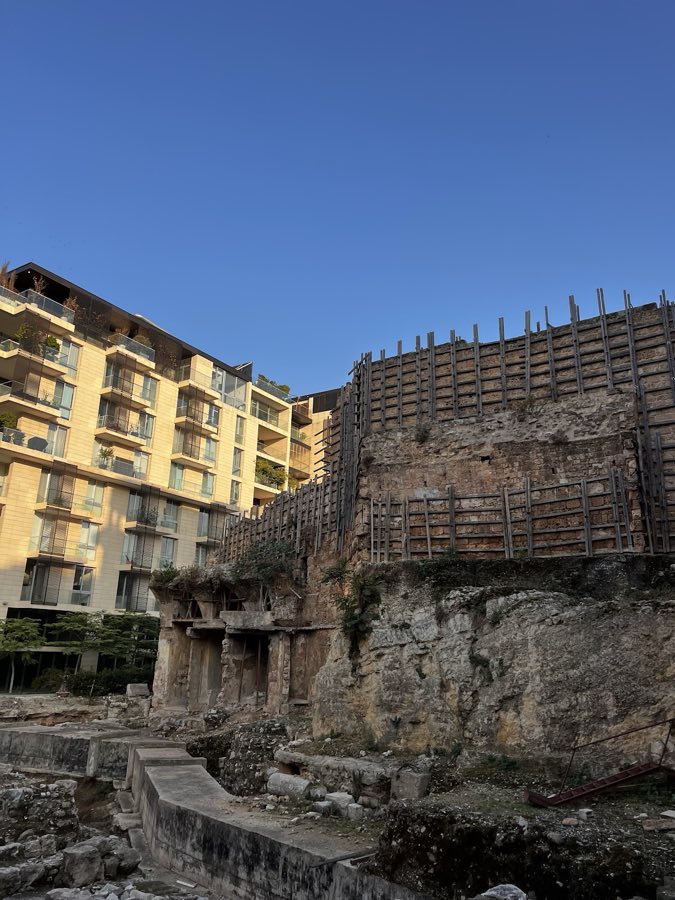
No. 96238
No. 96238 · 33.899 N, 35.507 E
Quick summary
Beirut Castle is a castle in Lebanon with origins associated with the 12th century.
See all castles in LebanonBeirut Castle was built by Crusader forces on a rocky headland overlooking the port. A defensive circuit around the town appears in records from 1110, and a purpose-built castle was erected about 1183–1185, probably under Raymond III of Tripoli. Saladin besieged the town in 1183 without taking it, captured it in 1187, and Crusader forces regained Beirut in 1197. In 1198 John of Ibelin took control and carried out repairs and improvements; Wilbrand of Oldenburg recorded the castle’s condition in 1212.
Mamluk armies seized Beirut in 1291 and removed parts of the fortifications. In the later fourteenth century Sultan Barquq established a new tower on the promontory. During the 1770s Ahmad Pasha al‑Jazzar destroyed portions of the castle and later rebuilt at least one tower. Local notables managed garrison functions under the title qal’aji, with named figures including Emir Abd al‑Salam al‑Ammad, Sheikh Hussein Telhouq, Yusuf Shihab (who displaced predecessors in 1772), Sadiq al‑Jundi Deh and Ahmad Pasha al‑Jazzar. Under Egyptian rule in 1840 Ibrahim Pasha appointed Abdullah Abu Dieh as wali and as director in the qal’aji role.
The castle suffered bombardment from allied European fleets in the early nineteenth century, and a British naval attack in 1840 caused notable damage during the Egyptian–Ottoman War. In 1844 the fortification was rebuilt and converted for worship as the al‑Majidiya mosque during the reign of Sultan Abdülmecid I. Following an 1887 decision to expand and modernize the harbour, the remaining castle buildings and their rocky promontories were levelled from 1889 to 1895 to make way for a road and a railway serving the new port; that roadway is now Avenue Charles Helou and the area at the foot of the former promontory became Souk Mal‑al‑Qabban. Excavations carried out in 1995 as part of the Beirut Central District development uncovered basement remains of the castle.
The castle occupied a rocky headland on the sea, set just north of the ancient mound of Beirut and to the west of the modern intersection of Charles Helou Avenue and Al‑Shuhada Street. A separate defensive work, known as Burj al‑Musallah, stood on a small islet near what is today the junction of Helou Avenue and Foch Street. Archaeological and historical evidence shows the complex followed the typical pattern of a harbour fortress with a principal sea‑facing tower and lower enclosures serving the town and port.
A six‑metre-wide moat separated the southwestern tower from the lower town during the Crusader period. The principal tower faced the waterfront and its ground floor was used as storage space for merchants operating at the port; documentary references record its use in the wood trade between 1257 and 1260 AH. The sea‑facing tower underwent later interventions, including partial demolition at the Mamluk capture of 1291 and the erection of a new tower by Sultan Barquq in the late fourteenth century, with further changes ordered by Ahmad Pasha al‑Jazzar in the 1770s. Major engineering works for the enlarged port led to the removal of above‑ground castle fabric between 1889 and 1895. Archaeological excavation in 1995 recovered basement‑level remains of the land castle; those substructures survive as the tangible remnants brought to light during modern development.
No. 15373
No. 31562
No. 22684
No. 52216
Comments
Comments for Beirut Castle will require a verified account before posting.
We'll send a verification link before your first comment is published.