No. 57346
Barryscourt Castle
Ireland
Tower houseRuinFor events7th century
No. 76470
No. 76470 · 51.888 N, 8.302 W
Quick summary
Belvelly Castle is a tower house in Ireland with origins associated with the 15th century.
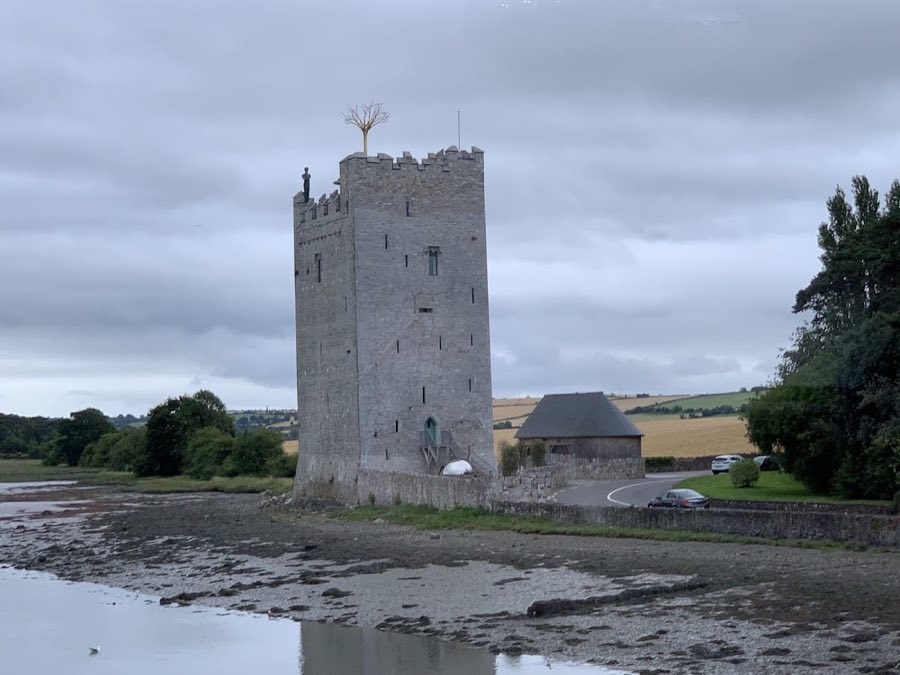
See all castles in IrelandBelvelly Castle stands near the village of Belvelly in County Cork, Ireland. This tower house was originally built by the Anglo-Norman Hodnett family during the 14th or 15th century, reflecting the military architecture introduced by Norman settlers in the region.
In the 14th century, control of the castle shifted when the De la Roch (later known as Roche) and De Barra (Barry) families came into possession. Despite this transfer, the Hodnett family later leased their lands back, indicating a complex arrangement of ownership and occupation among these prominent Norman-Irish families. By the 16th century, Sir Walter Raleigh, an English explorer and courtier, is said to have occupied the castle for a period, after which it returned to the De Barra family holdings.
During the turbulent years of the mid-17th century Irish Confederate Wars, between 1641 and 1652, Belvelly Castle was used strategically by Roger Boyle, the 1st Earl of Orrery, as a garrison for troops. This military use highlights the castle’s continued importance due to its location controlling access between Fota Island and Great Island.
The castle’s fortunes declined over time, and by the 19th century it had fallen into ruin. Stone from the building was scavenged and repurposed for local construction, reflecting a period of abandonment and neglect. In the early 20th century, during World War I, it became the subject of local misunderstanding. Coachmen from the nearby port of Queenstown (now Cobh) would bring sailors to visit Belvelly Castle, mistakenly believing it to be the famous nearby Blarney Castle known for its stone.
During the Emergency period in Ireland, corresponding to World War II, the Irish Army occupied the castle and made minor alterations to its structure. In recent times, the castle entered private ownership and was granted restoration permission in 2016. The works, completed by late 2018, transformed Belvelly Castle into a private residence while preserving its historic character.
Belvelly Castle is a classic example of a tower house, a type of fortified residence typical of the Anglo-Norman period from the 14th or 15th century. Its strategic position opposite the sole road bridge linking Fota Island to Great Island underscores its defensive purpose. The castle’s original form consisted of a vertical stone structure typical of such military buildings, designed to provide both habitation and defense.
By the 19th century, much of the castle had deteriorated into ruin, yet enough of its stonework remained intact to allow for comprehensive restoration in the 21st century. Revival efforts involved reconstructing the battlements—parapet walls with gaps used for defense—and installing a new slate roof, restoring the tower’s traditional silhouette. Modern additions were appended discreetly to accommodate residential needs, including a separate garage, a boiler room for heating, a new boundary wall marking the property line, a vehicle entrance, and a proprietary sewage treatment system to manage waste.
Notably, after the restoration, artistic elements were placed on the roof of the tower house, adding a contemporary touch to the historic structure. Despite the castle’s long history of military use and decay, these restorations have preserved its distinctive character and structural integrity. The stone construction and defensive features now stand renewed, bridging centuries of history in the modern landscape.
No. 57346
No. 15304
No. 64296
No. 10743
Comments
Comments for Belvelly Castle will require a verified account before posting.
We'll send a verification link before your first comment is published.