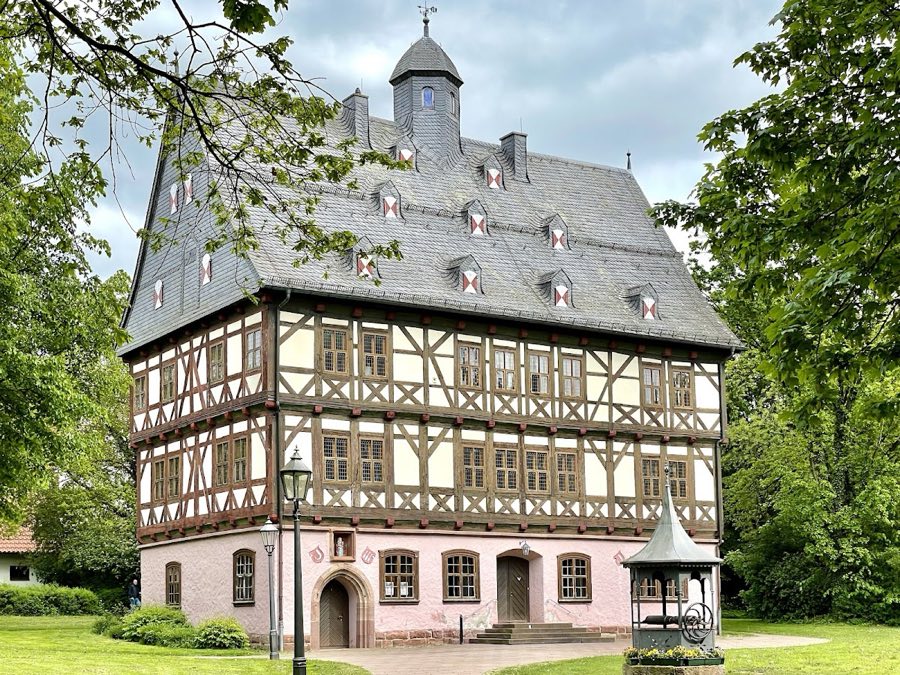
No. 68614
Burg Gieboldehausen
Germany
CastleRuin13th century
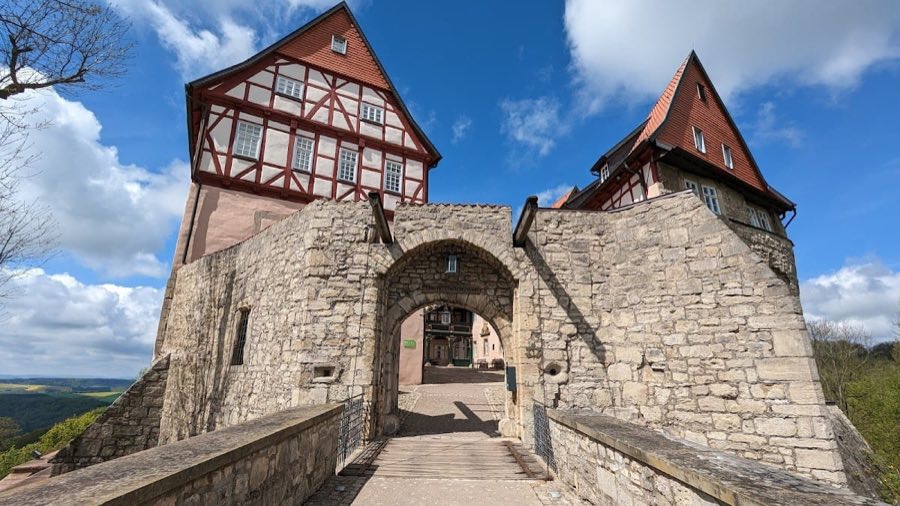
No. 33460
Castle · Germany
No. 33460 · 51.454 N, 10.342 E
For events
Burg Bodenstein is marked as a château or castle venue lead. Capacity, indoor/outdoor spaces, catering rules, and accommodation options are published only after public verification.
Event types: Private events, Cultural gatherings, Filming and photography
Quick summary
Burg Bodenstein is a castle in Germany with origins associated with the 10th century.
See all castles in GermanyBurg Bodenstein is a medieval hill castle situated near the village of Wintzingerode, within the municipality of Leinefelde-Worbis, Germany. The castle was originally established by early medieval Germanic peoples, likely serving as a border post between the Saxons and Franks. Its strategic position was solidified during the reign of King Henry I in the 10th century, who expanded the site to strengthen defenses against Hungarian raids, highlighting its role in the region’s military network.
In the era of the Salian dynasty under Emperor Henry IV, Burg Bodenstein belonged to Count Otto of Northeim, a leading figure among the Saxon nobility and connected to the Liudolfing dynasty. From this period, a noble family known as von Bodenstein emerged, probably descended from the Northeim lineage and taking their name from the castle itself. This era marked the castle as an important seat of power within the local aristocracy.
Ownership of Burg Bodenstein shifted frequently throughout the late Middle Ages. In 1275, it came into the hands of the Welf dynasty, before being sold to the Counts of Honstein in 1293. The castle’s control toggled between these families across the following decades, including a redemption of the property in 1322, until it was sold in 1337 to Hans von Wintzingerode and his associates. Despite these transactions, the Welfs retained overlordship until the close of the 16th century.
By 1448, the von Wintzingerode family had united full ownership of the castle and maintained it until 1945. In 1530, they officially introduced the Protestant Reformation at Burg Bodenstein, igniting conflicts with the neighboring Counts of Honstein and the Catholic Archbishopric of Mainz. The castle suffered heavy damage during the Peasants’ War in 1525, an uprising led by the radical preacher Thomas Müntzer. After this destruction, it was rebuilt incorporating architectural styles contemporary to the mid-16th century.
The castle’s turbulent history continued in 1574, when it was besieged amidst a family feud entwined with broader political disputes. Its lord, Berthold XI von Wintzingerode, was captured and executed the following year. Despite these trials, the extinction of the Honstein line in 1593 allowed the Welfs to maintain their overlordship, which consequently safeguarded Burg Bodenstein from the sweeping Counter-Reformation measures imposed elsewhere. The site grew into a religious hub for Evangelicals within the Lower Eichsfeld, a status reinforced by the construction of a chapel in 1668.
In the late 1700s, Philippine of Hesse-Kassel made her residence at Burg Bodenstein and entered a morganatic marriage with its owner, Georg Ernst Levin von Wintzingerode, in 1794. During this period, the castle amassed an impressive collection of art and cultural treasures, partly inherited from the Brandenburg-Schwedt family and enriched through connections to the Bonaparte family during the Napoleonic era.
Political changes in the 19th century placed Burg Bodenstein under Prussian control in 1803. Between 1807 and 1813, it became part of the Kingdom of Westphalia before being returned to Prussia following the Congress of Vienna. The von Wintzingerode family held the castle up until 1945, when they were expelled as part of post-World War II land reforms.
During the Nazi period, Burg Bodenstein was notable as a center for resistance activities associated with the Confessing Church, reflecting its enduring religious significance. After 1948, stewardship of the castle passed to the Evangelical Church of Central Germany, which repurposed it as a retreat and cultural venue. Historically, Burg Bodenstein also served as the seat of a local court district encompassing several villages, although the exact location of the original court and execution site remains uncertain.
Below the castle lies a family crypt constructed in 1823 by Georg Ernst Levin von Wintzingerode. This small cemetery experienced damage over time but has since been restored, preserving a tangible link to the family’s long-standing association with the site.
Burg Bodenstein presents as a well-preserved example of a medieval hill castle, strategically positioned atop a hill in the Ohmgebirge mountain range. The construction primarily employs natural stone, reflecting building methods typical of the castle’s significant reconstruction in the early 16th century following damage during the Peasants’ War.
The castle complex includes a central courtyard, known in German as a Burghof, around which the main structures are arranged. In 1668, a chapel was added to the castle grounds, serving the religious needs of its occupants and local faithful. The chapel features a Herrenempore—a gallery intended for the noble family—adorned with stained-glass windows created circa 1835 by Heinrich Friedrich Wedemeyer, a distinguished glass artist based in Göttingen.
Interior spaces once housed a rich and diverse array of artworks, porcelain, finely crafted furniture, and miniature portraits. These treasures originated from the Brandenburg-Schwedt inheritance and were further expanded by gifts associated with the Napoleonic period, including items that once belonged to Queen Marie-Antoinette.
Among the unique features inside the chapel is a baptismal angel, an ornamental figure often used to symbolize protection during baptism ceremonies. The courtyard and chapel interiors remain important elements of the historic ambiance preserved at the site.
Descending from the castle into the surrounding forest is the family crypt and a small cemetery, established in 1823 under the direction of Georg Ernst Levin von Wintzingerode. Though it suffered vandalism and storm damage in later years, restoration efforts have returned this burial site to good condition, maintaining its connection to the castle’s history.
Today, Burg Bodenstein is cared for by the Evangelical Church, which uses the castle as a venue for cultural events and family retreats. The preservation of its architectural fabric and historic artifacts ensures that Burg Bodenstein continues to reflect its layered past, from medieval stronghold through to modern cultural landmark.
No. 68614

No. 80120
No. 13909
No. 70177
Comments
Comments for Burg Bodenstein will require a verified account before posting.
We'll send a verification link before your first comment is published.