No. 33460
Burg Bodenstein
Germany
CastleRestoredFor events10th century
No. 68614
Castle · Germany
No. 68614 · 51.613 N, 10.216 E
Quick summary
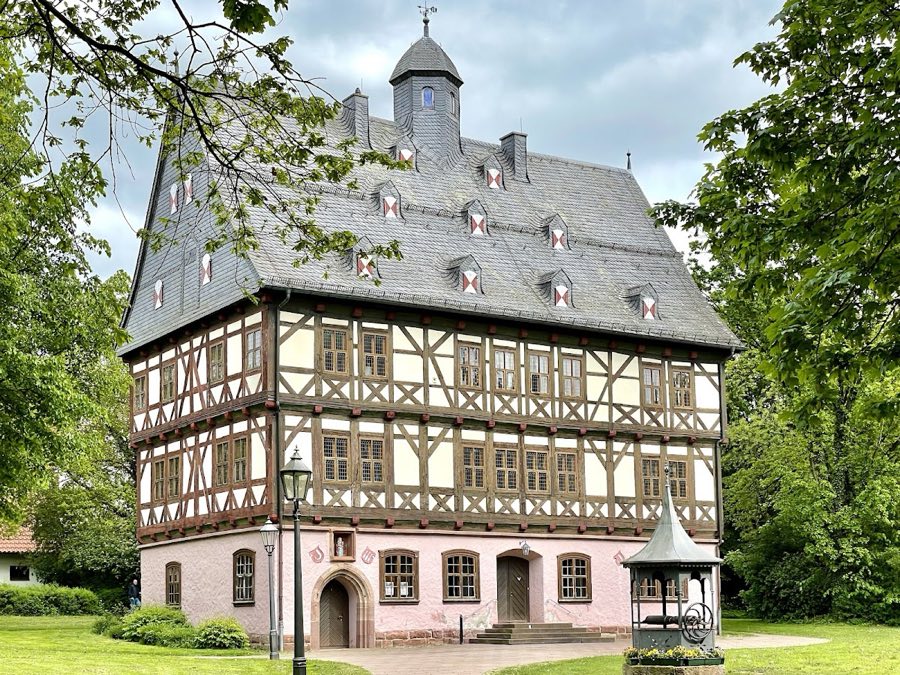
Burg Gieboldehausen is a castle in Germany with origins associated with the 13th century.
See all castles in GermanyBurg Gieboldehausen stands in the municipality of Gieboldehausen, Germany, and was created during the medieval period, probably in the 1200s by local German secular or ecclesiastical authorities.
The area belonged in the early and high Middle Ages to the Saxon Liesgau. The locality appears in the written record in 1003 when King Heinrich II stayed there, and an entry for 919 indicates the place may have come into the hands of a clerical institution, probably the religious foundation Stift Gandersheim. A later tradition preserved in a 1256 duplicature claims that a castle belonging to a Count Biso was given to Stift Gandersheim and that its stones were reused for the village’s first church; that tradition is recorded only in that duplicature.
The castle itself was probably erected in the 13th century, and possibilities proposed for its builders include the Dukes of Brunswick or the Bishops of Hildesheim. The site first appears in wartime records in 1291, when it was captured and demolished during the Herlingsberger War fought between Bishop Siegfried II of Hildesheim and the Dukes of Brunswick and Lüneburg. By 1315 the place served as the administrative centre for local bailiffs, and it later continued in that role under officials appointed by Brunswick and then by Mainz.
Control of the castle and its jurisdiction passed gradually to the Archbishopric of Mainz, formally recorded in 1342. In 1377 Archbishop Adolf of Mainz pledged the site to Burchard von Medem and required an outlay of 400 marks for construction work. In 1403 forces of the Dukes of Brunswick besieged and partly ruined the castle; a peace settlement of 1405 returned it to Mainz. A documentary note from 1418 orders Adolf von Nassau to carry out restoration. An inventory drawn up in 1485 lists weapons, household goods, livestock, a mill and a brewery at the place, showing it remained a functioning administrative centre and estate.
In the later sixteenth century houses were built on the former burgh area, recorded in 1563 and again in 1588. During the Thirty Years’ War the castle was destroyed in 1622 by troops of the Duke of Brunswick. After 1673 the site was rebuilt and once more used as an administrative seat, but remaining medieval structures were removed by demolition in 1806. An administrative house and associated buildings that stood on the site burned in 1850. Four years later, in 1854, a Hanoverian administrative building was erected on the former castle area; that building was later occupied as a Prussian district court.
The former stronghold occupied a lowland position on the Rhume floodplain with a roughly circular enclosure about 70 metres across, and its defences relied on water. The castle lay at the northern edge of the old village core and was bordered on three sides by the Hahle and Rhume rivers. Contemporary records describe it as a water castle with a moat fed from the surrounding waterways, and a nearby ford across the Rhume marks the junction of old travel and trade routes that once met near the site.
Archaeological work has confirmed the presence of the filled-in, formerly water-filled moat that encircled the round castle area; pottery sherds recovered from the place date from the thirteenth century onwards and provide the primary ceramic evidence for the medieval occupation. Because later building on the footprint was limited in extent for long periods, the circular form of the former burgh remains visible within the village’s layout.
The village around the castle carried its own defensive system, with up to eight named fortified manorial seats positioned around the settlement and integrated with a ditch-and-bank line backed by a hedge. These fortified manorial sites included Eulenburg and the Haus auf dem Wall. The village ditch drew water from the Hahle and the Rhume, and fortified gates controlled the roads into the settlement, including an upper gate on one approach. In the early sixteenth century Hans von Minnigerode converted the Haus auf dem Wall into the existing manor house known as the Schloss.
Later phases of reuse are archaeologically and historically documented. Houses were erected on the burgh ground in 1563 and 1588, the place was rebuilt and reused for administration after 1673, and nineteenth-century public buildings were established on the same footprint, most notably the Hanoverian administrative house of 1854, which later served as a Prussian district court. Excavations and finds have been limited to the moat fill and a small collection of pottery fragments.
No. 33460
No. 51078
No. 30528
No. 70177
Comments
Comments for Burg Gieboldehausen will require a verified account before posting.
We'll send a verification link before your first comment is published.