No. 75875
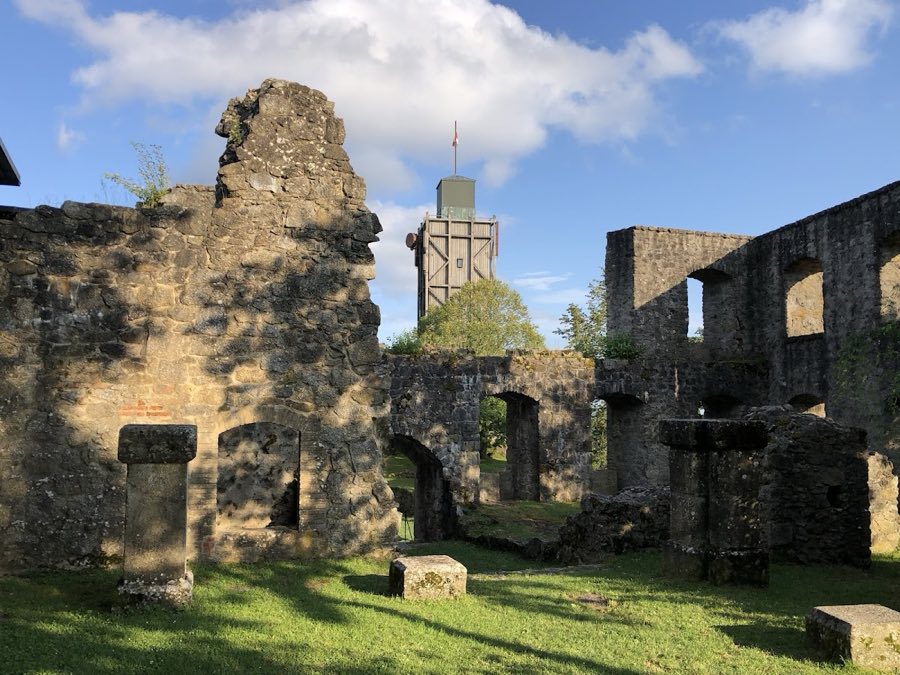
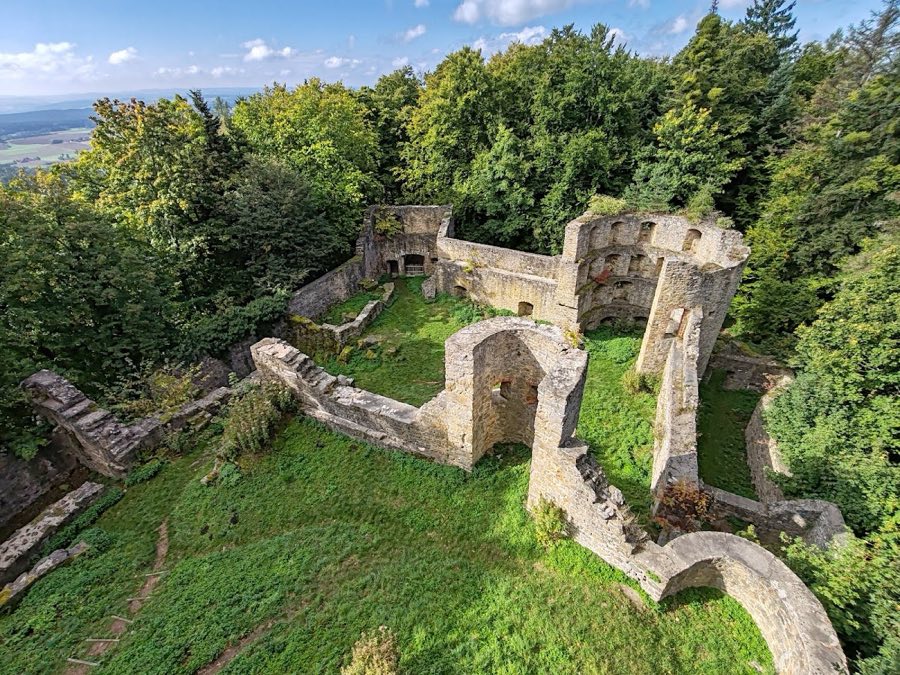
Burg Brennberg
Germany
CastleRuin14th century
No. 19570
Castle · Germany
No. 19570 · 49.099 N, 12.484 E
Quick summary
Burg Falkenstein is a castle in Germany with origins associated with the 10th century.
See all castles in GermanyBurg Falkenstein stands above the town of Falkenstein in Germany, and it was established during the Middle Ages by medieval German ecclesiastical authorities under the bishops of Regensburg and their local followers.
The site began under the influence of the bishops of Regensburg in the mid-10th century and was probably built in the 11th century. A member of the household named Falko gave his name to the family that first held the place, later known as the Falkensteiner line. The castle is first securely recorded in 1129, when Rudolph von Valchenstein appears as a witness in a document. During the early 1130s Duke Heinrich X besieged the stronghold in 1129, captured it in 1130 without destroying it, and after mediation it was taken back and garrisoned before being returned in 1132.
Across the later Middle Ages the site passed through many hands connected to regional power structures, including association with the office that represented the cathedral chapter of Regensburg and links to the counts of Bogen. In 1323 Heinrich of Hohenfels-Falkenstein was forced to sell the property to King Ludwig IV. In 1347 King Ludwig pledged the castle to Count Wolfahrt den Satzenhofer, who carried out renewal work that same year. Successive noble and ducal owners included members of the Wittelsbach family and a long sequence of families and holders recorded in later documents, with transfers and sales occurring from the medieval period down to the 19th century.
In the 17th century the castle was involved in the wars of that era. In 1634 Swedish forces captured Burg Falkenstein and set it on fire while the castle’s lord, a member of the Haslang family, was being held captive. Swedish operations in the region continued; an attempt in 1641 and a separate later occasion did not succeed in taking the castle. During the same century the complex received late-Renaissance remodelling, and the attached chapel dates to the period after 1664 when the Törring family held the site.
In the 19th century the princely house of Thurn und Taxis acquired the estate in 1829. The property declined during the 19th and 20th centuries until the municipality of Falkenstein purchased it in 1967 for one Deutsche Mark to halt further deterioration. A restoration programme was completed in 1978, after which the buildings were adapted for public uses, including hospitality and a museum of hunting and game. The castle is recorded as a protected architectural monument under file number D-3-72-125-7 and as an archaeological monument, with medieval and early modern finds in the area, under file number D-3-6840-0039 in the Bavarian Atlas.
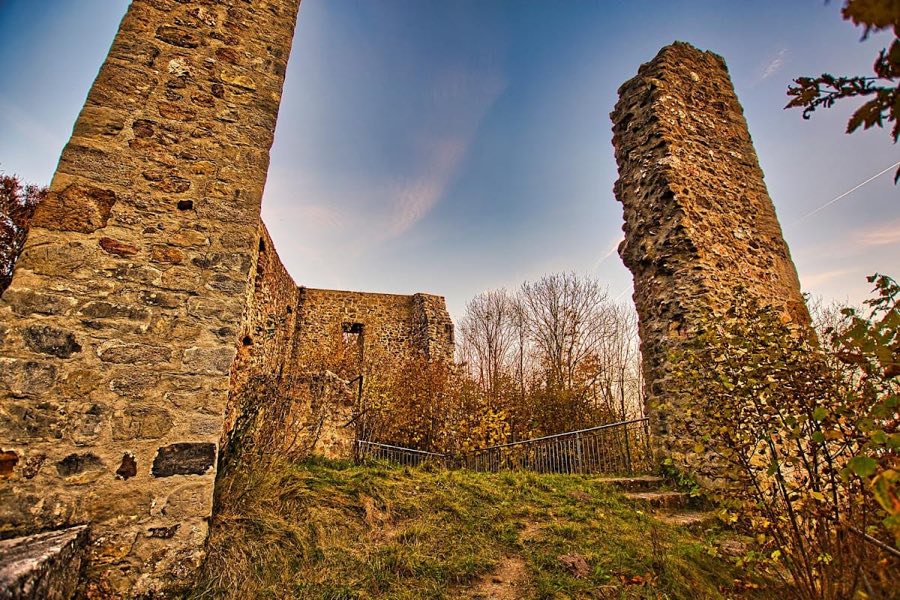
Burg Falkenstein occupies a granite outcrop at 626 metres above sea level and rises roughly sixty metres above the Perlbach valley, set within an estate that includes a park of about 13.748 hectares now protected as a nature reserve. The surviving complex forms an approximately forty by forty metre outer and main castle, arranged as an upper and a lower courtyard. The narrow inner court takes the shape of an elongated pentagon of about 45 by 29 metres and is reached through a deliberately angled gateway passage with a vaulted ceiling, a design intended to control entry into the inner wards.
The outer bailey is defined by a ring wall built of rubble masonry; much of this wall now survives mainly as a retaining structure that supports the site’s terraces and links in the northwest to a named defensive element known locally as the Weiberwehr. The enclosing walls of the lower bailey are substantial, up to 1.50 metres thick on the outside, and are attributed to construction phases of the 13th century. These masonry enclosures show later repairs and have been consolidated during modern restoration.
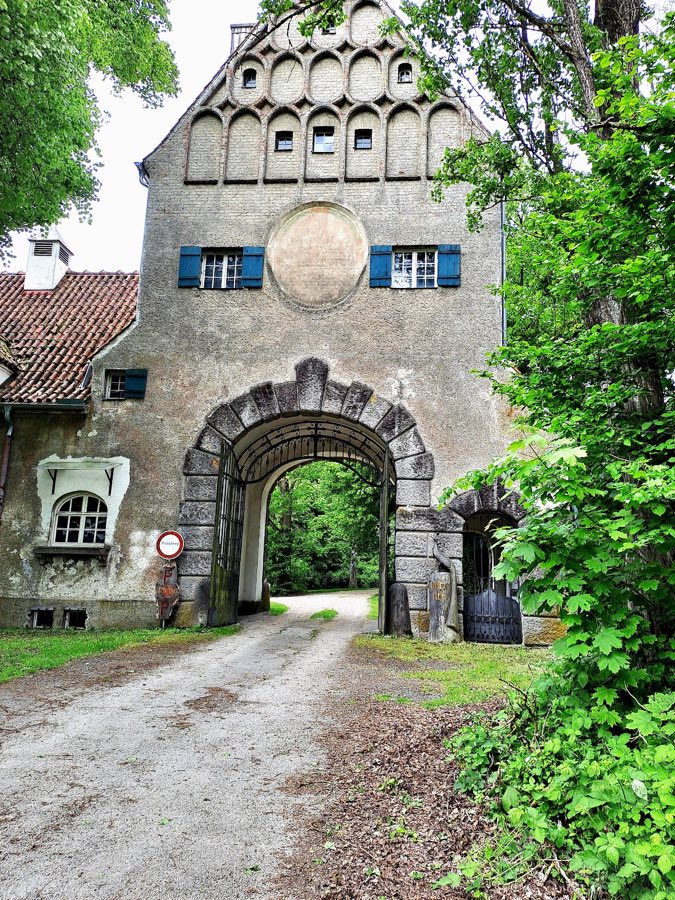
A prominent five-storey square keep stands on the steep western face of the rock, its external footprint measuring about 8.5 by 8.5 metres. Historically serving as the main defensive tower, this bergfried now functions as an observation point. The main gate still bears an alliance coat of arms of the von Belasy and Nothafft families set above the entrance, providing a visible heraldic marker tied to one phase of ownership.
The castle chapel is a hall-type structure whose interior vaulting is formed by a cross-barrel vault supported on corbels and enhanced by late-Gothic decorative ribs. A small square tower to the west rises into an octagonal upper section capped by an onion-shaped dome. The choir is rounded at its lower portion and closes on three sides at the top. The chapel’s form and details are associated with changes made during the Törring period after 1664.
Late-Renaissance interventions from the 17th century are visible in arcaded walkways introduced on ground and upper levels; arcades remain within the lower bailey courtyard. Much of the complex was consolidated and restored by 1978, and surviving fabric today presents a mix of medieval masonry, Renaissance additions, and modern repairs that maintain the castle’s historic arrangement and certain in situ sculptural elements.
No. 75875
No. 32356
No. 16578
No. 93225
Comments
Comments for Burg Falkenstein will require a verified account before posting.
We'll send a verification link before your first comment is published.