No. 92701
Bürglischloss
Germany
CastleRuin11th century
No. 71845
Castle · Germany
No. 71845 · 47.752 N, 8.780 E
Quick summary
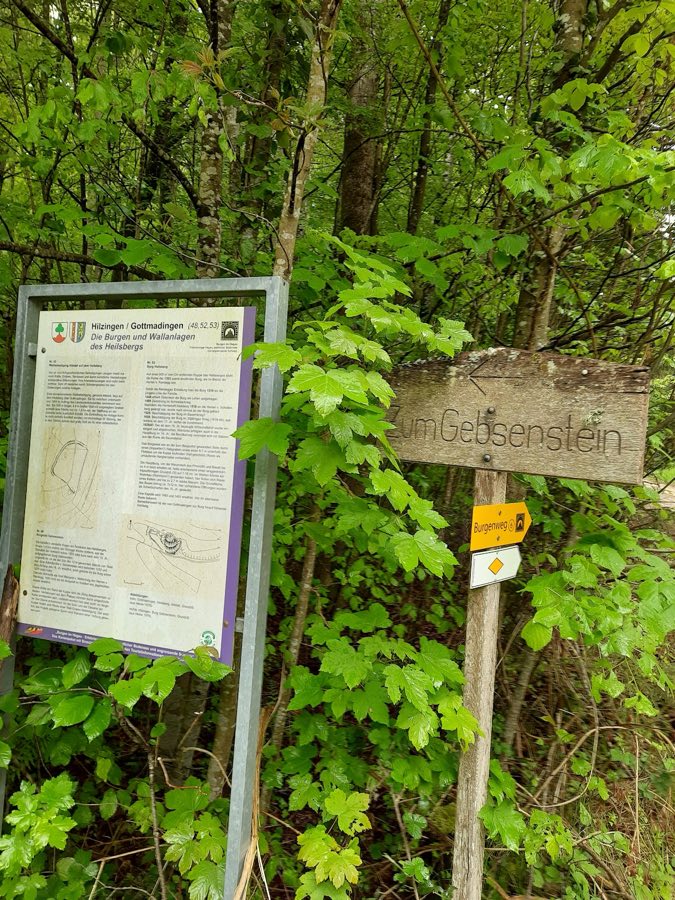
Burg Gebsenstein is a castle in Germany with origins associated with the 13th century.
See all castles in GermanyBurg Gebsenstein stands in Hilzingen, Germany, and was erected during the medieval period in the first half of the thirteenth century by local medieval builders.
The name Gebzio von Twiel appears in records from 1214 and may be linked to the site because his name resembles Gebsenstein. A noble household identified as the Herren von Gebsenstein is recorded between 1253 and the early fourteenth century. Documentary evidence indicates that this family held the castle, but they ceased possession at some point before 1275.
In 1275 Graf Mangold von Nellenburg sold the place recorded as “ze Gepsenstein” to the Herren von Randegg. After that transfer, the written trail for the castle grows scarce. By 1683 the location was described in connection with hunting rights as a Burgstall, a term used for a castle site or ruin, showing that the site was already considered ruined by the late seventeenth century.
A later published note records that people dug at the castle site and uncovered a small golden value vessel attributed to a Herrn von Raiser. The same note places those excavations around 1800 and suggests the named individual may have been Johann Nepomuk von Raiser. The later note states the present location of the golden object is unknown and records that the two men associated with the account, Panzer and Reiser, were contemporaries and both served as state officials.
Burg Gebsenstein occupies a two-part defensive position on a northwest-facing spur on the northeast flank of the Heilsberg, covering roughly nine hundred square metres at about five hundred and fifty metres above sea level and lying nearly one and a half kilometres south of Hilzingen church. The layout uses the natural rock of the spur together with earthworks to form a compact hilltop stronghold and an adjacent lower, defended area.
The core hilltop platform measures about twenty-three by sixteen metres and drops away steeply to the north over exposed rock. Around the edge of this plateau an embankment survives that is interpreted as the remains of a former curtain or ring wall. Deep hollows up to four metres in the centre of the plateau have been recorded; these are regarded as traces of cellars once belonging to buildings on the summit, although they have also been considered possible recent extraction pits. These summit features survive in a fragmentary state.
On the south and east faces, roughly five metres below the main plateau, a terrace about three metres wide runs around the slope and helps define the protected core. At the foot of the hill a continuous trench encircles the spur on all sides except the steep northern face. This surrounding trench reaches widths of up to sixteen metres and depths of three to four metres where it is best preserved, while the west side shows partial silting. Beyond the trench on the eastern and southern approaches a low outer bank about forty centimetres high remains.
South of the core the outer bank leads into an intentionally steepened slope that continues to a transverse cutting at the tip of the spur. That cutting runs roughly south to north and measures about two metres deep on the outer face and three to four metres deep on the inner face, forming a further defensive obstacle across the descent. West of the summit an enclosed area approximately thirty to thirty-five metres long and ten to twenty metres wide has been identified as the probable site of the outer bailey, where the castle’s economic buildings would once have stood. The northern edge of this outer area is closed by a narrow rock ridge about three metres across and one metre high.
A nearby secondary high point on the Heilsberg rises to about five hundred sixty-one metres above sea level. Historical commentary records that excavations around 1800 at the castle site produced a small golden vessel attributed to a Herrn von Raiser; that find was reported in a published note, the exact identity of the named person was suggested to be Johann Nepomuk von Raiser, and the object’s current whereabouts are unknown.
No. 92701
No. 15270
No. 47357
No. 59077
Comments
Comments for Burg Gebsenstein will require a verified account before posting.
We'll send a verification link before your first comment is published.