No. 98179
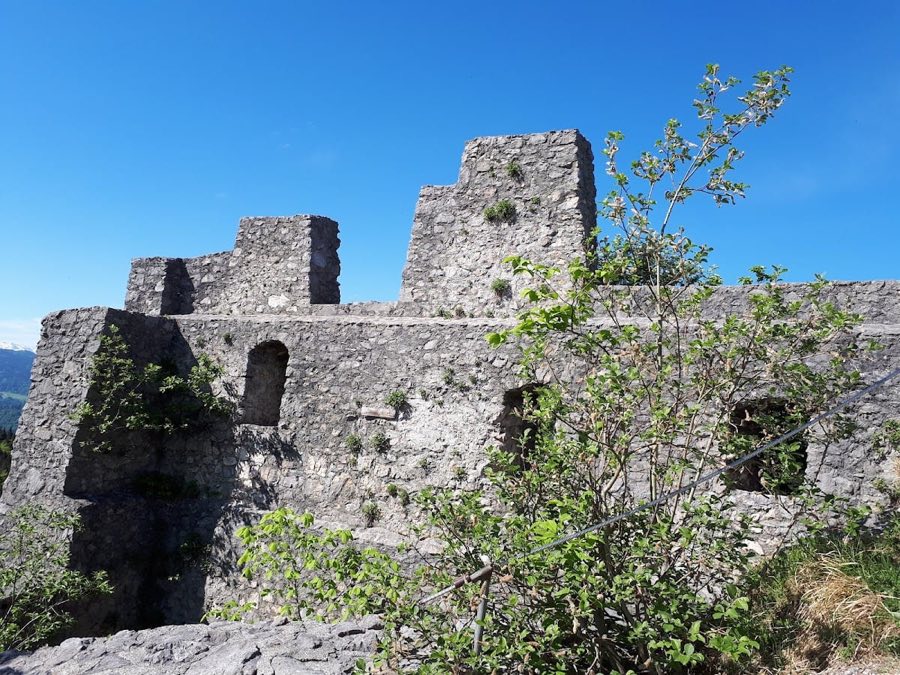
Burgruine Wartenfels
Austria
CastleRuin13th century
No. 95856
No. 95856 · 47.898 N, 13.235 E
Quick summary
Burg Lichtentann is a castle in Austria with origins associated with the 14th century.
See all castles in AustriaBurg Lichtentann is a medieval hill castle ruin located near Henndorf am Wallersee in modern-day Austria. It was established by the noble Herren von Tann family, who served as ministeriales—unfree knights in service—to the Archbishops of Salzburg.
The initial construction of the castle began around 1272 under Eckhart VI. von Tann, notably during the period known as the Interregnum (1254–1273) when the Holy Roman Empire lacked a reigning emperor. This building effort took place without obtaining the necessary permission from the Archbishopric, which led to a temporary transfer of the castle’s control to Archbishop Friedrich II. von Walchen for a period of five years. Despite this intervention, the castle eventually returned to the von Tann family.
By 1314, Eckhart VII. von Tann agreed to cease further expansion of the castle according to a formal accord. Nevertheless, construction was completed after this agreement and Burg Lichtentann became a significant seat of local power. It formed part of the Henndorf county, which was divided into two judicial districts: Lichtentann-Köstendorf and Altentann-Seekirchen. These courts possessed ‘high jurisdiction,’ meaning they held legal authority over serious criminal matters including the imposition of capital punishment.
The castle and its domains became embroiled in a series of conflicts during the 14th century, involving the Archbishops of Salzburg and the Bavarian dukes. One notable episode was the so-called “Tanner Fehde,” a feud associated with the von Tann family. After these disputes, by 1369, control over Burg Lichtentann and its court was permanently transferred to the Archbishopric of Salzburg.
Following this transfer, the castle served primarily as an administrative center, housing archiepiscopal officials known as pfleger. These officials managed the local courts and overseen the surrounding territories. This function continued until the 17th century, when administrative reorganization and the destruction of nearby Burg Altentann in 1680 led to the consolidation of judicial responsibilities elsewhere. Subsequently, Burg Lichtentann was abandoned. Over time, stones from the castle were taken for use in other buildings, and by the early 19th century, ownership had passed to the Moser family, known for their brewing enterprise.
Burg Lichtentann’s ruins occupy a hill rising to 736 meters above sea level, situated east of Henndorf near walking routes such as the “Eiszeitrundweg.” The site preserves the layout characteristic of a medieval hill castle, featuring fortified walls arranged around an inner courtyard. Constructed primarily from stone, substantial masonry from the original structure is still visible amidst the ruins.
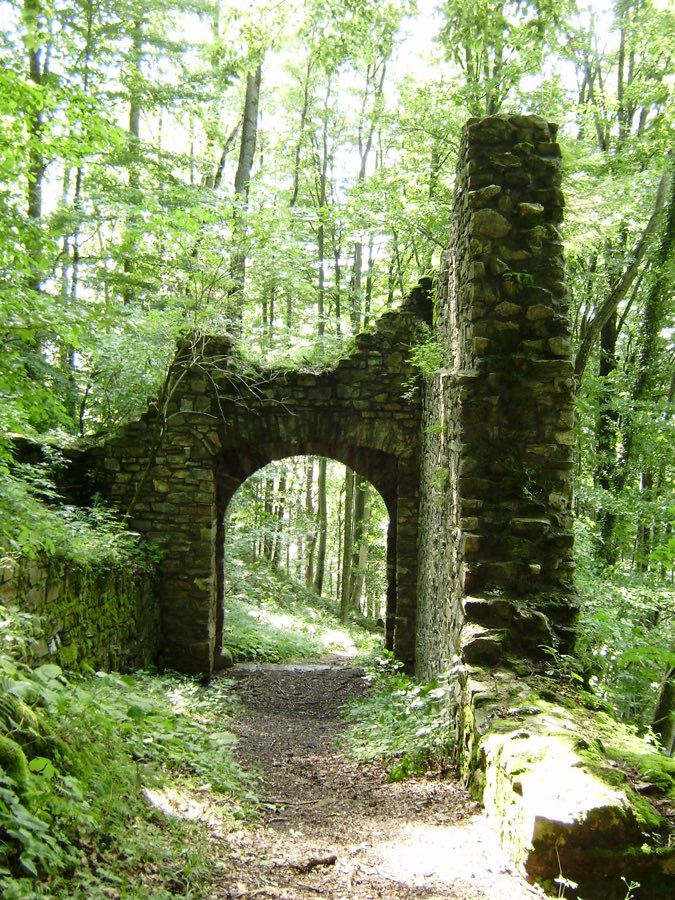
Among the architectural elements that survive are portions of the outer gate, which once controlled access to the castle’s interior, reflecting its defensive purpose. The remaining walls encircle what was once a protected courtyard space, providing insight into the castle’s enclosure strategy. Although complete plans or detailed internal arrangements have not been documented, the existing walls convey the solid construction techniques typical of medieval fortifications.
No decorative details or inscriptions have been identified on site. The proximity of Burg Lichtentann to the nearby Burg Altentann illustrates its role within a network of noble estates overseeing local governance and justice. Over centuries of disuse, the castle’s stonework has deteriorated but remains in situ, offering a tangible connection to the region’s medieval history.
No. 98179
No. 68646
No. 43886
No. 93845
Comments
Comments for Burg Lichtentann will require a verified account before posting.
We'll send a verification link before your first comment is published.