No. 43886
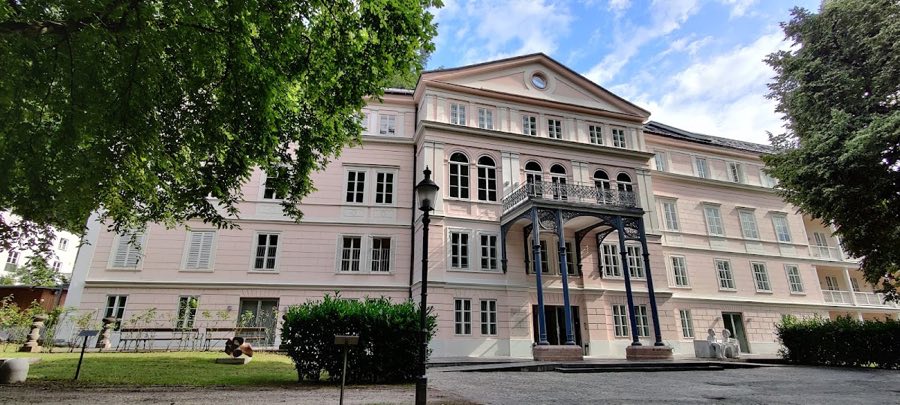
Arenberg Castle, Salzburg
Salzburg, Austria
ChâteauRestoredFor events17th century
No. 68646
Castle · Austria
No. 68646 · 47.809 N, 13.074 E
For events
Schloss Neuhaus is marked as a château or castle venue lead. Capacity, indoor/outdoor spaces, catering rules, and accommodation options are published only after public verification.
Event types: Weddings, Private events, Cultural gatherings, Filming and photography
Ceremony spaces: Ceremony setting to verify
Quick summary
Schloss Neuhaus is a castle in Austria with origins associated with the 13th century.
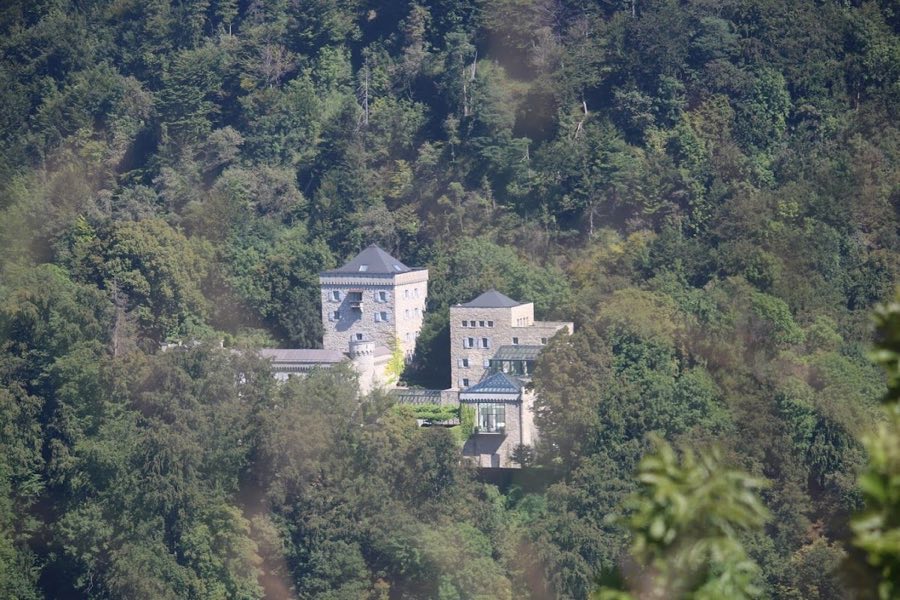
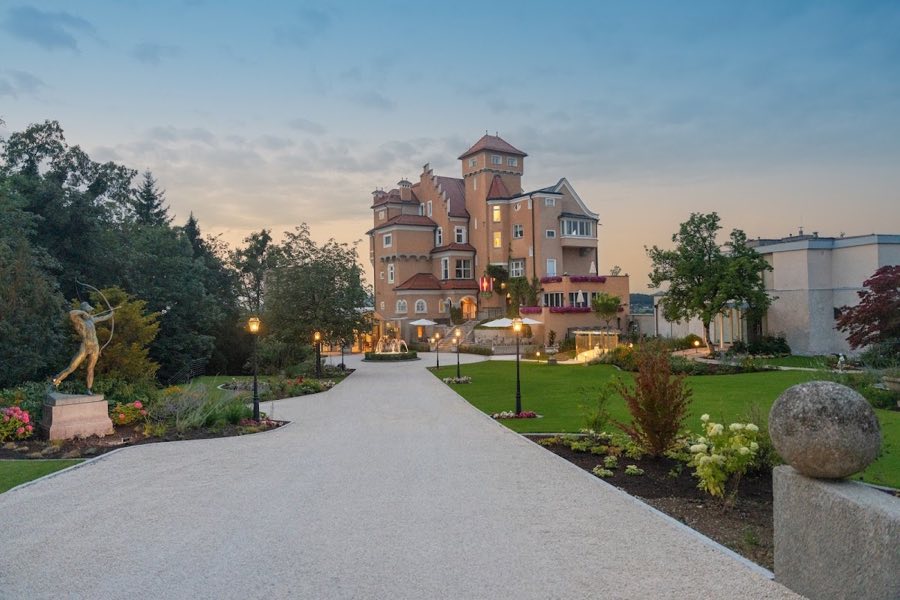
See all castles in AustriaSchloss Neuhaus stands on the Kühberg in the municipality of Salzburg, Austria, and was erected by medieval local nobility, first recorded in 1219 under a Konrad of Neuhaus. The building likely dates to the late twelfth or early thirteenth century. In the early fourteenth century ownership passed into the hands of the archbishopric. In 1424 Archbishop Eberhard III of Neuhaus had the place enlarged and converted into a fortified summer residence, tying the house more closely to ecclesiastical authority.
From 1508 the site served as the seat of a local administrative court and later a regional court. By 1599 the fabric had deteriorated to such an extent that the court official moved operations to the nearby village of Gnigl. During the Thirty Years’ War the castle again took on an important defensive role, operating together with the nearby Gnigler field work and the small fortress known as the Franziskischlössl to protect the city and its approaches. After about 1650 the building returned to use for the administrative court.
In 1695 a lightning strike started a fire that caused heavy damage and forced the court to relocate once more. Shortly before the end of rule by the archbishops, the court based at Neuhaus oversaw a wide territory, including the manorial jurisdiction of Gnigl, Schrannen Heuberg, Bergheim, Hallwang and Eugendorf, the princely Chiemsee free court at Koppel, and the baronial manorial domain at Ursprung. Subordinate to this jurisdiction were the parish of Bergheim, the curacy at Gnigl, and the vicarages at Eugendorf, Hallwang and Koppel.
A noble tenant, Oswald Count Thun, rented Neuhaus in 1796 and acquired it outright in 1811. From 1851 onward he introduced a number of neo‑Gothic and historicizing decorative additions. In 1921 Wolfgang Baron von Thienen‑Adlerflycht received the property as a wedding present; it was soon bought by his relative Adolf Count Dubsky, who entertained the writer Marie von Ebner‑Eschenbach as a frequent guest. The painter Ante Topić Mimara purchased the castle in 1963 and for a time opened a gallery of contemporary art there. The Topić Mimara family kept ownership until recent years. The present owner is the German industrialist Hubertus Benteler. The site remains a private residence and is protected as a historic monument.
The complex is organised around a defensive enclosure and consists of a prominent medieval residential tower, an elongated dwelling wing, and a former servants’ range. These principal elements form a compact ensemble that also incorporates several outbuildings, later economic structures, and a modern building added to the site.
The medieval residential tower dates to the thirteenth century and dominates the group. After 1400 the tower was raised to five storeys, creating the high central block visible today. In the nineteenth century the tower and the enclosure were given a battlemented crown, a historicizing addition made by Count Oswald Thun; the tower remains the visual centre of the site.
The long residential building and the former servants’ tract run alongside the defensive enclosure, reflecting the complex’s combination of household, service, and defensive functions. Entry to the site is from the south. The ensemble also includes later agricultural and service buildings that reflect its continued use into the modern era.
A notable movable element in the courtyard is a marble slab set above the stairwell door. This slab came from an isolated farmstead in Morzg and bears an angel together with the coat of arms of Count Johann Ernst von Thun. Many of the nineteenth‑century historicizing decorative features that had been added in the mid‑1800s were removed a few decades ago. Today the property is maintained as a private home and stands under monument protection; it is not open to the public.
No. 43886
No. 93845
No. 55579
No. 35699
Comments
Comments for Schloss Neuhaus will require a verified account before posting.
We'll send a verification link before your first comment is published.