No. 84387
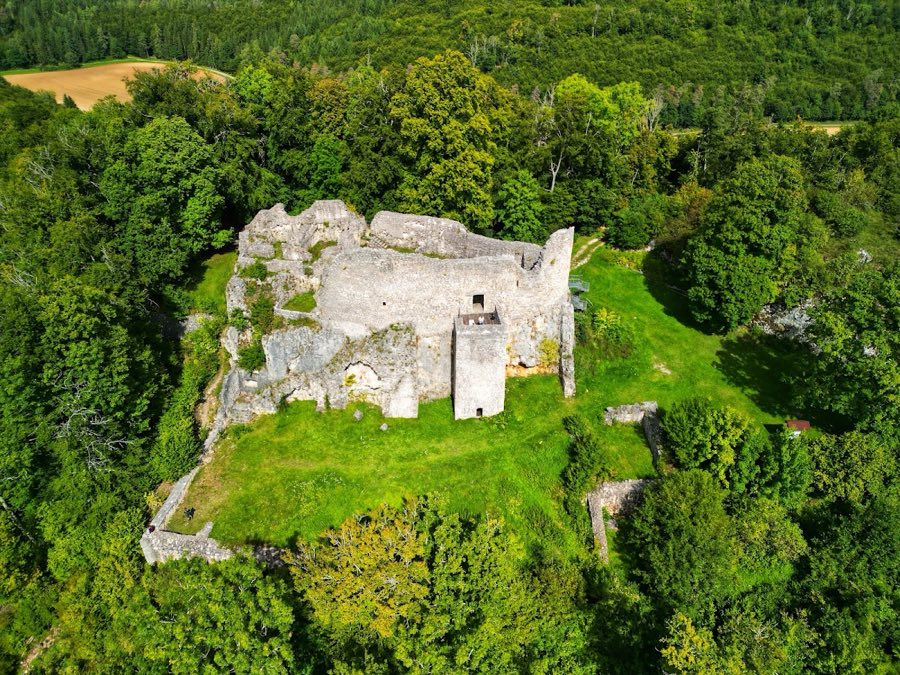
Burg Falkenstein
Germany
CastleRuin10th century
No. 63759
No. 63759 · 48.083 N, 9.066 E
For events
Burg Linzenberg is marked as a château or castle venue lead. Capacity, indoor/outdoor spaces, catering rules, and accommodation options are published only after public verification.
Event types: Private events, Cultural gatherings, Filming and photography
Quick summary
Burg Linzenberg is a castle in Germany with origins associated with the 13th century.
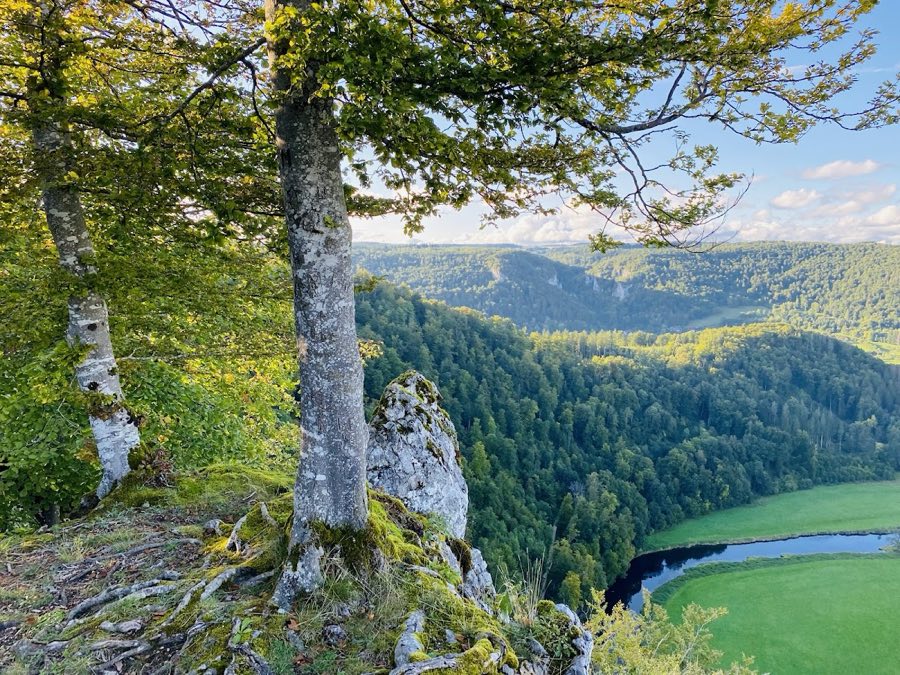
See all castles in GermanyBurg Linzenberg stands near Beuron, Germany, and appears to be a medieval hilltop stronghold probably erected in the twelfth century under the Counts of Montfort.
The earliest named individuals connected with the site are local feudal followers recorded in the early 1200s, with a Algozo of Linzenberg noted about 1216 and an Albero of Linzenberg appearing in 1228. These personal names indicate the place was occupied and managed by a small noble household in the first half of the thirteenth century. Over the following century the castle’s fortunes changed with wider regional events. The building was probably destroyed by the great Friuli earthquake of 1348.
By about 1362 the property of Linzenberg and the nearby Falkenstein belonged to the lords of Magenbuch. On 3 October 1390 Albrecht von Magenbuch sold the Linzenberg castle site with its appurtenances and the two castles known as Oberfalkenstein and Unterfalkenstein to Heinrich von Bubenhofen. The place continued to be remembered as a castle site into later centuries, and a sixteenth-century chronicle records it explicitly as a ruined castle site. Over time the name appears in records with variants such as Lenzenberg, Langenfels, and Linzenberg.
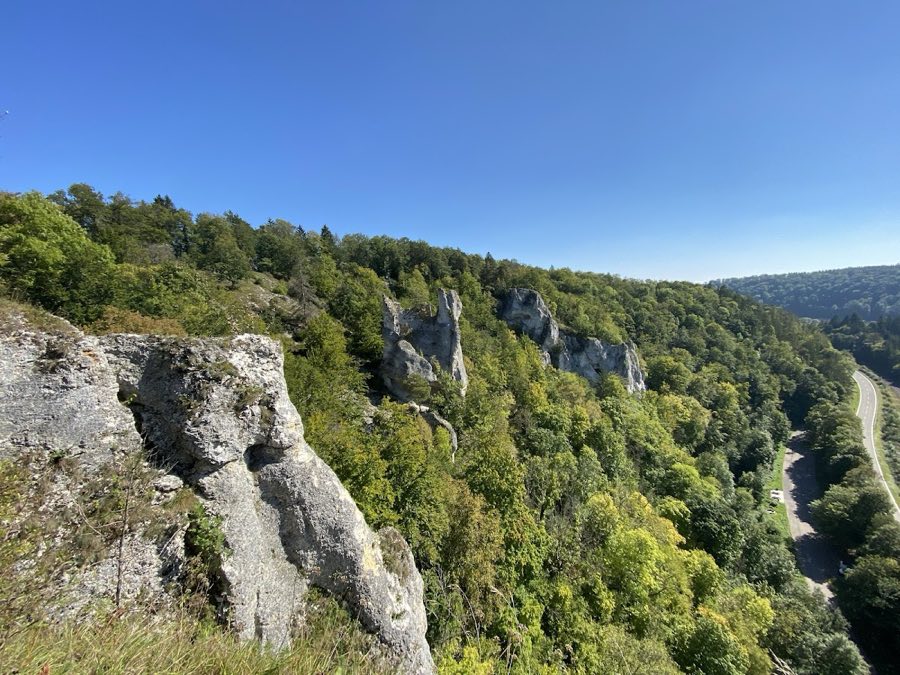
The castle occupied a narrow rock spur and was organized in two linked enclosures, an outer bailey with a roughly horseshoe shape of about seven hundred square metres and a slightly smaller inner bailey set a little to the northwest. The inner enclosure lay on the spur’s narrowest part and was defended by a substantial stone shield wall that protected the approach from the rock neck. Stonework at the northwest end of that wall survives as a fragment.
Defensive earthworks remain readable in the ground plan. A wide neck ditch facing southwest toward the high plateau measures between eight and twelve metres across and separated the site from the surrounding rock, while a second ditch at the northern tip cuts through the spur and further defined the castle’s defensive layout. In the outer bailey there are vestiges of what was once a polygonal curtain wall, preserved only in short stretches, and a flattened rock tongue at the eastern brink marks an exposed platform that once held a building.
On the highest point of the rock, on the southeastern flank, stands the footprint of a trapezoidal structure interpreted as the residential tower. Its measured length is 12.5 metres, with the width varying from about 7.10 metres along the side facing the shield wall to roughly 4.60 metres at the opposite side. The northwest wall retains core masonry with small facing stones, while the southeast corner is marked by a single limestone block measuring approximately 65 by 40 by 42 centimetres. At the eastern corner there is a short remnant of wall built of small squared blocks set in regular courses, and three isolated ashlar blocks lie near the building’s center. Scattered depressions and solitary stone blocks across the site are taken as traces of additional former buildings.
The spur’s northeastern tip is a levelled rock step that was probably built upon in the castle period. From that point clear lines of sight extend to the twin Falkenstein ruin, the Schaufelsen and its Schauenburg ruins, the Neidinger Heidenschloss rock formation, and the Burgstall Auchtbühl. Construction employed small squared stone blocks and larger limestone blocks, and today the location exists chiefly as wall and masonry remnants on the rock outcrop.
No. 84387
No. 32643
No. 11693
No. 33348
Comments
Comments for Burg Linzenberg will require a verified account before posting.
We'll send a verification link before your first comment is published.