No. 32643
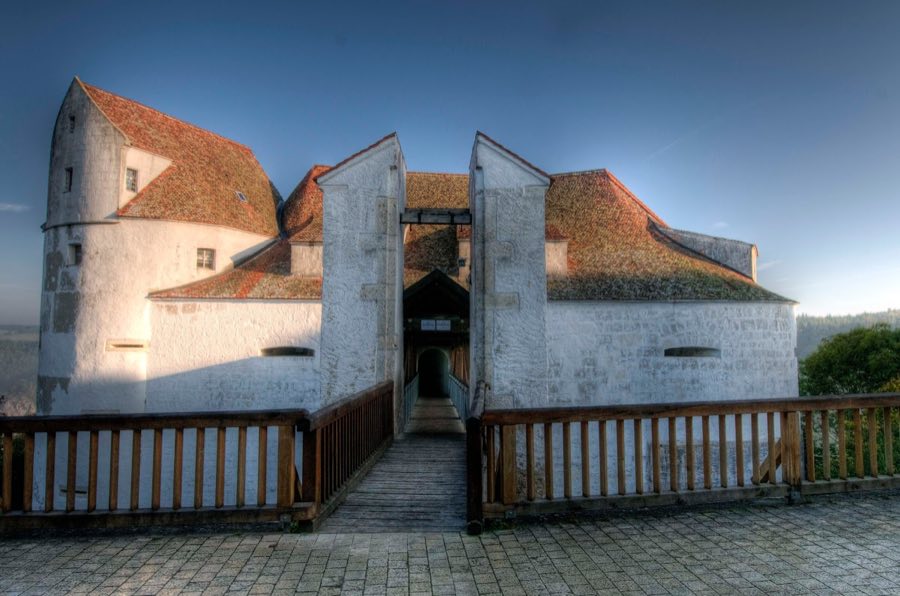
Wildenstein Castle
Germany
CastleRestoredFor events13th century
No. 11693
Castle · Germany
No. 11693 · 48.054 N, 8.999 E
Quick summary
Wildenstein–Hexenturm is a castle in Germany with origins associated with the 11th century.
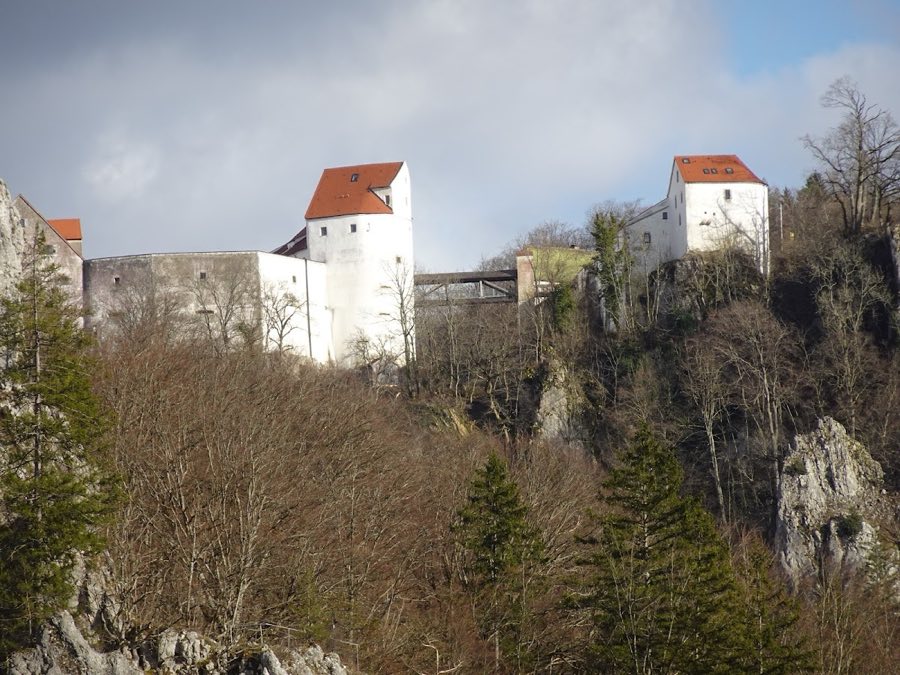
See all castles in GermanyWildenstein – Hexenturm stands above Leibertingen, Germany, and was erected by high-medieval free nobles.
The complex likely dates back to the first half of the twelfth century, with surviving building features consistent with a foundation between about 1100 and 1150. Members of the family later called the Lords of Wildenstein appear in monastery of Salem charters between 1168 and 1174, providing the first documentary link to the site. Around 1200 the upper part of the stronghold, known as the Hexenturm, was built and seems to have replaced an earlier structure on the same rock. In the thirteenth century a new Burg Wildenstein was constructed elsewhere, yet the older stronghold continued to be used as a residence until roughly 1400.
The ruins belong to a cluster of four castles that predate the later Burg Wildenstein, indicating a long sequence of occupation and reworking at this place. A local tradition records that during witch persecutions the castle served as a prison for accused women, that a bridge collapsed so they starved before execution, and that the castle was struck by lightning soon afterwards; this story survives as a regional legend about the site.
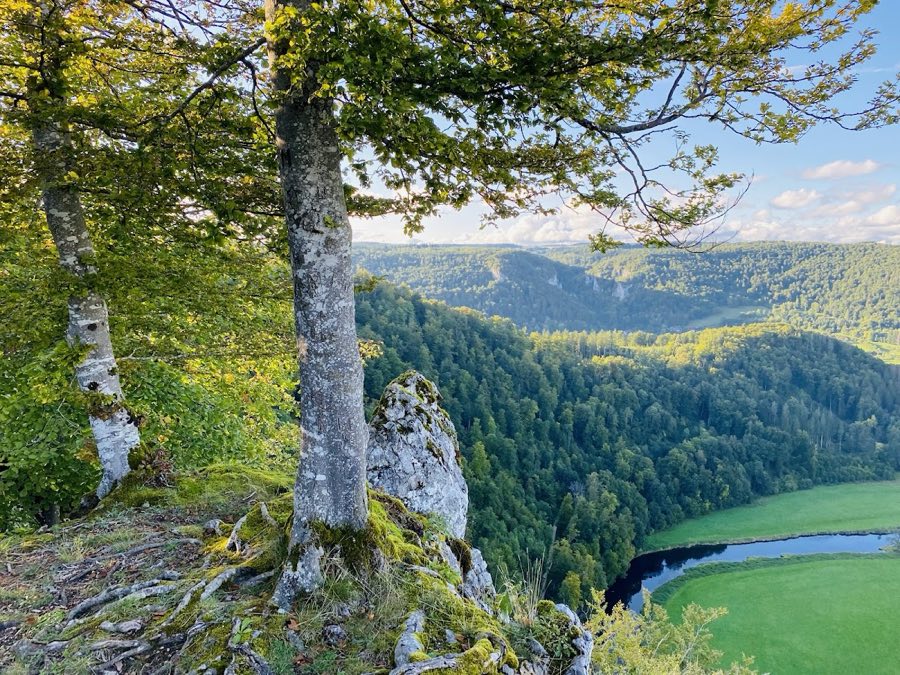
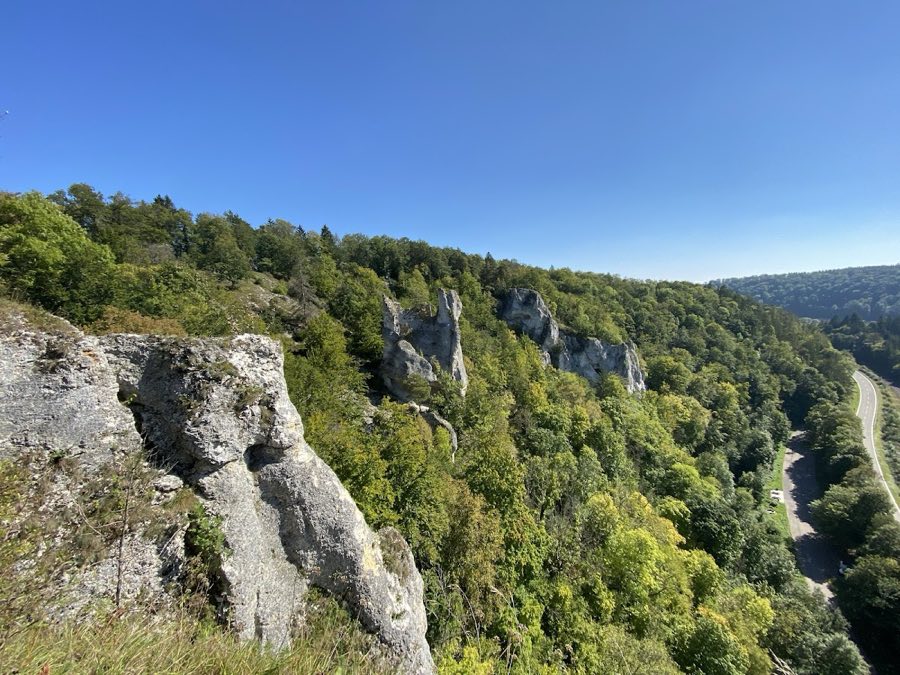
The site is a rock castle arranged as two linked fortifications set on a steep rocky tooth, with the upper position reached higher on the rock and the lower position set somewhat below. The whole ensemble sits on an inaccessible outcrop and the masonry that remains shows construction from multiple phases, which supports an early twelfth-century origin as well as later rebuilds.
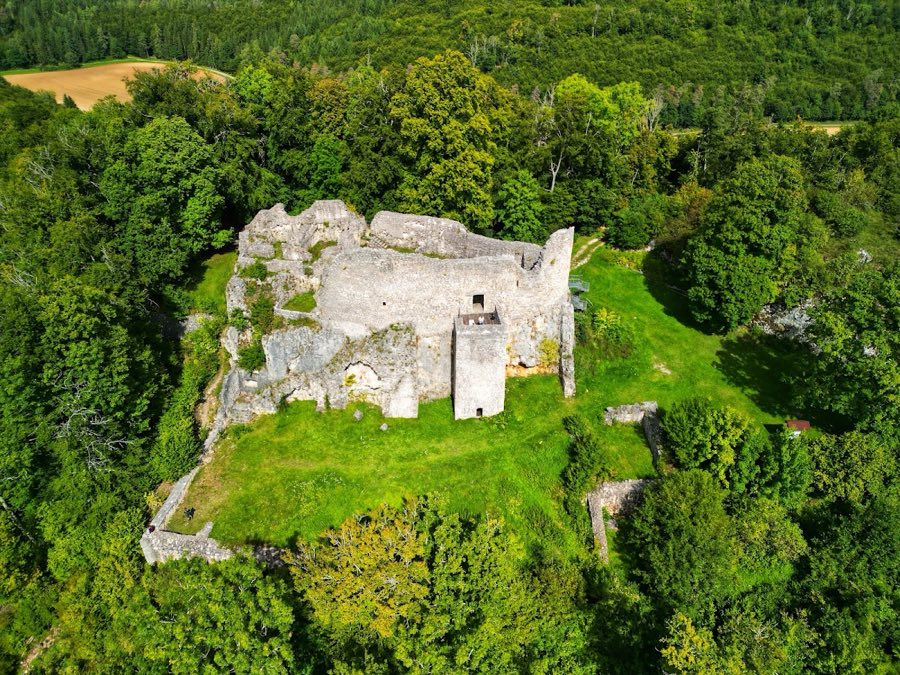
The upper stronghold, historically called the Hexenturm, preserves only small sections of core walling built from dressed stones with projecting faces, a technique visible in the remaining blocks. These fragments record masonry workmanship from different periods and lie in a ruinous state, providing limited but direct evidence of the upper tower’s position and construction method.
On the lower, steeply falling north side there are fragments of a terminal or closing wall and a large rock shaft cut into the bedrock. The lower courtyard has, on its east side, an opening that leads into a cave hewn into the rock; this cave functions as the central feature of the complex and connects directly with the courtyard. Overall the ruins are fragmentary, with only limited sections of masonry in situ, and the surviving fabric preserves traces of successive building phases and later reuse.
No. 32643
No. 63759
No. 84387
No. 33348
Comments
Comments for Wildenstein–Hexenturm will require a verified account before posting.
We'll send a verification link before your first comment is published.