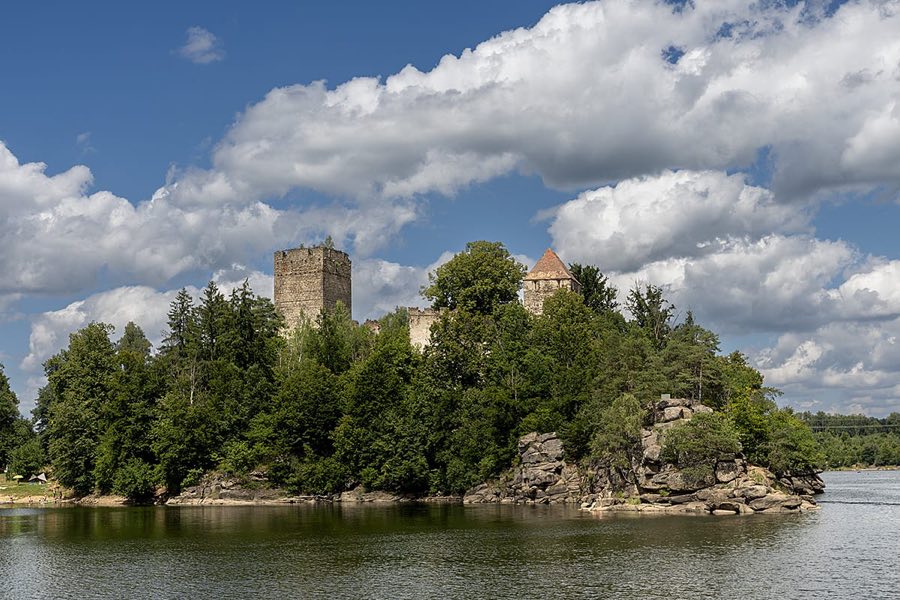
No. 46768
Ruine Lichtenfels
Austria
CastleRuin12th century
No. 82563
Castle · Austria
No. 82563 · 48.590 N, 15.337 E
For rent
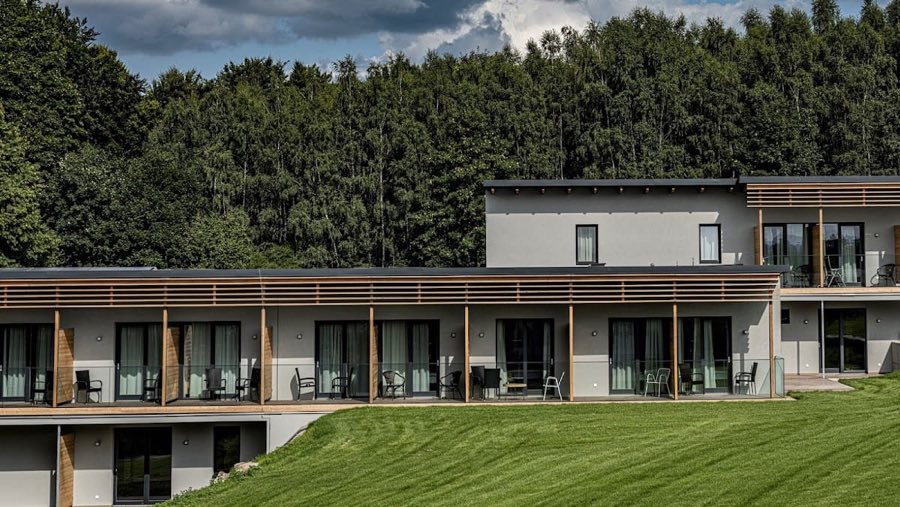
Burg Ottenstein is marked for bookable castle accommodation. Nightly pricing, sleeps count, stay rules, and amenities are displayed only when public operator data is available.
Rental type: Hotel / bookable stay, Short-stay rental
Short-term availability: Bookable accommodation signal
For events
Burg Ottenstein is marked as a château or castle venue lead. Capacity, indoor/outdoor spaces, catering rules, and accommodation options are published only after public verification.
Event types: Private events, Cultural gatherings, Filming and photography
Accommodation: Accommodation signal present
Quick summary
Burg Ottenstein is a castle in Austria with origins associated with the 12th century.
See all castles in AustriaBurg Ottenstein is a hilltop castle located in Rastenfeld, in the Waldviertel region of Lower Austria. Its origins trace back to the 12th century or earlier, with the first written record dating to 1177, mentioning Hugo de Ottenstaine. The castle was initially established by the Ottensteiner family, who were related to the lords of Rauheneck near Baden. This family maintained ownership until the early 1400s.
In the mid-15th century, ownership passed to Tobias von Rohr. His tenure ended abruptly after a siege in 1448, when he was captured due to misconduct. By 1516, Paul Stodoligk acquired the castle, and his son Eustach initiated major renovations, including the addition of the outer bailey, a fortified courtyard. In 1536, the noble Lamberg family purchased Burg Ottenstein, beginning a period of over four centuries of continuous ownership.
The Lambergs rose in nobility during their tenure, becoming barons in 1544 with the title Freiherren von Ortenegg und Ottenstein, and later counts in 1667. The castle endured military challenges during the Thirty Years’ War, withstanding two sieges in 1622 and 1640, and repelling a Swedish assault in 1645.
Starting in 1679, Burg Ottenstein underwent extensive Baroque remodeling. This included decorative stucco work in the chapel dedicated to Saint Florian, crafted by Lorando Aliprandi. A notable feature from this period is the “Päpstezimmer,” a room adorned with portraits of 241 popes. In 1822, Franz Adam von Lamberg donated the family’s art collection to the Vienna Academy of Fine Arts, while the castle’s archives were transferred to the Lower Austrian State Archive.
Between 1867 and 1878, the castle was renovated in the Romantic style. This phase introduced conical and tent-shaped roofs, replacing earlier Baroque onion domes, and added window shutters painted in red, white, and red, reflecting Austrian national colors.
Around 1940, the surrounding area was cleared of inhabitants to create the Döllersheim military training ground. The castle was sold to Nazi Germany and, after World War II, came under Soviet administration as part of the USIA (Soviet Property Administration). During this time, it served as officers’ quarters but suffered damage. Since 1958, the castle has been leased by the EVN energy company and is owned by the Windhag’sche Stipendienstiftung foundation. A restaurant operated in the outer bailey for some time but closed in 2014.
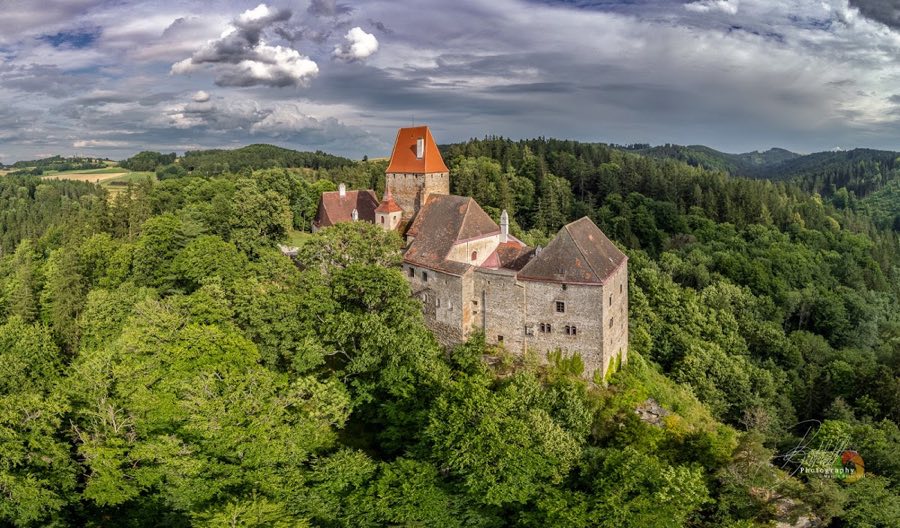
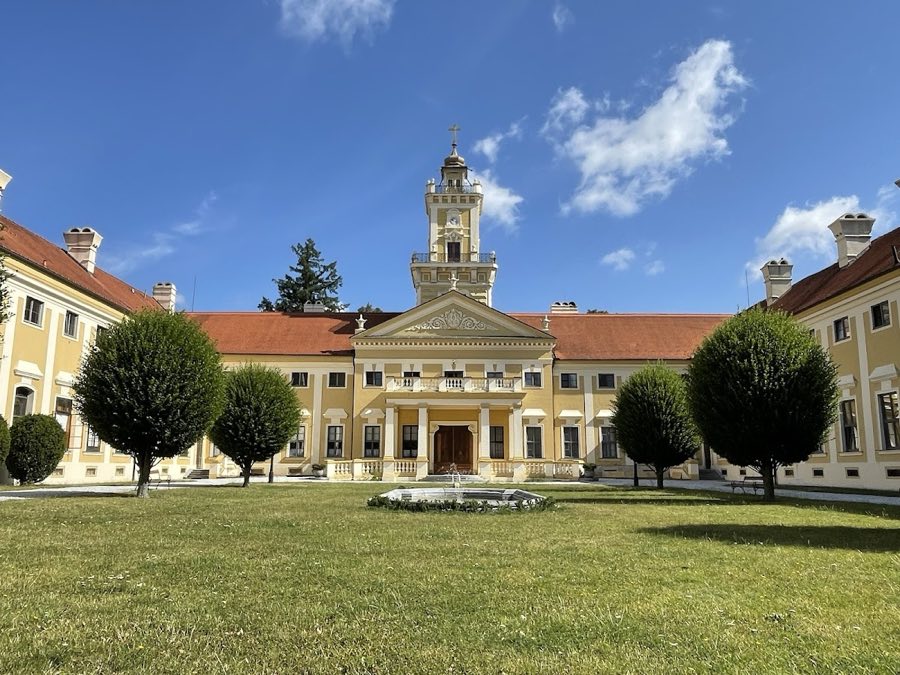
Burg Ottenstein is situated on a hill overlooking the Ottenstein reservoir. The site consists of a main castle and an outer bailey, the latter constructed during early 16th-century renovations. The outer bailey features gates once connected by a drawbridge, now replaced by a permanent bridge built at the end of the 17th century.
The main castle reflects architectural changes from the 17th and 18th centuries, showcasing Baroque elements. The chapel, dedicated to Saint Florian, contains early Baroque stucco decorations by Lorando Aliprandi. Beneath these later additions, the chapel’s oldest section holds frescoes dating from the late 12th century, uncovered during restoration work in 1974 and 1975.
In the late 19th century, the castle’s roofs were altered to conical and tent shapes, consistent with Romantic historicism. This replaced the earlier Baroque onion domes. Window shutters painted in red, white, and red were also added during this period.
The “Päpstezimmer” is a distinctive interior feature, decorated with portraits of 241 popes. The castle’s condition declined during its use as Soviet officers’ quarters after World War II, but renovations in the 1960s helped restore parts of the structure. The outer bailey once housed a restaurant, which now operates only for pre-arranged groups and events.
No. 46768
No. 47019
No. 86482
No. 44743
Comments
Comments for Burg Ottenstein will require a verified account before posting.
We'll send a verification link before your first comment is published.