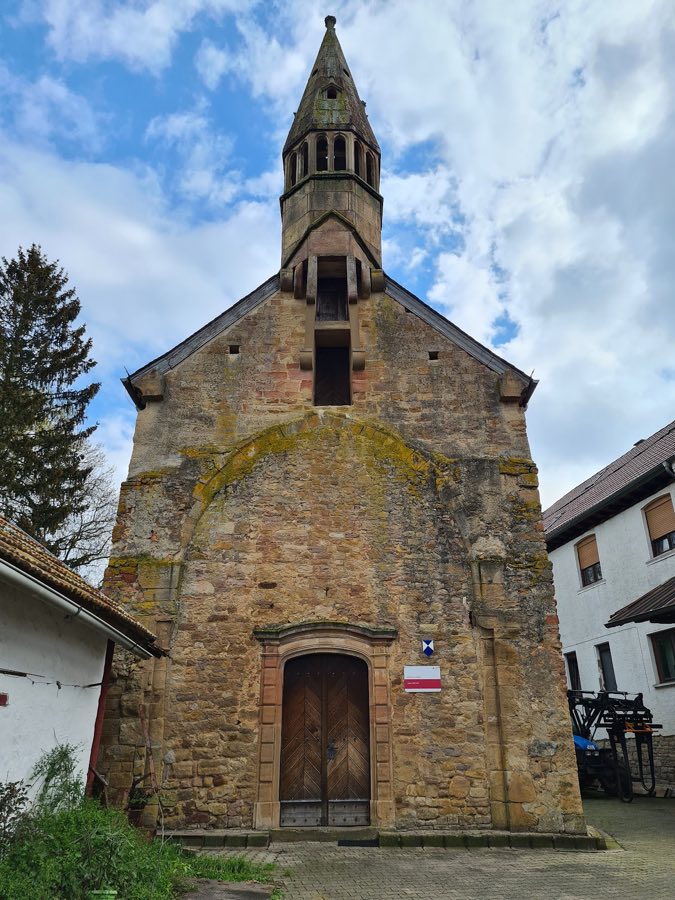
No. 36182
Hof Iben
Germany
CastleRuin18th century
No. 17841
Castle · Germany
No. 17841 · 49.645 N, 7.879 E
Quick summary
Burg Ruppertsecken is a castle in Germany with origins associated with the 18th century.
See all castles in GermanyBurg Ruppertsecken stands on Schlossberg hill in the municipality of Ruppertsecken, Germany. It was constructed during the Middle Ages by the Palatine Counts, a noble family associated with the Palatinate region of the Holy Roman Empire. The earliest written record of the castle dates to July 17, 1344, when it was recognized as an estate connected to the nearby Burg Frauenstein, granted as a hereditary fief to Ritter Hermann von Hohenfels.
Throughout the 14th and 15th centuries, ownership of Burg Ruppertsecken shifted among several noble figures. In 1401, the castle was pledged for 4600 gold gulden to Dieter Landschad von Steinach and his wife Irmgard. Just a few years later, in 1406, Johann von Worms acquired it for 3000 gulden. By 1410, the castle came into the possession of Duke Stephan of Pfalz-Simmern-Zweibrücken. Later in 1444, governance passed to Ludwig of Pfalz-Zweibrücken-Veldenz, reflecting the complex inheritance and territorial arrangements common among German nobility of the time.
A pivotal event occurred in 1470 when Count Palatine Friedrich I launched a military siege on Burg Ruppertsecken. The castle endured a 14-day assault before succumbing. Its destruction was carried out under the supervision of artillery master Martin Merz, who oversaw the castle’s plundering and demolition. Following this event, rebuilding efforts were explicitly forbidden, marking the beginning of its decline.
By the late 18th century, around 1794, the ruins and surrounding village became part of the Electorate of the Palatinate, an important territorial principality. Even into the early 19th century, in 1825, remnants of the castle masonry could still be observed. Over time, however, local inhabitants harvested stones from the ruins, repurposing them for construction projects such as the village’s bell tower, erected in 1869.
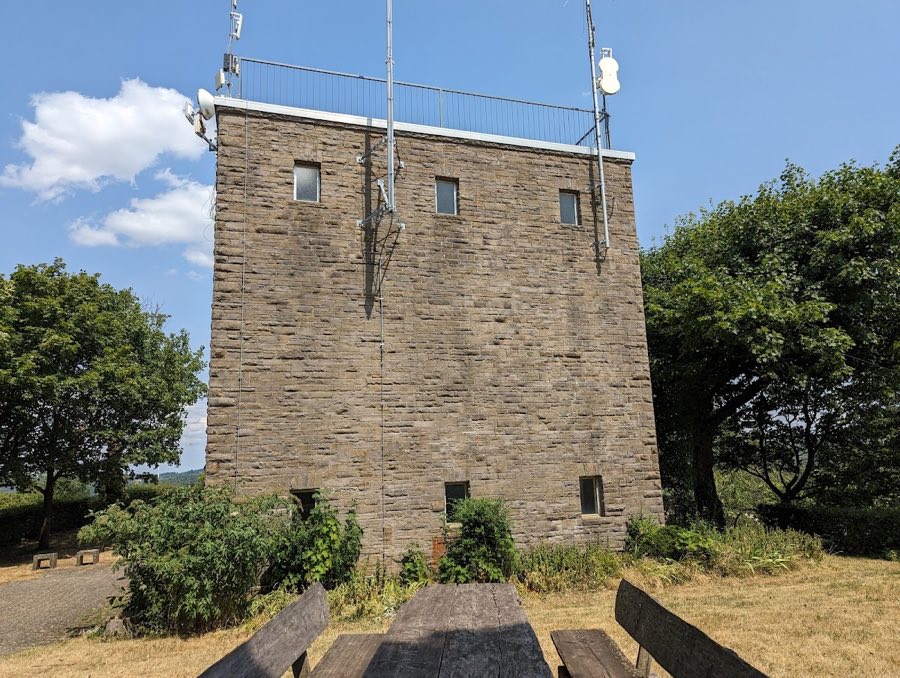
In the late 19th century, the historic significance of the site inspired the 1889 construction of a water tower designed to resemble a medieval donjon, or fortified tower. This structure was later renovated in 1963, blending practical modern use with an architectural homage to the medieval past of Burg Ruppertsecken.
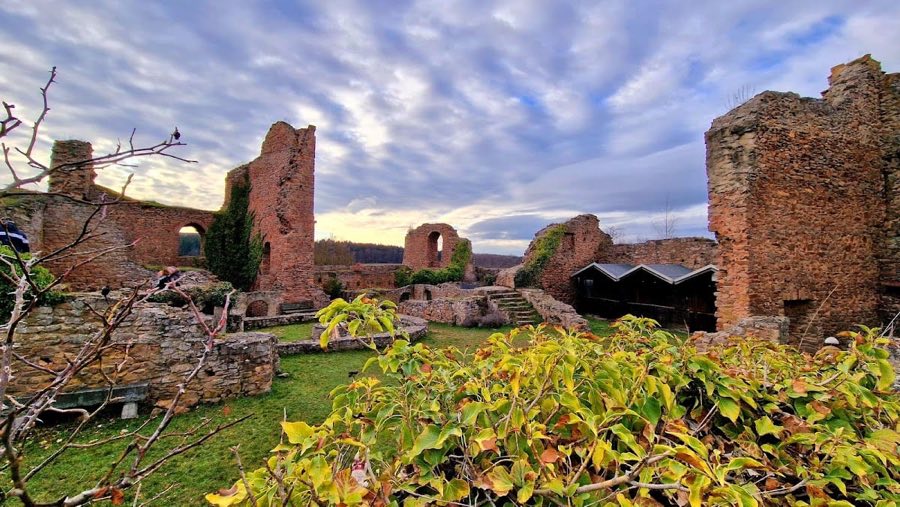
The ruins of Burg Ruppertsecken occupy a prominent position atop Schlossberg hill, rising 498 meters above sea level. While specific details of the castle’s original layout and dimensions remain undocumented, its elevated location offered strategic oversight of the surrounding village, underscoring its function as a defensive stronghold.
Archaeological observations from the 19th century noted surviving fragments of vertical masonry, indicating sections where walls once rose. These stone remains served as a source of building material for local villagers, who incorporated them into village structures including the bell tower constructed in 1869. This reuse reflects the intimate relationship between the castle’s material heritage and the community’s architectural development.
On the historic castle grounds, a distinctive water tower built in 1889 stands as a modern structure inspired by medieval castle architecture. Constructed to resemble a donjon, this tower combines contemporary utility with design elements evocative of the castle’s defensive past. It underwent restoration in 1963 to maintain its structure and appearance, now marking the landscape where the original fortress once dominated.
Together, these features illustrate a site that transitioned from a medieval fortress to ruination, with its stones woven into the fabric of local buildings and its silhouette echoed in later architectural interventions. The remains convey a layered history visible both in the fragments of ancient walls and in the constructed homage of the water tower.
No. 36182
No. 80194
No. 93479
No. 61332
Comments
Comments for Burg Ruppertsecken will require a verified account before posting.
We'll send a verification link before your first comment is published.