No. 60112
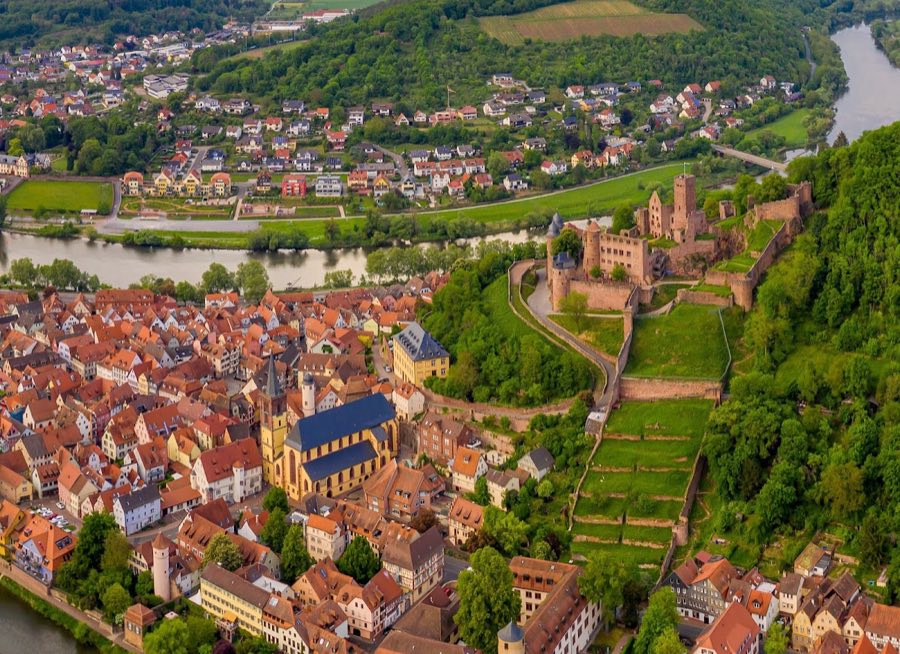
Burg Wertheim
Germany
CastleRuin6th century
No. 83449
Castle · Germany
No. 83449 · 49.622 N, 9.523 E
Quick summary
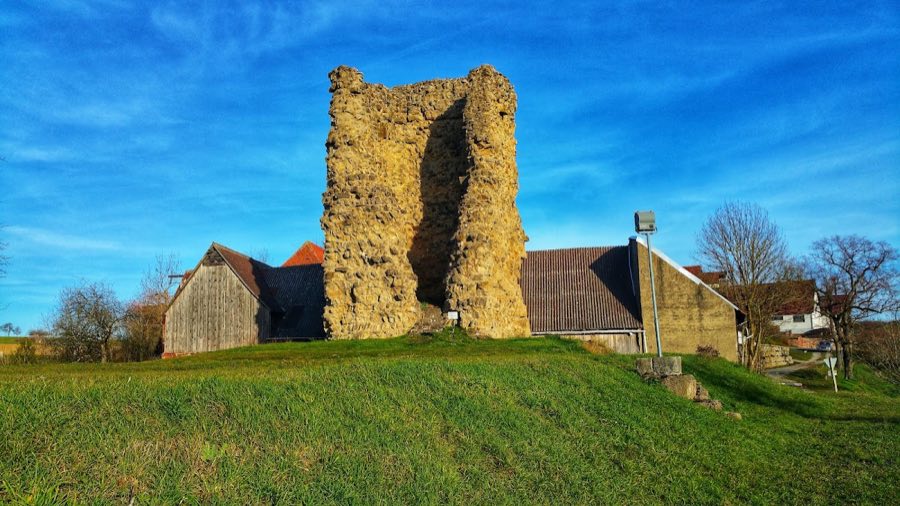
Burg Schweinberg is a castle in Germany with origins associated with the 12th century.
See all castles in GermanyBurg Schweinberg is a medieval spur castle situated in the municipality of Hardheim in Germany. It was constructed by a noble family during the Middle Ages, likely in the late 11th or early 12th century. The earliest reference to the castle dates back to 1098, when it was associated with the noble family known as de Swenenburg.
During the 12th century, the castle held strategic importance due to its position overlooking a key medieval route connecting Würzburg through Tauberbischofsheim to the Lower Main region. Documentation from this period includes mentions of individuals linked to the site, such as Wolfram de Sueneburc, who appeared as a witness in a deed from Mainz in 1127. By 1157, the castle was noted under the name Suinenburch, confirming its early presence and importance.
The last known lord from the Schweinberg family, Kraft II., joined Emperor Frederick Barbarossa’s campaign in Italy in 1167 and died shortly thereafter, probably from malaria. The castle then came into the possession of Konrad von Boxberg, Kraft’s brother-in-law, who transferred it to the Johanniter, commonly known as the Knights Hospitaller, at Wölchingen. Over time, parts of the Schweinberg lordship were divided among the Edelfreien von Dürn and the Counts of Wertheim, reflecting shifts in regional power.
In 1287, an exchange arranged by Bishop Berthold II of Würzburg saw Burg Schweinberg traded with the Johanniters for Burg Boxberg. The castle was then granted to Konrad Rupert von Boxberg, who held the hereditary office of ducal chamberlain, an important administrative role. By 1299, control shifted to the Counts of Wertheim, related to the Boxberg family, who also secured the chamberlainate by 1313. They established the Amt Schweinberg, an administrative district encompassing the castle, its village, and adjacent settlements, consolidating their regional authority.
The Prince-Bishops of Würzburg continued to view Schweinberg as a fief belonging to their bishopric, leading to disputes with the Counts of Wertheim. These tensions culminated in 1437 when forces loyal to Würzburg captured and burned the castle during a feud over inheritance rights involving Michael I of Wertheim. The stronghold was rebuilt in 1473 and thereafter served as the seat of a Wertheim ministerial, a noble official managing local affairs.
Following the extinction of the Counts of Wertheim, ownership of the castle and its associated chamberlain office passed through several hands, including the Freiherr von Crichingen by the year 1574. In 1612, Prince-Bishop Julius Echter succeeded in reclaiming Schweinberg as a Würzburg fief after extended legal and military efforts, although formal conflicts over jurisdiction continued until the Holy Roman Empire dissolved in 1803. The castle endured damage during the Thirty Years’ War and gradually fell into neglect. Over subsequent centuries it was quarried for building materials before preservation efforts began, notably with the restoration of its bergfried tower in 1974.
The surviving remains of Burg Schweinberg primarily consist of the stump of its bergfried, a tall, square defensive tower that once stood prominently on the eastern edge of the inner castle courtyard. This tower, measuring about 15 meters in height, overlooks a deep neck ditch, now mostly filled in, which would have offered protection by separating the castle’s core from the surrounding terrain. Originally, the bergfried’s exterior walls were constructed from large rusticated ashlar blocks known in German as Buckelquader, giving the tower a robust appearance. However, most of these facing stones have been removed over time, revealing the herringbone-patterned masonry used as infill behind them.
Adjacent to the bergfried are vestiges of a round artillery bastion dating to the late 15th century, reflecting adaptations made to accommodate early firearms and cannon defense during the castle’s reconstruction phase. Small fragments of the curtain wall that once enclosed the castle’s inner area also survive, preserving a glimpse of its former fortifications.
An important architectural element linked to the original castle is a finely decorated, round-arched double window thought to have belonged to the vanished palas, which was the main residential building within the medieval structure. This window was discovered in 1894 built into a farm building located on what had been the castle’s outer bailey, the outer courtyard area. Today, this window is preserved in the Badisches Landesmuseum Karlsruhe.
Additional fragments reflecting the castle’s Romanesque architectural style, including portions of wall columns, capitals from columns, and ornamental friezes, have been recovered and are displayed in local museums such as the Grafschaftsmuseum Wertheim and the Erfatal-Museum in Hardheim. These pieces provide valuable insight into the artistic and building traditions present at Burg Schweinberg during its medieval heyday.
No. 60112
No. 35664
No. 54847
No. 75820
Comments
Comments for Burg Schweinberg will require a verified account before posting.
We'll send a verification link before your first comment is published.