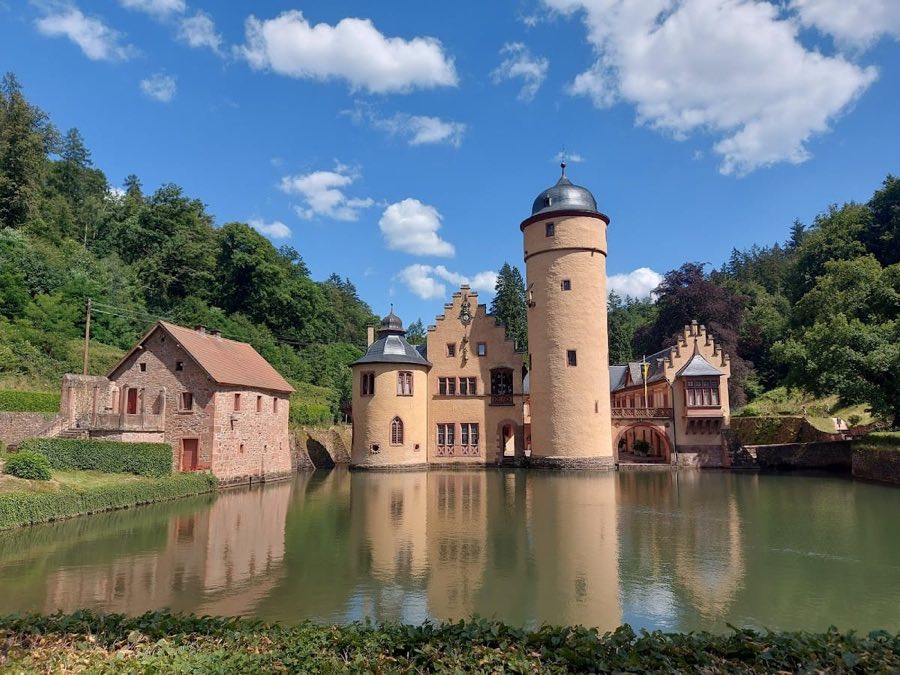
No. 73790
Mespelbrunn Castle
Germany
CastleIntact15th century
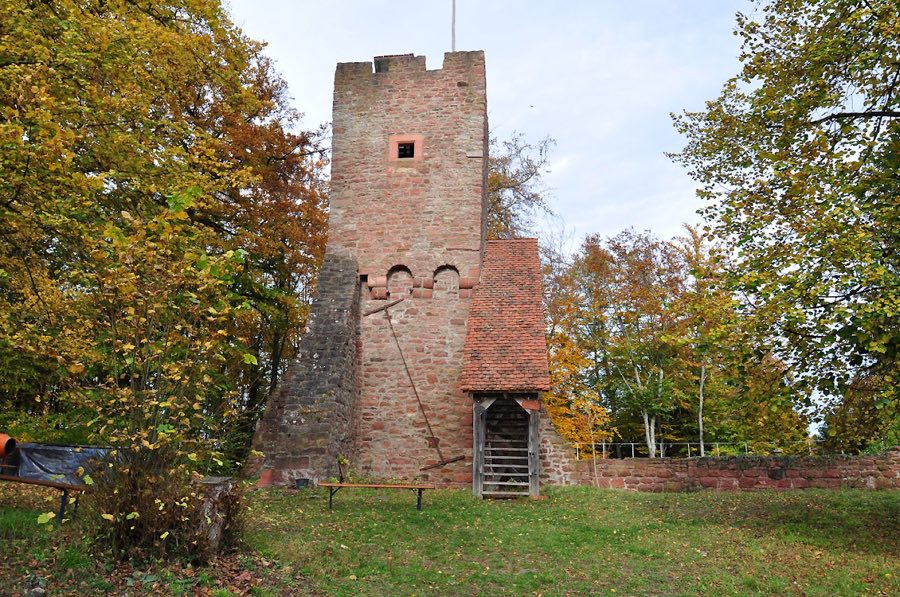
No. 35664
Castle · Germany
No. 35664 · 49.829 N, 9.293 E
Quick summary
Burg Wildenstein is a castle in Germany with origins associated with the 13th century.
See all castles in GermanyBurg Wildenstein stands in the municipality of Eschau in Germany and originated during the Staufer (Hohenstaufen) era of the High Middle Ages.
Archaeological material shows an initial phase in the 12th century associated with Staufer activity. Finds made north of the residential range demonstrate an early construction and use that predate earlier assumptions tying the site solely to the Counts of Rieneck.
By the early 1200s the castle formed a fortified estate in the hands of regional lords. The site appears in written records for the first time in 1260, when it was captured in a conflict that involved the Counts of Rieneck and forces aligned with Mainz and Reinhard I of Hanau. Mainz responded by building a short-lived counter-castle a few hundred metres to the east on the ridge.
Negotiations followed the fighting. In 1261 the Rieneck brothers Ludwig, Gerhard and Heinrich promised not to erect a fortification on Mainz ground after Bishop Wernher of Mainz demolished Schloss Esche. In 1266 the Rieneck counts agreed to pay Archbishop Wernher 500 marks of silver, placed themselves under a pawn to Herman of Henneberg for 300 marks together with Wildenstein, and accepted that castrum Ronnenbach should be slighted. In January 1271 the counts submitted unconditionally to the archbishop at Aschaffenburg.
The castle remained connected to the Rieneck family for the following centuries. The counts enfeoffed Wildenstein, Eschau and Kleinheubach to the Count Palatine while Wildenstein continued to serve as the seat of the Rieneck bailiff for the Amt Wildenstein. Documentary records show the site was partially pledged in 1319, governed by an appointed bailiff named Johann Gundelwin in 1340, associated with a noble squire of the Fechenbach family in 1382, and recorded under Eberhard Rüd von Kollenberg as a castle official in 1420.
In 1520 Eberhard Schenk von Erbach secured rights to the palatine fiefs once held by Rieneck. The Palatinate seized the property as a reverted fief in 1559 and granted it the following year, in 1560, to the Counts of Erbach as a free, allodial possession. Under Erbach ownership the castle continued to serve administrative purposes for a time but then fell into disuse.
By the 1680s the site was already run down. The last Erbach bailiff, Johannes Schnellbacher, lived at Wildenstein with his wife Anna Maria and nine children and died on 25 December 1689; he was buried in Eschau on 27 December. After later transfers of the cellar rights the castle lost its remaining function, its residential building was demolished around 1700, and the place fell into ruin. In the late 20th and early 21st centuries local volunteers began conservation efforts and archaeological fieldwork documented the complex and its material remains in 2011 and 2012.
Burg Wildenstein was a hilltop fortress strategically positioned on a rocky spur of the Katrin mountain, overseeing the Traun valley. This location provided commanding views and a defensive advantage over the surrounding area. The castle’s layout included multiple defensive elements designed to prot
No. 73790
No. 60112
No. 54847
No. 25631
Comments
Comments for Burg Wildenstein will require a verified account before posting.
We'll send a verification link before your first comment is published.