No. 75820
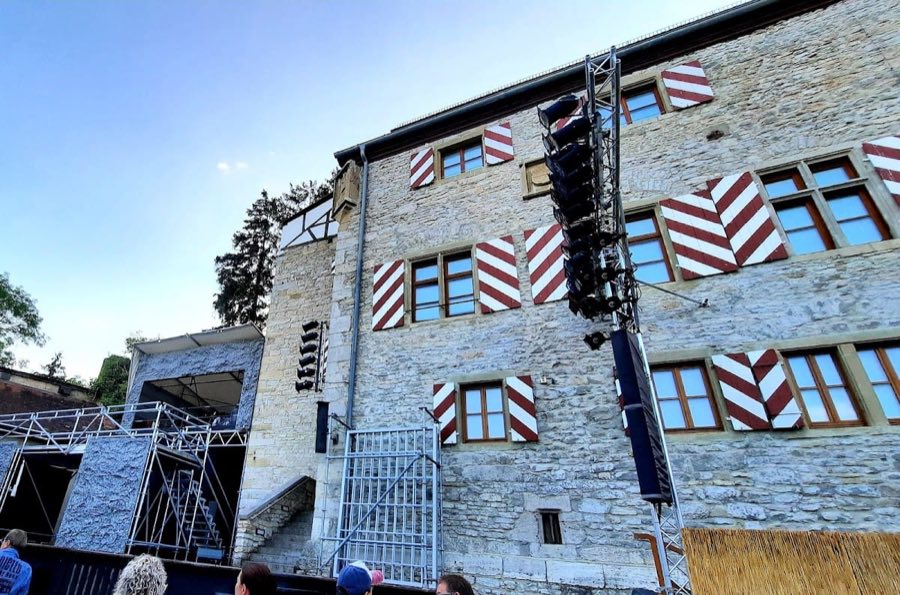
Burg Brattenstein
Germany
CastleRestoredFor events13th century
No. 74740
Castle · Germany
No. 74740 · 49.412 N, 10.149 E
Quick summary
Burg Seldeneck is a castle in Germany with origins associated with the 13th century.
See all castles in GermanyBurg Seldeneck stands in the municipality of Rothenburg ob der Tauber, Germany, and was built by a medieval German noble family under the overlordship of the Bohemian king.
The castle enters written records in the mid-13th century; its connection with Henricus von Rothenburg begins in that period, so the site is unlikely to be much older than those references. The foundation is attributed to the father of Götz (Gottfried) von Hohenlohe, who held the place as a fief from King John of Bohemia. Gottfried placed a branch of the Nordenberg family, who later took the name Seldeneck, in service as castle retainers, granted them portions of the stronghold, and sold additional shares to Conrad and Arnold von Seinsheim. He also transferred a share to his brother Kraft II, turning the site into a joint-inheritors castle where multiple families held rights.
During the 14th century the castle formed part of the administrative area associated with the Oberamt Mergentheim, and ancillary installations such as the castle mill called Adelgersmühle are recorded in 1341. On 24 July 1344 Conrad von Seinsheim conveyed his rights in Seldeneck to the Burgraves of Nuremberg; Luppold von Seldeneck sold his interest that same day but remained as the burgrave’s castellan. The sale by Conrad followed his being placed under an imperial ban earlier that year, a factor in his need to settle debts. Persons documented at the castle across the century include Kraft II, Luppold von Seldeneck, a Kraft of Gattenhofen in 1347, and in 1368 Ullrich Mörder and Eberwein von Seldeneck. In 1379 Friedrich V pledged the castle together with the lordships of Bernheim (probably Burgbernheim) and Bergel.
Ownership passed from Frederick I, Burgrave of Nuremberg, to the Imperial City of Rothenburg ob der Tauber on 29 July 1404. In 1407 Rothenburg entered the Marbacher alliance against King Rupert and was placed under imperial ban; many regional fortifications were destroyed in the measures that followed, and Seldeneck appears to have been damaged or destroyed in that period. Despite this, Rothenburg’s records still note officials associated with the castle in 1418. Cunz von Kirchberg is documented as castellan in 1393, and his successor Adam von Kirchberg formally renounced his claim in 1414, by which time the castle had already been ruined. The surviving ruins were cleaned and conserved in 1985.
Burg Seldeneck occupies the tip of a narrow ridge above a steep creek-cut valley formed by the Tauber River, at about 392 metres above sea level, with the long-distance walking route E8 crossing the spur. The defensive mound falls sharply on three sides and the former line of the fortification can still be followed in places. The western approach, toward a modern cluster of buildings that historically functioned as an outer farm or forework, was defended by a moat that protected the access from lower ground.
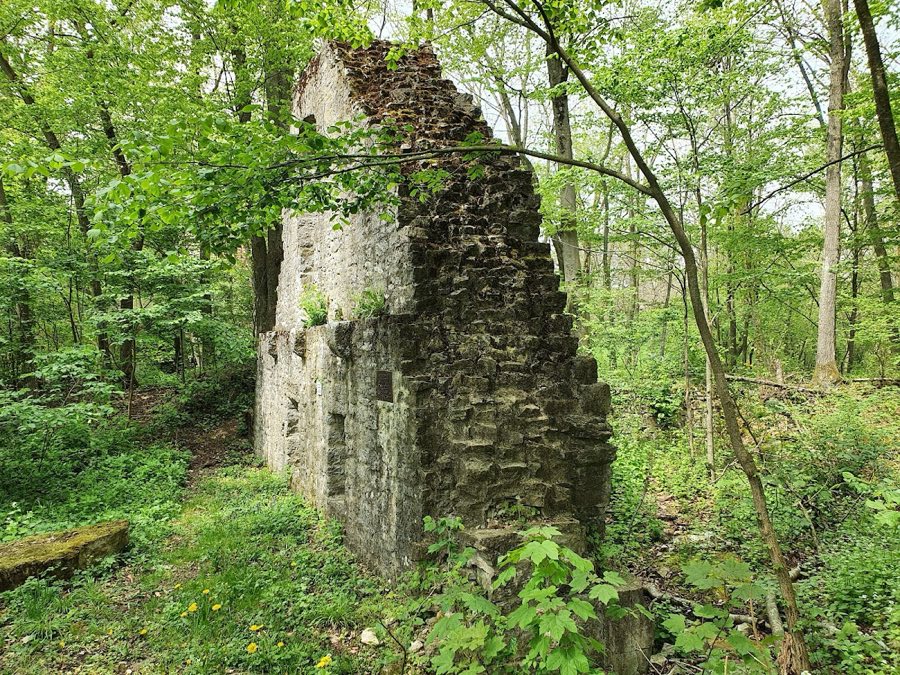
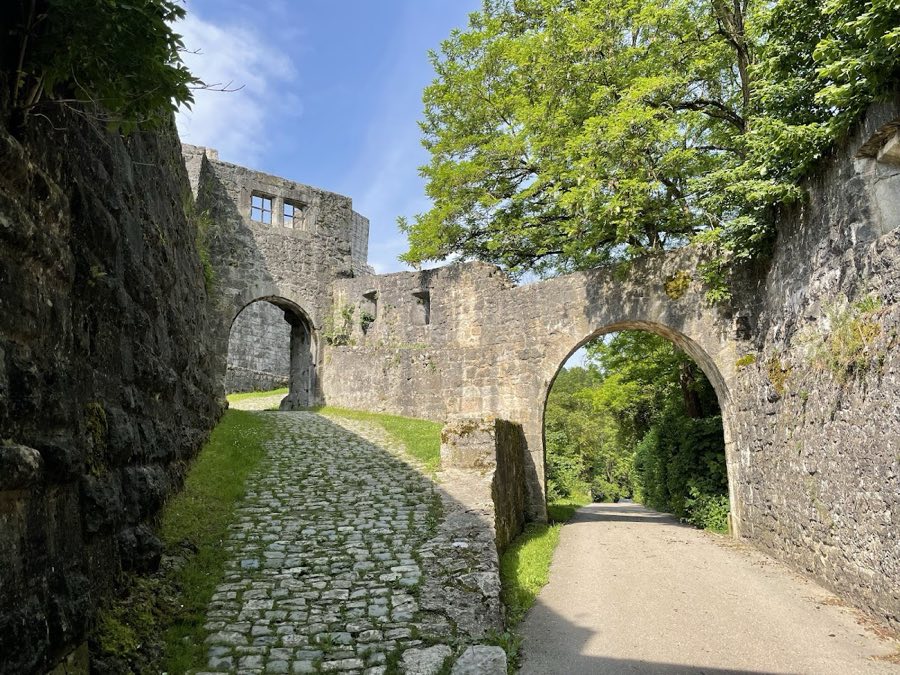
The most substantial standing section is a long house wall that preserves an arrow-slit set in what is probably the original ground floor and an arched window on the floor above; inside the wall the bearings for additional storeys are visible, indicating further floors once rose from the same masonry. A wall stretching at right angles to this house has been partly rebuilt, and this restored length gives a sense of the castle’s original footprint and room divisions. The masonry and surviving openings attest to medieval stone construction and the layout of domestic and defensive spaces.
Close to these elements a broken structure contains the remains of two pointed-arch windows, which may belong to the principal hall or to a small chapel attached to the living quarters, and further fragments of wall lie nearby among overgrown ground. Many parts of the masonry were later removed for building stone, a process that scattered and reduced surviving fabric. The castle hill is now wooded, which limits the medieval sightlines; historical evidence indicates the site once afforded a view toward Rothenburg ob der Tauber.
Documentary evidence also records a mill associated with the castle, the Adelgersmühle, first mentioned in 1341; the mill’s historical connection reflects the castle’s control of nearby resources. Today the preserved sections, the partly restored wall, the ruined windowed structure and the scattered wall fragments together present the surviving archaeological record at the site.
No. 75820
No. 69258
No. 75826
No. 74654
Comments
Comments for Burg Seldeneck will require a verified account before posting.
We'll send a verification link before your first comment is published.