No. 82826
Burg Althornberg
Germany
CastleRuin11th century
No. 36657
Castle · Germany
No. 36657 · 48.131 N, 8.232 E
Quick summary
Burg Triberg is a castle in Germany with origins associated with the 13th century.
See all castles in GermanyBurg Triberg is a medieval castle located near the town of Triberg in what is now Germany. It was built by the people of the region in the early 13th century, or possibly around the year 1200, linked to the division of the Hornberg family territories.
The earliest known record of the castle’s name appears in 1239, during a legal document involving Count Berthold of Neuenburg and Bishop Lüthold of Basel. This document also mentions a ministerial, Peter von Triberc, indicating the castle’s early administrative role and social connections. Burg Triberg is believed to have been constructed by Burkhard I of Triberg and initially belonged to a branch of the Hornberg noble family.
Following the end of the Triberg family line, ownership of the castle and the surrounding town transferred to the Counts of Hohenberg. In 1355, Duke Albrecht II of Austria, a member of the Habsburg dynasty, purchased the lordship, bringing Burg Triberg under Habsburg influence. The castle later became part of Austrian Vorderösterreich (Further Austria) officially in 1654.
Throughout its history, the castle was pledged several times to different regional powers. In 1372, it was pledged to the Margraves of Baden; later, in 1493, it came under the control of the Counts of Fürstenberg. The 16th century saw the castle held by prominent individuals including the jurist Ulrich Zasius from Freiburg and military leader Lazarus von Schwendi.
Burg Triberg faced significant destruction in its active years. It burned down in 1489 and was rebuilt afterward. During the German Peasants’ War in 1525, rebels from the Black Forest region and townspeople set fire to the castle, leading to another major rebuilding effort using forced labor. The structure sustained additional partial damage in 1616.
The final and complete destruction took place during the Thirty Years’ War. On Christmas Day in 1642, Swedish soldiers destroyed the castle, ending its occupation and use as a stronghold. In the 20th century, archaeological work conducted in 1934 uncovered the layout of the castle and parts of its structure, revealing remnants that have survived through centuries.
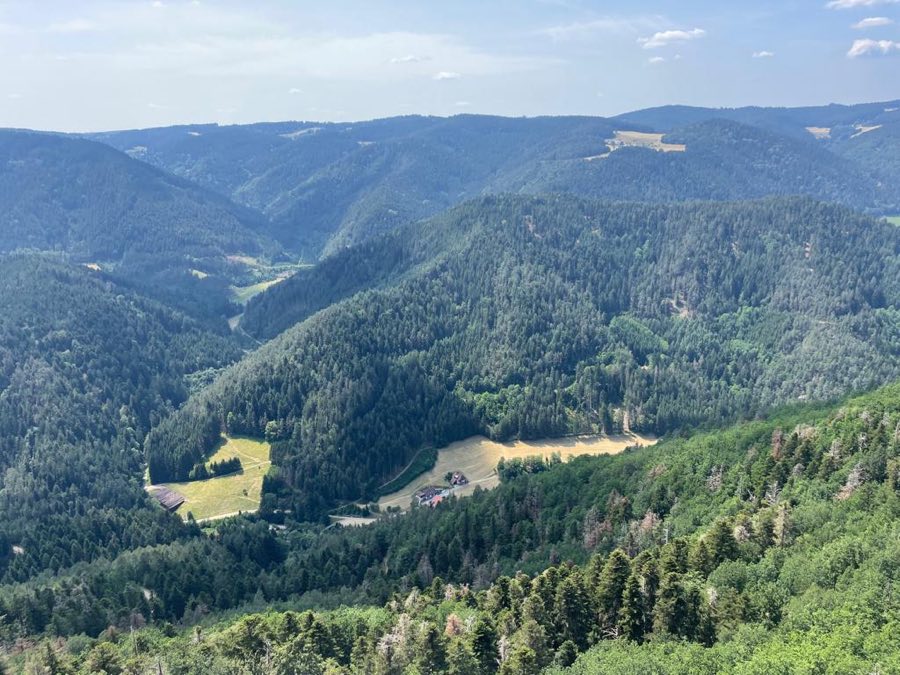
Burg Triberg was built as a spur castle, occupying a strategic position on a mountain spur overlooking the Gutach river near the later site of the town of Triberg. Its design took advantage of the natural terrain for defense, typical of such castles built in the medieval period.
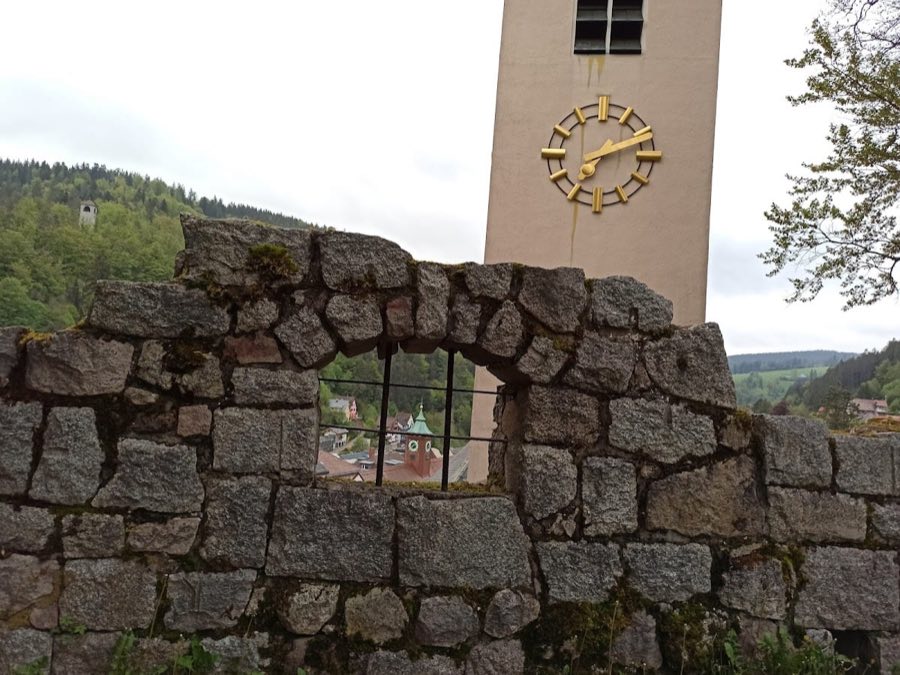
Today, only limited ruins survive, primarily found in an area named the “Burggarten” close to the historic Kurhaus, a spa building nearby. Excavations carried out in 1934 revealed the castle’s ground plan, providing insight into its original footprint on the landscape.
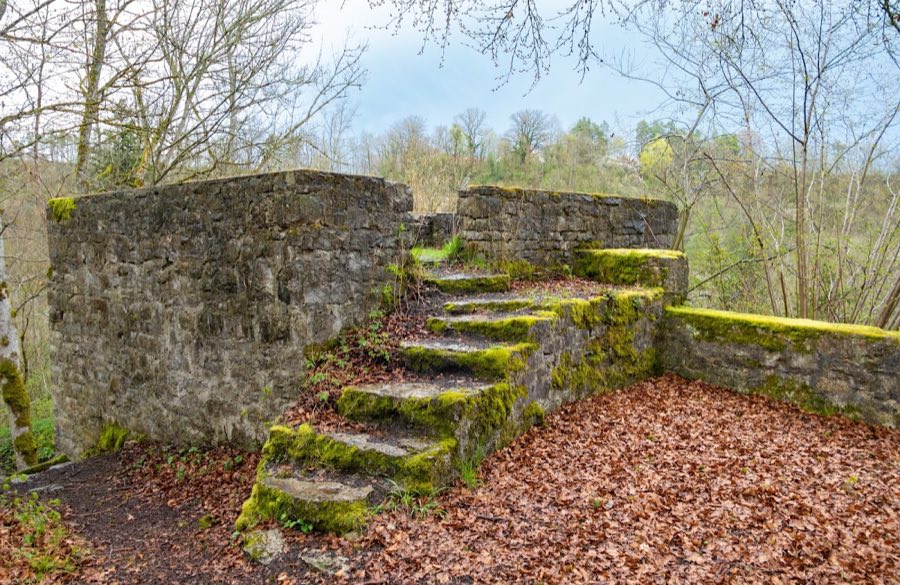
Among the discoveries was an upright pillar from the former castle, which offers a tangible connection to the building’s past. Additionally, portions of the castle’s walls remain, giving a sense of the structure’s size and defensive purpose, although these are fragmentary.
The surviving walls stand as remnants of the repeated cycles of destruction and reconstruction that Burg Triberg experienced over several centuries. These ruins mark the castle’s location and preserve its memory amid the surrounding forested terrain.
No decorative elements, inscriptions, or detailed architectural features have been recorded from the site. The focus of the archaeological findings highlights the castle’s layout and structural remains, allowing for a general understanding of its form and historical presence within the landscape of the Black Forest region.
No. 82826
No. 12693
No. 79170
No. 44679
Comments
Comments for Burg Triberg will require a verified account before posting.
We'll send a verification link before your first comment is published.