No. 15876
Burg Lichtenfels
Germany
CastleRuin14th century
No. 79170
No. 79170 · 48.241 N, 8.631 E
Quick summary
Irslingen Castle is a castle in Germany with origins associated with the 12th century.
See all castles in GermanyIrslingen Castle, also known as Urslingen, is located near the municipality of Epfendorf in Germany. This hilltop fortress was constructed by the noble Urslingen family, who likely established it as their ancestral home during the late 12th century.
The castle is first documented in 1178, marking the height of the Urslingen family’s influence. Among their ranks, Konrad von Urslingen stood out as a prominent figure, serving within the Staufer imperial administration. His stature grew as he was granted the title Duke of Spoleto and took on the role of imperial regent in Sicily. These appointments tied the family closely to imperial affairs, elevating their status beyond their Swabian origins.
Following the death of Emperor Heinrich VI in 1197, the Urslingen family lost direct control over the Duchy of Spoleto. Nevertheless, they maintained hereditary claims to the title. Rainald von Urslingen, a notable family member during this period, was appointed as the imperial deputy overseeing territories in Italy and Sicily during the time of the Fifth Crusade. His position underscored the family’s continued involvement in imperial governance despite territorial setbacks.
Rainald’s career ended abruptly in 1230 when he fell out of imperial favor, accused of financial irregularities. He was imprisoned, and by 1233, the Urslingen were compelled to leave Sicily, forfeiting their estates on the island. Some family members returned to their homeland in Swabia, marking a retreat from their earlier Mediterranean influence.
Despite the loss of their southern lands, the Urslingen retained their ducal title for some time but saw their power and possessions gradually diminish. By 1327, the ancestral castle itself came under the control of the Württemberg rulers. Reinold VI, the last Duke of Urslingen, held only the town of Schiltach by the late 14th century. In 1381, he sold Schiltach to Württemberg and reportedly died in poverty, according to contemporary chroniclers.
By the 16th century, Irslingen Castle had fallen into ruin, ending its role as a stronghold and noble residence. The site remains today as a reminder of the Urslingen family’s legacy within the shifting landscape of medieval imperial politics.
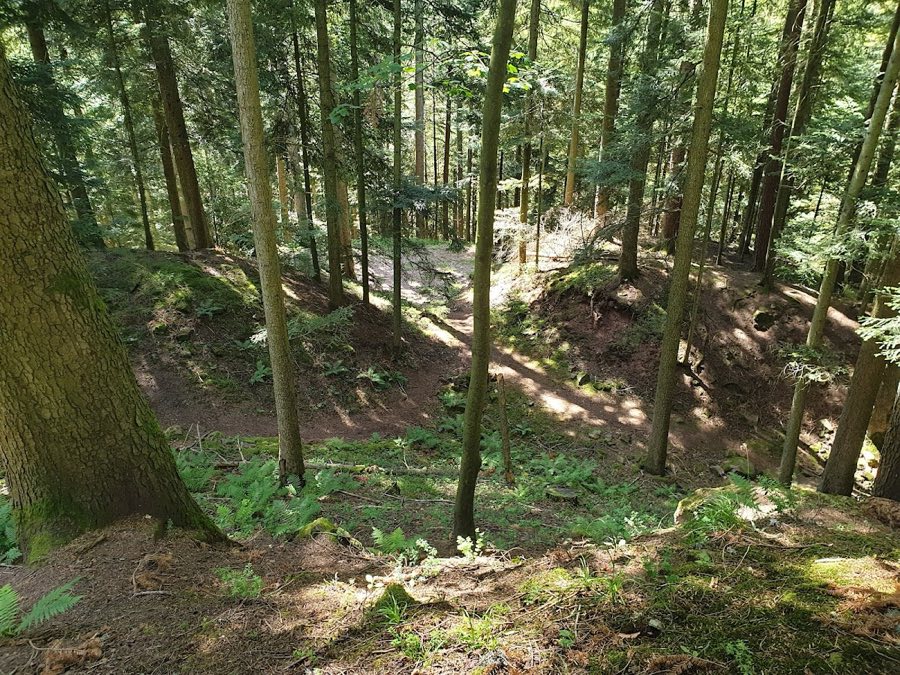
The remains of Irslingen Castle occupy a raised promontory, approximately 530 meters above sea level, overlooking the Schlichem valley near the notable Schlichemklamm gorge. This elevated position reflects its function as a hill castle, designed for defense and surveillance over the surrounding landscape.
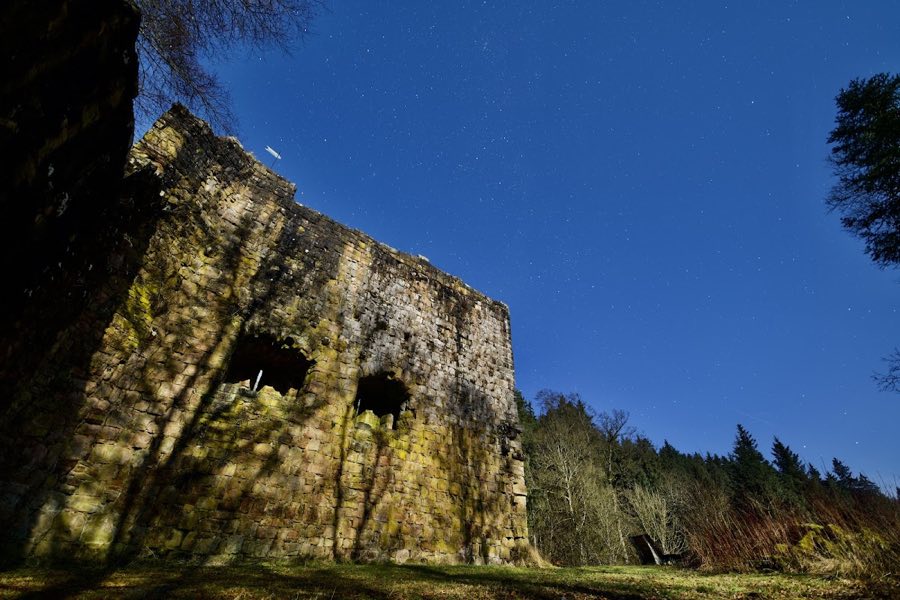
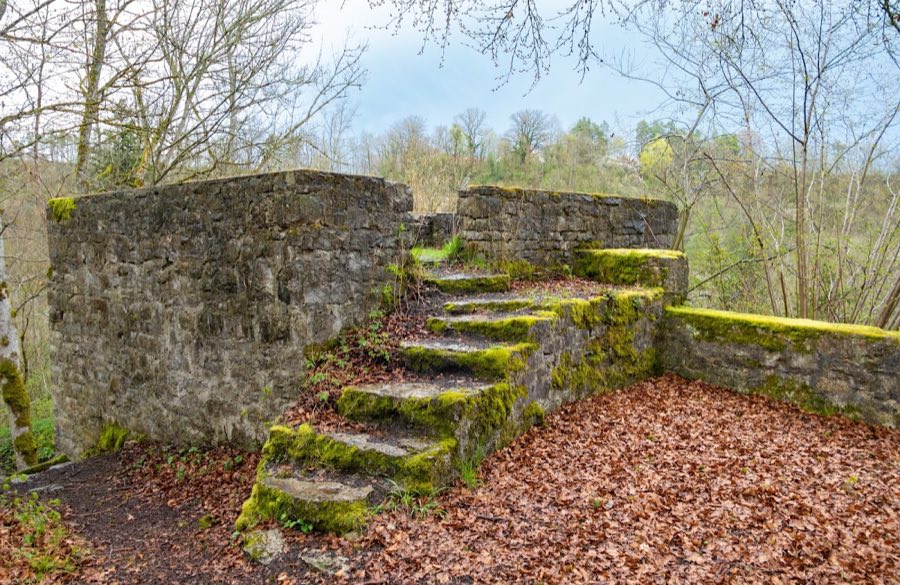
Today, what survives are primarily fragments of the castle’s walls, giving a glimpse of the former fortification’s layout. The masonry fragments include a shooting slit (Schießscharte), a narrow vertical opening used in medieval castles to allow defenders to fire arrows or crossbow bolts while remaining protected. This feature affirms the military purpose of the structure during its active use.
The visible remnants consist of stone construction typical of hill castles from the medieval period, situated within what is now the Schlichemtal nature reserve. The site’s accessible location on a hiking trail allows close observation of the ruins, which stand in situ, preserving their relationship to the natural terrain.
While detailed archaeological findings such as inscriptions or decorative elements have not been documented, the surviving defensive components highlight the castle’s role in regional control. The ruin’s presence offers tangible evidence of the Urslingen family’s former seat and the castle’s medieval origins.
No. 15876
No. 57378
No. 71791
No. 12693
Comments
Comments for Irslingen Castle will require a verified account before posting.
We'll send a verification link before your first comment is published.